

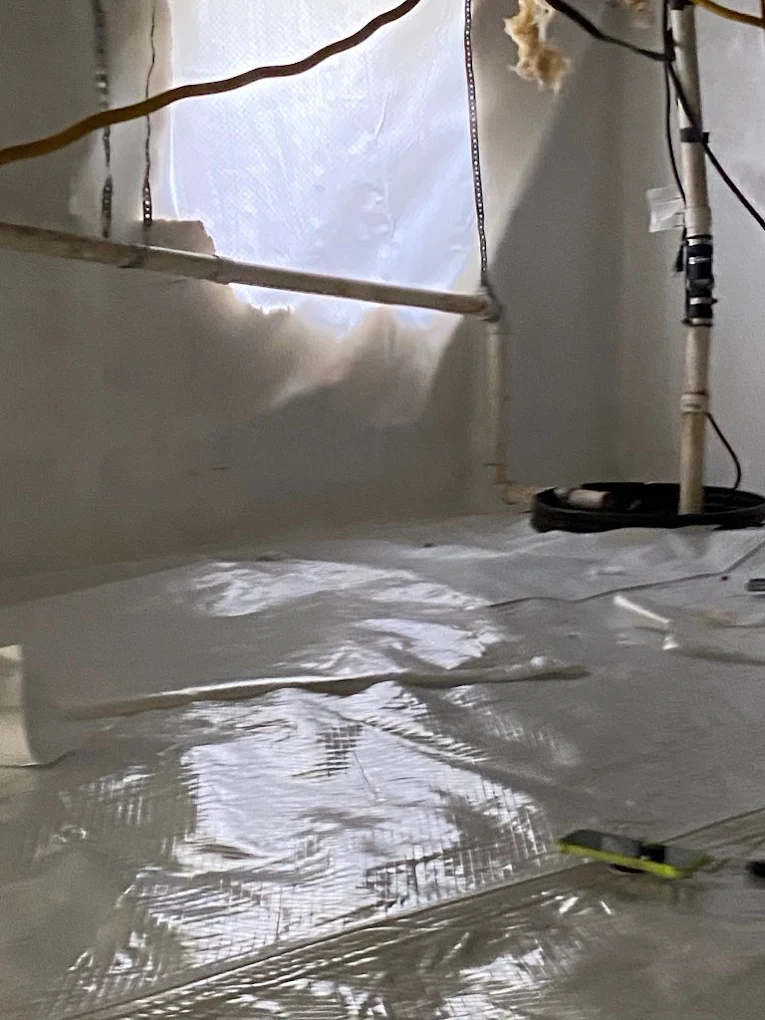
Most homeowners in Southeastern Michigan never set foot in their crawl space, which is exactly why moisture problems there go unnoticed for years while they quietly rot floor joists, feed mold, and push contaminated air up into living spaces. The region’s clay-heavy soil, high water table, and humid summers create conditions where crawl space moisture is one of the most common hidden problems in local homes. Here’s what causes it, how to recognize it, and what actually fixes it.
What Is Crawl Space Moisture, and When Does It Become a Problem?
Crawl space moisture is any water present in the space beneath a home, whether it comes from condensation, groundwater seepage, a leak, or high ambient humidity. Some moisture is expected given the crawl space’s direct contact with the ground. It becomes a problem once relative humidity climbs above roughly 55%, the point where mold, wood decay, and pest activity start to take hold.
Above that threshold, conditions favor several problems at once:
- Mold and mildew formation
- Wood decay in floor joists and beams
- Sagging or bouncy floors
- Damp or falling insulation
- Pest attraction and infestation
- Musty odors that travel into the living space
This isn’t just a comfort issue. Left unchecked, crawl space moisture is a structural and health problem that gets worse the longer it sits.
What Causes Crawl Space Moisture in Southeastern Michigan Homes?
Southeastern Michigan’s combination of soil type, climate, and older home construction creates conditions that are unusually favorable for crawl space moisture.
Clay-heavy soil and a high water table
Clay soil is common across Macomb, Wayne, Oakland, and the surrounding counties. Clay absorbs water and holds onto it instead of draining it away, so after heavy rain or spring snowmelt, saturated clay pushes groundwater against and beneath foundation walls. In a crawl space with an exposed dirt floor, that moisture has nowhere to go but up, evaporating directly into the crawl space air and raising humidity quickly.
Open vents and foundation cracks
Older crawl space vents were designed to promote airflow, but in Michigan’s humid climate they tend to do the opposite: they let warm, moisture-laden outside air into a cooler crawl space. When that warm air meets the cooler surfaces below, it condenses into liquid water on floor joists, pipes, and insulation. Cracks around pipe penetrations, conduits, and foundation walls let in humid air and groundwater the same way, adding to the problem year-round.
Seasonal humidity and condensation
Michigan summers run humid, with outdoor humidity regularly pushing above 70% across the Detroit metro area and surrounding counties. When that air enters an unsealed crawl space, it meets cooler ground temperatures below and condenses on every surface it touches. This cycle repeats each summer, and in an untreated crawl space, the moisture load compounds a little more each year.
Plumbing leaks and poor drainage
A slow leak in a crawl space pipe joint often goes undetected for months. A steady, constant moisture source like that accelerates mold growth and wood decay faster than ambient humidity alone. Poor yard grading and clogged gutters compound the problem from the outside by directing surface water toward the foundation, which increases the groundwater pressure pushing moisture in from below.
What Are the Warning Signs of a Crawl Space Moisture Problem?
Musty odors on the main floor, soft or bouncy flooring, and rising energy bills are the most common warning signs, since most homeowners never see the crawl space itself. Visible mold, damp insulation, and condensation on pipes are more direct signs that usually mean the problem has been developing for a while.
Watch for:
- Musty or earthy odors anywhere in the home, particularly on the ground floor
- Floors that feel soft, bouncy, or uneven underfoot
- Visible mold or dark staining on floor joists or subfloor sheathing
- Falling or damp insulation hanging from the crawl space ceiling
- Increased allergy symptoms or respiratory issues among household members
- An unexplained rise in heating or cooling costs
- Visible condensation on crawl space pipes or walls
- Rodent or insect activity beneath the home
If any of these are present, a professional crawl space repair inspection is the right next step rather than a wait-and-see approach.
What Happens If Crawl Space Moisture Goes Unaddressed?
Left alone, crawl space moisture doesn’t stay contained to one area. It works against several parts of the home at the same time.
Wood rot and structural damage
Floor joists, beams, and subfloor sheathing are wood, and wood absorbs moisture. When crawl space humidity stays above roughly 55% for extended periods, the wood begins to rot. Rot weakens the structural capacity of the joists, which is why floors above an affected area start to sag, bounce, or feel soft. In severe cases, joists deteriorate to the point of needing full replacement, a far more expensive repair than early moisture control would have been.
Mold growth and indoor air quality
Mold spores thrive in humid, dark, poorly ventilated spaces, and a moist crawl space is close to ideal. Because of the stack effect, warm air rises through a home from the crawl space upward, and a meaningful share of the air in a home’s living spaces originates below the floor. Mold spores and other biological contaminants ride along with that air into bedrooms, kitchens, and living rooms, which is part of why indoor air quality and crawl space health are so closely connected, particularly for households with children or elderly family members.
Pest infestations
Moisture attracts pests. Termites, carpenter ants, and wood-boring beetles are drawn to damp wood, while mice and rats look for accessible water sources. A damp, unsealed crawl space offers both. Once pests establish themselves in a moisture-damaged crawl space, extermination alone won’t resolve the underlying conditions that drew them in.
Rising energy bills
A damp crawl space is an inefficient one. Wet insulation loses most of its R-value, and when it becomes saturated enough to fall from the joists, the floor above loses its thermal barrier entirely. Heating costs climb in winter as conditioned air escapes through an uninsulated floor, and cooling costs climb in summer as humid air keeps infiltrating the living space above.
How Do You Fix Crawl Space Moisture in Southeastern Michigan?
A properly waterproofed and encapsulated crawl space combines several systems working together. No single product resolves every possible source of moisture on its own, which is why the right fix depends on whether the issue is humidity, active water entry, or both.
Crawl space encapsulation
Encapsulation seals the crawl space off from ground moisture and outside air. A heavy-duty plastic barrier, typically 12 to 20 mil thick, is installed across the dirt floor and up the foundation walls, and the existing vents are sealed as part of the process. The goal is to convert the crawl space from an uncontrolled, outdoor-adjacent space into a controlled one. For a full breakdown of what this involves, see what’s included in a complete crawl space encapsulation system.
Vapor barrier installation
A vapor barrier works alongside encapsulation and specifically targets moisture moving through foundation walls and concrete surfaces. Wall panels or vapor barrier sheeting go up across the foundation walls to block condensation and groundwater seepage before it reaches the crawl space air and structure. Given how much groundwater pressure Southeastern Michigan’s clay soil puts against foundation walls, this step is a core part of a complete moisture control system, not an optional add-on.
Interior drainage and a sump pump
When groundwater seepage is an active problem rather than just elevated humidity, interior drainage is what actually addresses it. A perimeter drainage channel runs along the crawl space floor at the base of the foundation walls, capturing water that enters through the walls or floor and directing it to a sump pump for removal. This is the piece that handles water moving under hydrostatic pressure from saturated soil, which encapsulation and vapor barriers alone don’t stop. If an existing sump pump is aging or undersized for the job, sump pump installation and replacement is worth evaluating alongside the drainage work, and a seasonal sump pump maintenance checklist helps keep it reliable once it’s in place.
Crawl space dehumidifier
Even after encapsulation and drainage are in place, a dedicated crawl space dehumidifier keeps humidity at safe levels year-round. Standard household dehumidifiers aren’t built for crawl space conditions. Purpose-built units are designed for continuous operation in low-clearance, unheated spaces and drain to a sump or exterior line so they don’t need manual emptying. The target is to keep relative humidity consistently below 55%, the threshold above which mold becomes active.
Do You Need Encapsulation, or Do You Need Interior Drainage Too?
It depends on whether the crawl space has active water entry or only elevated humidity. Encapsulation and a vapor barrier address humidity, condensation, and moisture evaporating up from the soil. If water is actually entering through cracks or the wall-floor joint, that’s a different pathway, and it requires interior drainage paired with a sump pump to capture and remove the water rather than just sealing it out. A professional inspection is the reliable way to tell which situation applies, since the visible symptoms — a musty smell versus standing water, for example — don’t always match the underlying cause.
Why Addressing Crawl Space Moisture Early Matters
Crawl space moisture damage follows a familiar pattern: it starts small, progresses slowly, then accelerates once wood decay and mold are established. Early moisture control costs a fraction of what full remediation runs later.
- Crawl space encapsulation: roughly $3,000–$8,000 depending on size and scope
- Mold remediation: roughly $2,000–$6,000 or more
- Floor joist replacement: roughly $5,000–$15,000+
- Combined remediation after years of neglect: often exceeds $20,000
Homeowners across Macomb, Oakland, and Wayne counties who deal with moisture conditions early protect both their home’s structure and their family’s health, typically at a fraction of what reactive repairs eventually cost.
When Should You Call a Professional for a Crawl Space Inspection?
If any of the warning signs above are present, or if the crawl space simply hasn’t been checked in several years, a professional inspection is worth scheduling before symptoms show up inside the living space. An inspection identifies whether the issue is humidity, active seepage, or both, and which combination of encapsulation, vapor barrier, drainage, and dehumidification actually fits the home. You can schedule a free crawl space inspection to get a clear picture of what’s happening beneath your home before deciding on next steps.
FAQs
What is the most common cause of crawl space moisture in SE Michigan?
Clay-heavy soil and a high water table are the primary regional causes. Clay holds water instead of draining it, pushing groundwater against and beneath foundations. Combined with open crawl space vents that let humid Michigan air in to condense, the result is consistently elevated humidity in untreated crawl spaces.
Is crawl space moisture dangerous?
Yes, on more than one level. Structurally, it causes wood rot in floor joists and beams. From a health standpoint, mold spores generated in a damp crawl space travel into the home’s living areas through the stack effect, which can worsen allergies and respiratory issues, particularly for children and elderly residents.
Can I just use a store-bought dehumidifier in my crawl space?
A standard household dehumidifier offers only temporary relief and isn’t built for continuous operation in crawl space conditions. It manages symptoms without addressing the moisture source. A professional encapsulation system paired with a purpose-built crawl space dehumidifier provides more lasting protection.
What is crawl space encapsulation?
Encapsulation seals the crawl space floor, walls, and vents with a heavy-duty vapor barrier, typically 12 to 20 mil plastic sheeting. It turns the crawl space from an uncontrolled space open to outside air and ground moisture into a sealed, controlled environment, and it’s usually the first step in resolving a moisture problem.
How do I know if my crawl space has a moisture problem?
Common signs include musty odors in the home, soft or bouncy floors, visible mold on joists, falling insulation, increased allergy symptoms, rising energy bills, and visible condensation or standing water in the crawl space itself. A professional inspection confirms how far the problem has progressed.
Do I need an interior drainage system, or is encapsulation enough?
It depends on whether there’s active water seepage or only elevated humidity. Encapsulation alone handles humidity and condensation. Active water entry through the foundation walls or floor needs an interior drainage system paired with a sump pump to capture and remove it. A professional inspection determines which situation applies.
Will fixing my crawl space lower my energy bills?
For most homes, yes. Wet insulation loses its thermal resistance, letting heat escape in winter and humidity in during summer. Encapsulation stabilizes crawl space temperature and restores insulation performance, which is why many homeowners in the region see lower heating and cooling costs afterward.
If you’re seeing any of these warning signs, a free crawl space inspection is the most direct way to find out what’s happening beneath your home and which fix actually applies to it.
