

Basement Waterproofing Solution in Sterling Heights, MI

Stop Water Leaks Fast with Our Proven Interior System

Our patented basement waterproofing system is designed to cure your ground water leakage problem in your basement or crawlspace as well as saturated soil conditions caused by weather.
Basement waterproofing membrane installation with interior waterproofing system

A standard installation

  1. Remove approximately 9 – 12 inches of concrete floor adjoining the walls on the inside of the basement.
  2. Install sump pump (where required by local building code)
    • Install 18 inch circumference by 30 inch deep perforated crock.
    • Standard installation of 3/4 horse power submersible cast iron motor, with stainless steel casing.
    • 1&1/2 inch PVC discharge line with check valve.
    • Connection of discharge line to outside drain source (downspout, storm sewer, natural watershed).
    • All drainage intended to be by gravity, no trap is necessary.
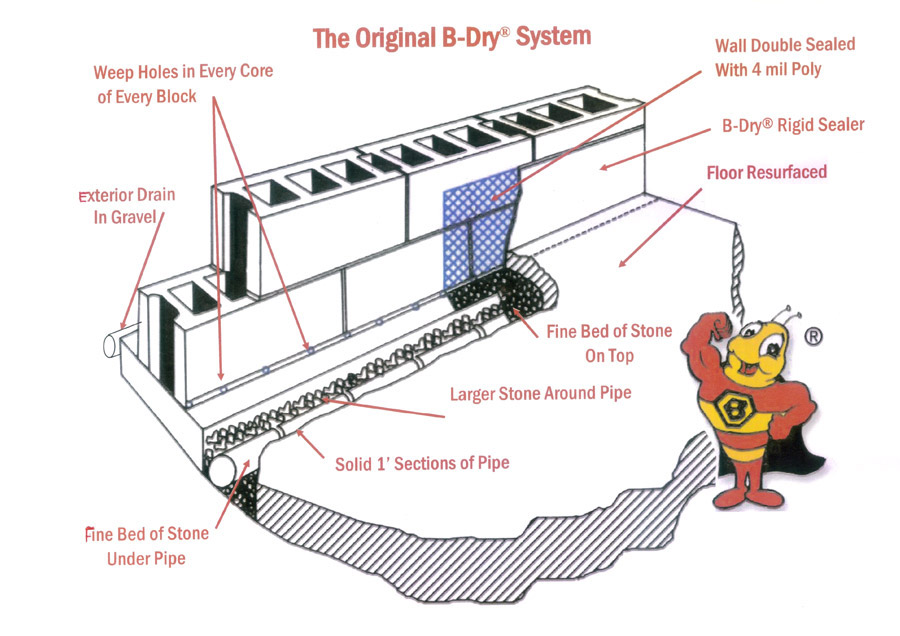
  3. Cover drain tile with #6 washed limestone as a filter.
  4. Install wall drainage system and vapor barrier. This step varies dependent upon what the wall structure is built with.
  5. Cover drainage system with concrete. The curing of this concrete can take up to 30 to 45 days to completely cure.
  6. Electrical outlet for the sump pump replacement must be installed by a licensed electrician.

Frequently Asked Questions

How much concrete do you need to remove from my basement floor?

We remove approximately 9 to 12 inches of concrete flooring along the interior walls where water enters. This creates a trench for our drain tile system while minimizing disruption to your usable floor space. We cut precisely and replace everything with new concrete when finished.

What kind of sump pump do you install with the system?

We install a 3/4 horsepower submersible pump with cast iron motor and stainless steel casing. This sits in an 18 inch by 30 inch deep perforated crock. We use 1.5 inch PVC discharge lines with check valves to prevent backflow, connected to your exterior drainage.

How long does the new concrete take to fully cure?

The concrete we pour over the drainage system takes 30 to 45 days to completely cure and reach full strength. While it sets enough for light use within 24 to 48 hours, we recommend avoiding heavy items or storage along the wall area for about six weeks.

Do I need to hire my own electrician for this installation?

Yes, a licensed electrician must install the dedicated electrical outlet for the sump pump system. This ensures code compliance and safety. We can recommend trusted local electricians if needed, or coordinate with your preferred electrician during the installation process.

What is the washed limestone used for in the installation?

We cover the drain tile pipe with #6 washed limestone as a natural filter media. This allows water to flow freely into the pipe while preventing soil and sediment from clogging the system. The stone creates a bed underneath, around, and on top of the pipe for optimal drainage.

Will you seal my basement walls as part of the installation?

Yes, we install a wall drainage system and vapor barrier that varies based on your wall construction. Block walls receive weep holes drilled in every core to release trapped water. We use 4 mil polyethylene and rigid sealers to create a barrier between damp walls and your living space.

Does this system handle water coming up through the floor or just walls?

Our system handles both. The drain tile sits at the footing level where wall meets floor, capturing water entering through wall joints, cracks, and hydrostatic pressure beneath the slab. This addresses the most common entry points in Michigan basements with clay soil conditions.

What happens to the water once it enters your drain tile system?

Water flows through the perforated pipe by gravity to the sump crock, where the pump activates automatically. The pump discharges water through the PVC line to your exterior drainage point, such as a storm sewer, downspout extension, or natural watershed area away from your foundation.

How do you handle different types of wall construction?

We adapt our wall drainage approach based on whether you have block, poured concrete, stone, or brick walls. Block walls get weep holes in every core. Poured concrete receives different sealing methods. Our consultants assess your specific wall type during the estimate to specify the right approach.

Is the drain pipe solid or perforated to collect water?

The system uses solid pipe sections in some areas and perforated pipe in the collection zone. The perforations allow groundwater to enter the pipe from the soil and stone bed, then the solid sections carry that water to the sump pump. This design prevents clogging while maximizing water collection.

FREE ESTIMATE


We will help you quickly diagnose your problem and recommend the best solution for your budget at no cost or obligation.

FREE ESTIMATE