

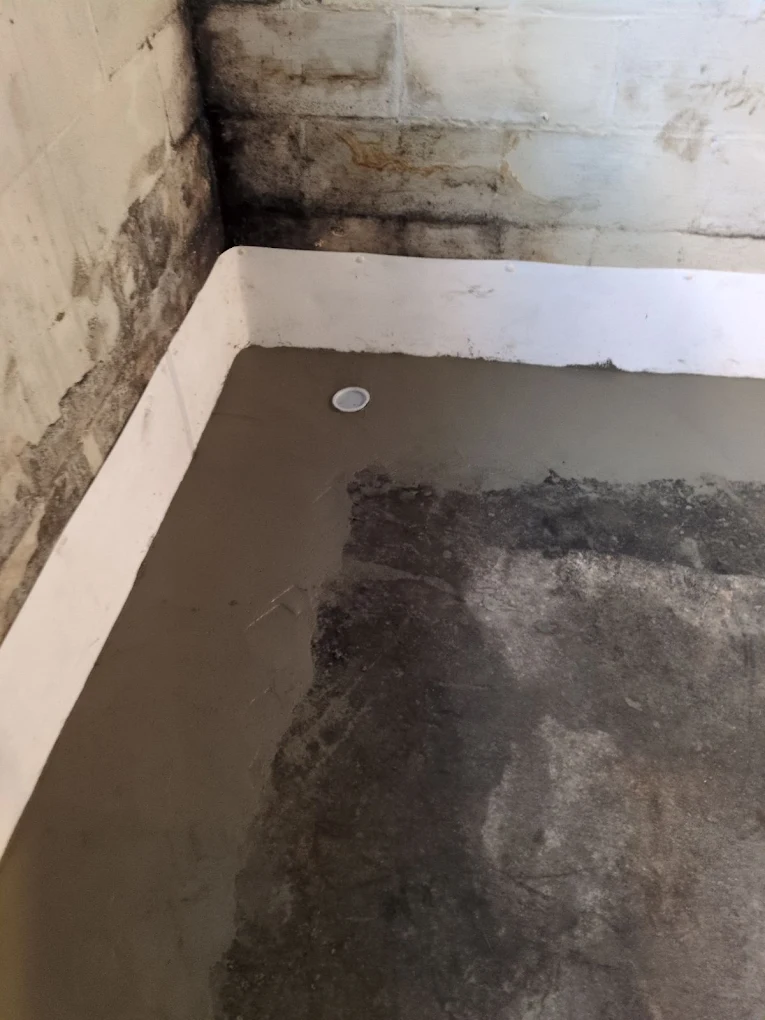
Basements in Southeastern Michigan flood after heavy rain because the region combines clay-heavy soil that cannot absorb water quickly, aging combined sewer systems that overflow under storm load, and flat terrain that gives surface water nowhere to go except toward foundations.
When an inch or more of rain falls within a few hours, every weakness in a home’s drainage and waterproofing system activates simultaneously. The result is water entering through foundation cracks, floor drains, window wells, and sewer backups all at once.
Understanding why it happens is the first step toward stopping it. If you are already dealing with recurring water issues, Basement Waterproofing in Michigan provides professional assessment and long-term solutions built for Michigan conditions.
Southeastern Michigan’s Soil and Geography: Why It Makes Flooding Worse
Southeastern Michigan sits on a foundation of glacial clay deposits left behind by retreating glaciers thousands of years ago. This geological history defines how the region handles water today.
Clay Soil and Low Permeability
Clay soil absorbs water extremely slowly compared to sandy or loam soils. When heavy rain falls faster than clay can absorb it, water pools on the surface and moves laterally toward the lowest available point, which is frequently the soil against a home’s foundation wall.
Saturated clay also holds moisture for extended periods after rain stops. Unlike sandy soil that drains quickly, clay keeps hydrostatic pressure elevated against foundation walls for days after a storm event, extending the window of flood risk well beyond the rain itself.
Flat Terrain Limits Natural Drainage
Southeastern Michigan’s relatively flat landscape, shaped by glacial activity, provides minimal natural grade for surface water to drain away efficiently.
In hilly terrain, water flows downhill and away from developed areas through natural channels. In flat urban and suburban Southeastern Michigan, surface water moves slowly, accumulates in low spots, and backs up against structures when drainage infrastructure is overwhelmed.
Great Lakes Weather and Precipitation Patterns
The Great Lakes generate significant moisture that influences regional precipitation patterns. Southeastern Michigan receives lake-effect precipitation during fall and early winter, and spring snowmelt from seasonal accumulation adds large volumes of water to already saturated soils within short timeframes.
When spring snowmelt coincides with early spring rainfall, soil saturation reaches maximum levels precisely when the frost layer below ground is still thawing. Frozen ground beneath the surface prevents downward infiltration, forcing all water to move laterally toward foundations.
How Aging Infrastructure Contributes to Basement Flooding
Southeastern Michigan’s municipal sewer infrastructure was built to serve populations and storm intensities that no longer reflect current conditions. That mismatch between infrastructure capacity and modern demand is a primary driver of basement flooding across the region.
Combined Sewer Systems
Many communities in Southeastern Michigan, particularly older urban areas within Wayne County and inner-ring suburbs, operate combined sewer systems that carry both sanitary sewage and storm runoff in the same pipes.
During normal conditions, this system functions adequately. During heavy rainfall, the combined volume of storm runoff and sewage exceeds pipe capacity, triggering combined sewer overflow events.
When the system surcharges, sewage and storm water back up through the lowest available outlet in connected buildings, which is typically the basement floor drain.
Aging Pipe Materials and Condition
Much of the region’s sewer infrastructure dates to the mid-twentieth century. Clay pipes, cast iron laterals, and early concrete mains have deteriorated over decades of use.
Cracked and offset pipe joints allow groundwater and soil to enter the sewer system during rain events through a process called inflow and infiltration. This additional water volume accelerates capacity exceedance during storms, making backup events more frequent and more severe than the original infrastructure was designed to experience.
Private Lateral Responsibility
The sewer lateral connecting a home to the municipal main is typically the homeowner’s responsibility from the foundation wall to the main. Deteriorated, root-intruded, or undersized private laterals restrict flow and contribute to backup conditions independent of municipal system performance.
Backwater valve installation on the private lateral prevents municipal sewer surcharge from entering the home through floor drains and provides meaningful protection against backup flooding even when the municipal system is overwhelmed. Homeowners across the region have addressed this through Basement Waterproofing in Southeastern Michigan to get the right drainage and valve solutions installed correctly.
Common Entry Points for Water in Michigan Basements
Water entering a Michigan basement rarely does so randomly. It follows specific pathways determined by foundation construction, soil conditions, and drainage failures. Identifying the entry point accurately determines the correct repair approach.
Cove Joint and Wall-Floor Junction
The cove joint, where the basement floor meets the foundation wall, is the most common water entry point in poured concrete and block foundations.
This joint is not a structural bond. It is a construction joint where the wall was poured separately from the floor.
Hydrostatic pressure from saturated soil pushes water through this gap with significant force during and after heavy rain events. Water appearing along the entire perimeter of the basement floor after rain almost always originates at the cove joint.
Foundation Wall Cracks
Poured concrete walls develop vertical and diagonal cracks from shrinkage during curing, differential settlement, and thermal cycling. These cracks become direct water entry pathways when hydrostatic pressure builds against the exterior wall surface.
Block foundation walls allow water entry through deteriorated mortar joints, through the hollow cores of blocks, and through cracks in the blocks themselves. Block walls are more permeable than poured concrete and allow greater water migration through the wall mass even without visible cracks.
Floor Drains and Sewer Backups
Floor drains connect directly to the municipal sewer system. When the sewer system surcharges during heavy rain, water backs up through the floor drain into the basement.
This type of flooding carries sanitary sewage and requires different remediation than clean groundwater intrusion.
Backwater valves installed on the drain line prevent sewer surcharge from entering through floor drains. This is one of the most cost-effective flood prevention measures available for homes in combined sewer service areas.
Window Wells and Basement Windows
Window wells that lack adequate drainage fill with water during heavy rain. Once the water level in the well exceeds the window sill height, water enters the basement directly through the window frame, which is rarely watertight under hydrostatic head.
Clogged window well drains and window wells without drains are particularly vulnerable. Even modest rainfall accumulates rapidly in an enclosed well with no outlet.
Pipe Penetrations and Tie Rod Holes
Every pipe, conduit, and utility entry through the foundation wall is a potential water entry point. The seal between pipe and concrete degrades over time, creating gaps that admit water under pressure.
Tie rod holes left from concrete forming are small but numerous in poured concrete walls. Inadequately sealed, each hole becomes a pinhole leak that, collectively across a wall face, admits significant water volume during high-pressure events.
The Role of Sump Pumps in Basement Flood Prevention
A sump pump is the active component of basement water management. While drainage systems and waterproofing barriers redirect and slow water, the sump pump physically removes it from beneath the foundation before it can rise to floor level.
How Sump Pumps Work
Water collected by interior drainage channels and entering the sump pit through the surrounding gravel and perforated pipe is pumped out through a discharge line routed to daylight outside the foundation perimeter.
A float switch activates the pump automatically when water in the pit reaches a set level. A check valve on the discharge line prevents pumped water from flowing back into the pit when the pump cycles off.
Matching pump capacity to the expected water volume in the worst-case storm event for the specific property is critical to system performance.
Why Sump Pumps Fail During Heavy Rain
The heaviest rain events that generate the most basement flood risk are also the events most likely to cause sump pump failure.
Power outages during storms disable standard electric pumps precisely when they are most needed. Float switches can stick in heavy debris-laden water. Pumps that have not been tested or serviced may have degraded motor components that fail under sustained operation demand.
A single pump without backup protection is a single point of failure in a system where failure means flooding.
Battery Backup and Redundant Systems
Battery backup sump pumps activate automatically when the primary pump loses power or fails. Quality battery backup systems provide several hours of pumping capacity on a fully charged battery, sufficient to manage most storm events.
Water-powered backup pumps use municipal water pressure to operate without electricity, providing unlimited runtime during power outages at the cost of water consumption.
Dual pump systems with a primary submersible pump and a backup unit in the same pit provide the highest level of flood protection and are strongly recommended for finished basements and homes with a history of flooding in Southeastern Michigan.
How Window Wells and Poor Grading Let Water In
Two of the most common and most correctable contributors to basement flooding in Southeastern Michigan homes are window well drainage failures and improper surface grading around the foundation.
Window Well Flooding
Window wells are recessed areas excavated against the foundation to allow light and ventilation to below-grade windows. Without adequate drainage, they function as collection bowls during heavy rain.
A properly designed window well includes a gravel base connected to a drain pipe routed to a storm drain or daylight. Many wells in older Michigan homes have no drain connection, or the drain has become clogged with sediment and debris over years of use.
When the well fills faster than it drains, water level rises against the window. Basement windows are not designed to resist hydrostatic pressure. Water forces through frame seals and enters the basement directly.
Window well covers reduce water collection in wells without drainage correction, but they do not fully prevent entry during heavy rain if the well itself lacks an adequate drain.
Negative Grade and Soil Settlement
The ground surrounding a foundation should slope away at a minimum of six inches of drop over the first ten feet from the wall. This grade directs surface water away from the foundation rather than toward it.
Soil settlement against foundation walls is common in established Michigan homes. Backfill placed during original construction compacts over decades, creating a depression that slopes toward the wall and directs surface water directly against the foundation.
Mulch beds built up against siding raise the effective grade toward the house and contribute to the same problem.
Downspout Discharge
Gutters collect roof runoff from the entire roof surface area and concentrate it at downspout locations. A downspout discharging within two feet of the foundation delivers a large volume of water directly into the soil zone adjacent to the basement wall.
Extensions routing downspout discharge a minimum of six feet from the foundation, or underground drain connections routing water to daylight well away from the structure, eliminate this concentrated water source at the foundation.
Why Finished Basements Face Higher Flood Risk
A finished basement does not increase the probability of flooding, but it dramatically increases the cost and complexity of the damage when flooding occurs.
Concealed Entry Points
Finishing a basement covers foundation walls, the cove joint, and floor penetrations behind drywall, insulation, and flooring. Water entry that would be immediately visible in an unfinished basement is hidden in a finished space until damage is extensive.
By the time water staining appears on drywall, moisture has already saturated the insulation behind it and begun affecting the wood framing in contact with the foundation wall. Mold growth inside finished wall cavities can be advanced before any surface indication appears.
Flood Damage Scope in Finished Spaces
When a finished basement floods, the remediation scope expands well beyond removing standing water.
- Saturated drywall must be removed to the flood line plus additional height to expose and dry the framing behind it
- Carpet, pad, laminate, and engineered wood flooring must be removed entirely
- Saturated fiberglass insulation must be removed and disposed of
- The remaining structure must be dried, treated for mold, and inspected before rebuilding begins
Rebuild costs for a flooded finished basement of 1,000 square feet routinely run $20,000 to $50,000 or more depending on finish quality and damage extent.
HVAC and Mechanical Equipment Risk
Furnaces, water heaters, electrical panels, and HVAC equipment installed in finished basements are at direct risk during flood events.
Flood water reaching a gas furnace or water heater requires professional assessment before restoration. Electrical panels and outlets that have been submerged require licensed electrical inspection. Equipment replacement after a flood event adds substantially to total remediation cost.
Flood Detection in Finished Spaces
Water detection sensors placed at the cove joint perimeter and near the sump pit provide early warning in finished basements where visual inspection is not possible.
Wi-Fi connected sensors alert homeowners remotely, allowing faster response that can limit damage extent. Pre-flood photographic documentation of finished basement contents and improvements supports insurance claims and speeds recovery.
What to Do Immediately After Your Basement Floods
The actions taken in the first hours after a basement flood determine how much damage becomes permanent and how much can be prevented from escalating.
Ensure Electrical Safety First
Do not enter a flooded basement until you have confirmed the electrical system is safe. If standing water may be in contact with outlets, electrical panels, or plugged-in equipment, shut off the circuit breaker for the basement from a dry location before entering.
If the main panel is in the basement and you cannot safely reach it, contact your utility provider for emergency disconnection before entry.
Identify and Stop the Water Source
Identify whether water is still actively entering before beginning extraction. Continuing sump pump failure, an ongoing sewer backup, or a still-active storm requires addressing the source before removal efforts are meaningful.
Confirm whether the water is clean groundwater intrusion, gray water from a drain backup, or sewage-contaminated black water from a sewer backup. Sewage-contaminated flooding requires professional remediation with appropriate personal protective equipment and disposal protocols.
Extract Standing Water Immediately
Every hour of standing water contact increases damage to flooring, drywall, insulation, and framing. Wet vacuums, submersible pumps, and water extraction equipment from equipment rental companies can remove standing water faster than residential dehumidifiers alone.
Water damage restoration companies have truck-mounted extraction equipment that removes large water volumes quickly and is worth engaging for significant flooding events.
Begin Drying Within 24 Hours
Mold colonization begins within 24 to 48 hours of moisture exposure on organic materials. Dehumidifiers and air movers deployed promptly after water extraction begin the structural drying process that prevents mold establishment.
- Open windows if outdoor humidity allows
- Remove saturated carpet, pad, and area rugs immediately
- Pull drywall that has been submerged to allow framing to dry
Document Everything Before Cleanup
Photograph all damage before moving contents or beginning cleanup. Document water lines on walls, affected materials, damaged contents, and any visible water entry points.
Contact your insurance carrier immediately to initiate the claim and understand your mitigation obligations under the policy before engaging contractors.
Long-Term Basement Waterproofing Solutions for Michigan Homes
Addressing basement flooding permanently requires a system approach that matches the solution to the specific water entry mechanisms present in the home.
Interior Drainage Systems
An interior perimeter drainage channel installed at the cove joint collects water entering through the wall-floor junction and foundation wall base and routes it to a sump pit for removal.
This system manages hydrostatic pressure-driven intrusion without exterior excavation and is the most common long-term solution for Michigan homes experiencing groundwater and hydrostatic pressure flooding.
Combined with a properly sized primary sump pump and battery backup, interior drainage provides year-round protection against the groundwater and soil-pressure flooding that heavy Michigan rain events generate.
Sump System Upgrades
Homes relying on aging or undersized sump systems benefit significantly from system evaluation and upgrade before flood season.
A properly sized submersible primary pump, battery backup unit, check valve, properly routed discharge line, and Wi-Fi monitoring provide comprehensive protection. Sump pit covers reduce evaporation and prevent debris entry that causes float switch malfunction.
Wall Crack Injection
Individual foundation wall cracks are sealed permanently with epoxy or polyurethane injection, eliminating discrete entry points that admit water under hydrostatic pressure.
Crack injection does not address systemic hydrostatic pressure at the cove joint but is an important component of a complete waterproofing scope for homes with visible crack entry.
Backwater Valve Installation
For homes in combined sewer service areas experiencing floor drain backup flooding, backwater valve installation on the private drain lateral is the most direct solution.
The valve allows normal flow out of the home but closes automatically when flow reverses, preventing sewer surcharge from entering through floor drains. Many Michigan municipalities offer partial reimbursement programs for backwater valve installation.
Exterior Waterproofing
Exterior membrane application with drain tile at the footing addresses water before it reaches the foundation wall. This is the most comprehensive solution for homes with severe intrusion, deteriorating block walls, or conditions not adequately controlled by interior systems.
Grading, Downspout, and Window Well Corrections
Exterior corrections eliminate surface water sources before they reach the foundation.
- Regrading to restore positive slope away from the foundation
- Downspout extensions or underground discharge routing
- Window well drain connection or replacement
- Gutter upgrade and maintenance to prevent overflow discharge against the foundation
These measures reduce the volume of water reaching the foundation and are cost-effective complements to any interior or exterior waterproofing system.
How to Choose a Basement Waterproofing Contractor in Southeastern Michigan
Basement waterproofing quality varies significantly between contractors. Choosing correctly in Southeastern Michigan means selecting a company with specific experience in the region’s clay soil conditions, aging infrastructure challenges, and seasonal flooding patterns.
Verify Licensing and Insurance
Michigan requires contractors performing residential improvement work to hold a residential builder’s license or maintenance and alteration contractor license. Verify the license is current through the Michigan Department of Licensing and Regulatory Affairs before signing any contract.
Confirm the contractor carries general liability insurance and workers compensation coverage. Work performed by uninsured contractors on your property creates liability exposure for the homeowner if a worker is injured on site.
Evaluate Local Experience
A contractor with years of experience specifically in Southeastern Michigan understands the clay soil conditions, combined sewer challenges, and seasonal flooding patterns that define the region’s waterproofing requirements.
National franchise operations may offer name recognition but vary in local installation quality depending on the franchise owner and crew. Local companies with established reputations in Wayne, Oakland, and Macomb counties have direct accountability to their local customer base.
Assess the Written Estimate
A professional waterproofing estimate specifies every component of the proposed system, including drainage channel type, sump pump model and capacity, backup system specifications, warranty terms, and exclusions.
Estimates that list only a total price without component detail make accurate comparison between contractors impossible and provide no basis for verifying what was installed after completion.
Understand Warranty Coverage
Ask specifically whether the warranty is manufacturer-backed or contractor labor only. Confirm the warranty is transferable to future owners. Request the warranty document in writing before signing the contract, not after installation.
Red Flags to Avoid
- Same-day signing pressure with expiring discounts
- No written specification of system components
- Warranty described verbally without written documentation
- Significantly lower price than all other quotes without explained scope difference
- No verifiable local references from completed jobs
Post-Installation Confirmation
A quality contractor provides post-installation moisture readings that document baseline conditions after system installation. Schedule a follow-up visit after the first significant rain event to verify system performance. Most reputable Michigan waterproofing companies offer annual maintenance agreements that include sump pump testing, drainage inspection, and system verification.
FAQs
Why does my basement flood only during heavy rain?
During light rain, soil absorbs moisture gradually and drainage infrastructure handles the volume. During heavy rain, soil reaches saturation point quickly, hydrostatic pressure against foundation walls spikes, and municipal sewer systems may exceed capacity. The combination of these simultaneous factors overwhelms waterproofing deficiencies that are not apparent under normal conditions.
Is basement flooding covered by homeowners insurance in Michigan?
Standard Michigan homeowners insurance policies exclude flood damage from surface water and groundwater intrusion. Sewer backup coverage is typically available as an endorsement for an additional premium. Flood insurance through the National Flood Insurance Program covers rising surface water flooding. Review your specific policy endorsements and contact your agent to understand what coverage you currently carry.
How do I know if my basement flooding is from groundwater or sewer backup?
Groundwater flooding typically originates at the cove joint, foundation wall cracks, or window wells and produces relatively clean water. Sewer backup flooding typically enters through floor drains, laundry drains, or toilet drains and may carry sewage odor and contamination. The entry point and water appearance help identify the source. A waterproofing professional can confirm source identification during an inspection.
What is a backwater valve and do I need one?
A backwater valve is a one-way check valve installed on the sewer lateral that prevents sewage from flowing backward into the home when the municipal system surcharges. Homes in Southeastern Michigan served by combined sewer systems, particularly in older Wayne County communities and inner-ring suburbs, benefit significantly from backwater valve installation. Many municipalities in the region offer rebate programs covering a portion of installation cost.
How much does basement waterproofing cost in Southeastern Michigan?
Interior drainage system installation with sump pump for a standard Michigan basement typically ranges from $5,000 to $15,000 depending on basement perimeter length and system components. Battery backup addition runs $800 to $1,500. Exterior waterproofing with excavation ranges from $15,000 to $30,000 or more. Backwater valve installation typically costs $1,000 to $3,000 depending on access conditions and local permit requirements.
Can I waterproof my basement myself?
Basic measures such as applying hydraulic cement to visible cracks, extending downspouts, and regrading soil away from the foundation are homeowner-manageable tasks that reduce water entry. Complete waterproofing system installation including interior drainage, sump pit construction, pump installation, and warranty coverage requires professional installation. DIY crack repairs and surface sealers do not address systemic hydrostatic pressure flooding and should not be relied upon as permanent solutions for recurring Michigan basement flooding.
How often do basements flood in Southeastern Michigan?
Southeastern Michigan is among the most flood-prone regions in the Midwest due to the combination of clay soil, flat terrain, aging combined sewer infrastructure, and Great Lakes precipitation patterns. Major flooding events affecting thousands of homes simultaneously have occurred multiple times in the past two decades, including significant events in 2014 and 2021 that caused hundreds of millions of dollars in residential property damage across Wayne, Oakland, and Macomb counties.
Will a dehumidifier prevent basement flooding?
A dehumidifier controls humidity and condensation in a basement but does not prevent water intrusion from groundwater, hydrostatic pressure, or sewer backup. A dehumidifier is an important component of a complete basement moisture management system but is not a substitute for waterproofing, drainage, and sump pump protection. Running a dehumidifier in an otherwise unprotected basement during heavy rain will not prevent flooding.
How long does basement waterproofing installation take?
Interior drainage system installation in a standard Southeastern Michigan basement typically takes one to two days. Larger basements or those requiring significant crack repair, multiple sump pits, or complex drainage routing may take two to three days. Exterior waterproofing with excavation takes three to seven days depending on property size, access conditions, and scope. Backwater valve installation typically takes four to eight hours.
What is the best long-term solution for basement flooding in Michigan?
The most effective long-term solution for most Michigan homes is a complete interior drainage system at the cove joint perimeter, a properly sized primary sump pump, a battery backup sump pump, individual crack injection for visible wall cracks, backwater valve installation for homes in combined sewer areas, and exterior grading and downspout correction to reduce surface water volume reaching the foundation. The appropriate combination depends on the specific water entry mechanisms identified during professional inspection.
