

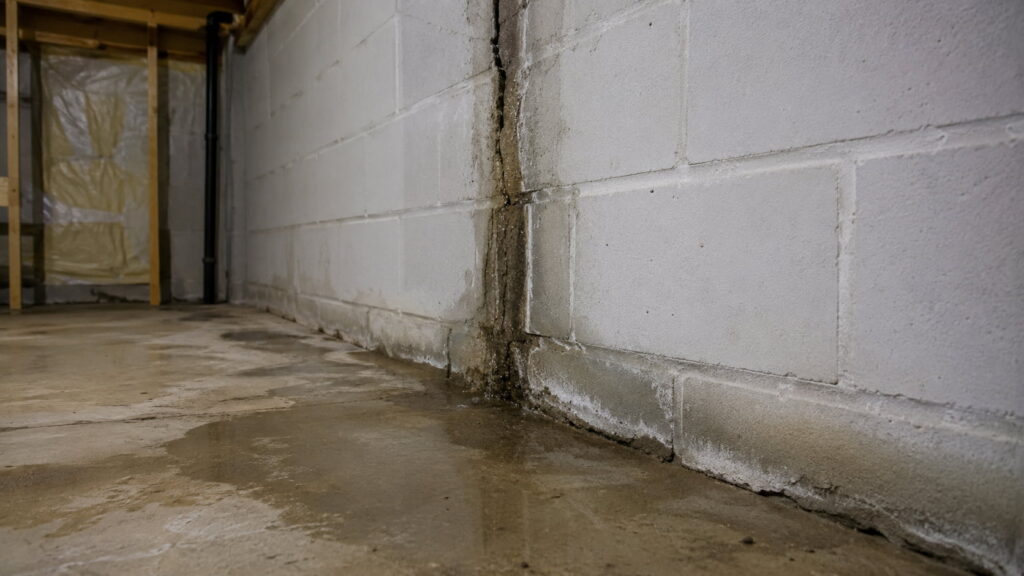
Wet basements in Michigan homes are not random. They result from a predictable combination of regional soil conditions, aging infrastructure, and drainage failures that work against foundations year after year.
Clay soil that holds water against foundation walls, freeze-thaw cycles that widen cracks, and sump systems that fail under storm load are among the most consistent culprits across Wayne, Oakland, and Macomb counties.
Identifying the specific cause in your home is what determines which fix actually works. If you are already dealing with recurring moisture, Basement Waterproofing in Southeastern Michigan provides professional assessment and long-term solutions built for Michigan conditions.
Michigan’s Clay Soil Problem
Southeastern Michigan sits on glacial clay deposits that define how the region handles rainfall and snowmelt at the foundation level.
Clay soil absorbs water slowly. When rain falls faster than clay can absorb it, water moves laterally through the soil and accumulates against foundation walls rather than draining downward and away.
Unlike sandy soil that drains within hours, saturated clay holds moisture for days after a rain event. This keeps hydrostatic pressure elevated against basement walls long after the storm has passed.
During spring thaw, frozen ground beneath the surface blocks downward infiltration entirely. All snowmelt and early spring rainfall is forced to move sideways through the soil, directly toward the path of least resistance: the foundation wall.
Original drain tile systems installed around footings in older Michigan homes frequently become clogged with clay fines and root intrusion over decades, eliminating the perimeter drainage that was supposed to relieve this pressure.
Hydrostatic Pressure Against Foundation Walls
Hydrostatic pressure is the force water exerts against a surface when it has nowhere else to go. In a saturated clay soil environment like Southeastern Michigan, this pressure builds rapidly during and after heavy rain.
Water-saturated soil against a basement wall pushes inward continuously. The foundation wall resists this pressure, but every crack, gap, and joint in the wall is a potential release point. Water follows the path of least resistance, entering wherever the wall is weakest.
The cove joint, where the floor meets the wall, is the most common pressure release point. This construction joint was never designed to resist hydrostatic pressure.
Water seeping along the entire perimeter of the basement floor after rain is hydrostatic pressure finding this gap.
Horizontal cracks in basement walls are a direct indicator that hydrostatic pressure is exceeding the wall’s lateral resistance. These cracks require immediate professional attention because they signal active structural stress, not just water entry.
Homeowners across the region have addressed this through Basement Waterproofing in Southeastern Michigan to get the right drainage solutions installed before pressure causes permanent wall damage.
Cracks in Foundation Walls and Floors
Foundation cracks are among the most direct water entry points in Michigan basements. They form through several mechanisms and vary significantly in severity.
Vertical and diagonal cracks in poured concrete walls typically result from concrete shrinkage during curing or minor differential settlement. They create direct pathways for water under hydrostatic pressure to enter the basement.
Freeze-thaw cycles in Michigan winters widen existing cracks progressively. Water enters a crack, freezes and expands, forces the crack slightly wider, then thaws and allows deeper penetration. Each cycle advances the damage.
Block foundation walls crack through mortar joint failure and block deterioration. Water migrates through the hollow cores of concrete blocks and exits through any available gap at the interior face.
Floor cracks with vertical displacement between the two faces indicate settlement and require structural evaluation alongside waterproofing.
Flat floor cracks with no displacement allow water entry under hydrostatic pressure from below the slab during high water table periods.
Efflorescence, the white mineral deposit appearing on basement walls, is a reliable indicator of chronic water movement through concrete or block, even when visible wetness is not present. Many Michigan homeowners confirm crack-related entry points through Basement Waterproofing in Southeastern Michigan before investing in targeted crack repair.
Failed or Missing Drainage Systems
Many Michigan homes were built with perimeter drain tile systems at the footing intended to collect and divert groundwater away from the foundation. In homes built before modern drainage standards, drain tile was often omitted entirely.
Drain tile systems installed decades ago are frequently beyond their functional lifespan. Clay-based original tile systems are particularly vulnerable to clogging from clay fines migrating through joints and from root intrusion over time.
A clogged or absent drain tile system eliminates the pressure relief that was supposed to protect the foundation wall. Groundwater that should be intercepted and routed away instead accumulates against the wall and finds entry points through every available gap.
Interior drainage systems installed at the cove joint are the standard solution for failed exterior drain tile.
Rather than attempting to excavate and replace deteriorated exterior systems, an interior perimeter channel captures water at the entry point and routes it to a sump pit for removal. This approach addresses the drainage failure without full exterior excavation.
Sump Pump Failure
A functioning sump pump is the last line of defense against basement flooding when groundwater rises. When it fails during a storm event, flooding follows quickly.
The most common failure point is power loss. Michigan storm events that generate the most groundwater intrusion frequently cause power outages. A primary electric sump pump without battery backup shuts off the moment power fails, leaving accumulated water no path out.
Float switches malfunction when debris accumulates in the pit and interferes with switch movement. A stuck float fails to activate the pump, and the pit overflows before the pump ever turns on.
Pumps that have operated for seven to ten years without replacement or testing may have degraded motor components that fail under the sustained high-demand operation that major storm events require.
An undersized pump cannot keep pace with water inflow during peak intrusion events even when it is operating correctly. The pump runs continuously but cannot remove water as fast as it enters.
Battery backup sump pumps and dual pump systems directly address these failure modes and are strongly recommended for any Michigan home with a history of basement water entry.
Poor Grading and Downspout Discharge
Surface water management failures around the foundation exterior are responsible for a significant portion of Michigan basement moisture problems and are among the most correctable causes.
Soil settlement against foundation walls is common in established Michigan homes. Backfill compacts over decades, creating a low point adjacent to the wall that directs surface water toward the foundation rather than away from it.
Mulch beds raised against the siding compound this by elevating the effective grade toward the house.
The standard grading requirement is six inches of drop over the first ten feet from the foundation wall. Restoring this grade is one of the most cost-effective basement moisture corrections available.
Downspouts concentrate roof runoff at specific points. A single downspout serving a large roof section can discharge hundreds of gallons during a storm. When that discharge lands within two feet of the foundation, the entire volume drives into foundation-adjacent soil simultaneously.
Extending downspouts a minimum of six feet from the foundation, or installing underground discharge lines routing water to daylight well away from the structure, eliminates this concentrated water source at the wall.
Window Wells Without Proper Drainage
Window wells without functional drainage are direct flood entry points during Michigan rain events. The well collects water from rainfall and surrounding soil with no outlet to discharge it.
As water accumulates in the well, the level rises against the basement window. Basement windows are not designed to resist water pressure. Once the water level reaches the window sill, it forces through the frame and enters the basement directly.
Many window wells in older Michigan homes were installed with a gravel base intended to allow drainage through the soil. Over time, clay fines migrate into the gravel, eliminating its drainage capacity. The well appears functional but no longer drains effectively.
Wells serving egress windows are larger and collect proportionally more water during storm events, increasing flood risk if drainage is not sized accordingly.
The correct solution is a drain pipe connected at the base of the well routed to a storm drain or daylight outlet. Where underground connection is not feasible, a properly fitting well cover reduces water entry while a corrected drain is installed.
Neither cover alone nor gravel replacement alone provides lasting protection without a connected drain outlet.
Sewer Backup Through Floor Drains
Sewer backup flooding is distinct from groundwater flooding and requires a different solution. It occurs when the municipal sewer system exceeds capacity during heavy rain and sewage flows backward through the lowest connected drain in the home, which is typically the basement floor drain.
This type of flooding is most common in older Southeastern Michigan communities served by combined sewer systems that carry both sanitary sewage and storm runoff in the same pipes. When storm volume overwhelms the system, the combined flow backs up through any available outlet.
Sewer backup water is classified as Category 3 contaminated water and requires professional remediation with appropriate containment and disposal protocols. It cannot be treated the same as clean groundwater intrusion.
A backwater valve installed on the private sewer lateral is the direct solution. The valve allows normal outflow from the home but closes automatically when flow reverses, blocking sewage from entering through floor drains regardless of municipal system pressure.
Many municipalities in Southeastern Michigan, including communities in Wayne and Macomb counties, offer partial reimbursement programs for backwater valve installation. Homeowners in combined sewer service areas should confirm eligibility before scheduling installation.
How to Permanently Fix a Wet Basement in Michigan
Permanent wet basement correction requires matching the solution to the specific cause. A single fix applied without identifying the entry mechanism rarely resolves Michigan basement moisture long term.
The foundation of most permanent solutions is an interior perimeter drainage system at the cove joint combined with a properly sized sump pump and battery backup. This combination addresses the hydrostatic pressure and drainage failure that drive the majority of Michigan basement flooding cases.
Individual foundation wall cracks require epoxy or polyurethane injection to seal them as discrete entry points. Crack injection does not replace drainage system installation but is a necessary component of a complete scope for homes with visible crack entry.
Backwater valve installation addresses sewer backup flooding independently of groundwater solutions. Homes experiencing both groundwater intrusion and sewer backup require both solutions installed together.
Exterior corrections reduce the volume of water reaching the foundation and improve the performance of any interior system:
- Grading restoration to restore positive slope away from the foundation
- Downspout rerouting a minimum of six feet from the wall
- Window well drain connection to a storm drain or daylight outlet
These exterior measures are low cost relative to their impact and should be part of every permanent wet basement correction plan.
A professional inspection with moisture readings, entry point identification, and cause assessment is the correct starting point before any waterproofing investment.
FAQs
Why is my Michigan basement wet only in spring?
Spring combines snowmelt volume with early rainfall on frozen or near-frozen ground that cannot absorb water. Soil saturation peaks in spring, hydrostatic pressure against foundation walls reaches its annual high, and sump pumps face their heaviest demand of the year simultaneously. Basements that stay dry through summer and fall frequently show water in spring because spring conditions exceed the threshold that existing drainage and waterproofing can manage.
Is a wet basement in Michigan normal?
Water intrusion is common in Michigan homes due to clay soil, flat terrain, and aging infrastructure, but it is not something homeowners should accept as normal. Recurring moisture causes mold growth, wood rot, and structural deterioration over time. Every wet basement has a specific cause that can be identified and addressed with the correct waterproofing system.
How do I know what is causing my wet basement?
Entry point location is the primary diagnostic indicator. Water along the wall-floor perimeter indicates cove joint hydrostatic pressure. Water through specific wall cracks indicates crack entry. Water from floor drains indicates sewer backup. Water below windows indicates window well drainage failure. A professional waterproofing inspection with moisture readings confirms the source and guides the correct repair scope.
Does interior waterproofing really work in Michigan?
Yes. Interior perimeter drainage systems are the most widely used and longest proven solution for Michigan basement conditions. They manage hydrostatic pressure-driven water entry effectively without exterior excavation, carry manufacturer-backed transferable warranties, and are appropriate for the clay soil and drainage conditions found throughout Southeastern Michigan.
How much does fixing a wet basement cost in Michigan?
Interior drainage system installation with sump pump typically ranges from $5,000 to $15,000 depending on basement perimeter and scope. Battery backup addition runs $800 to $1,500. Backwater valve installation costs $1,000 to $3,000. Exterior grading and downspout corrections are often under $1,000 when completed as part of a broader scope. The cost of not acting consistently exceeds the cost of the repair through mold remediation, structural damage, and lost home value.
