
Basement Wall Stabilization in Southeastern Michigan

A foundation wall that starts to bow, lean, or crack horizontally is rarely a sudden event. It is the result of years of pressure from saturated soil, frost heave, and the slow loss of structural support inside the wall itself. Once movement starts, gravity and lateral force keep working against the concrete every season until the wall either reaches a critical bend point or fails outright. The same soil and moisture conditions that drive wall failure also push homeowners toward basement waterproofing in Southeastern Michigan, since the two problems share a single root cause.

Basement wall stabilization stops that process and locks the wall against further movement. The right reinforcement method depends on how much the wall has shifted, what material it is built from, and what is causing the pressure in the first place. A well-matched system stabilizes the structure, prevents future deflection, and protects the home from the larger structural failures that follow an untreated foundation wall.

Get free quoteCall Now
Full Name

What We Do

Wall Stabilization Solutions for Failing Foundations

Every bowing or cracking wall tells a different story depending on how far it has moved and what pulled it out of plumb. A wall under one inch of inward deflection responds well to bonded reinforcement, while a wall pushed more than two inches needs mechanical bracing or external tension to recover. The methods below cover the full range of basement wall stabilization & repair scenarios, from light cosmetic cracking to severe structural movement. Many of these same principles also apply to support systems used in crawl space repair in Southeastern Michigan, where structural reinforcement plays a similar role.

Carbon Fiber Strap Reinforcement

Carbon fiber straps bonded to the wall with high-strength epoxy add the tensile strength that concrete naturally lacks. Running floor-to-joist on poured concrete or block walls deflected under two inches, they lock the wall against further movement and stay low-profile enough to paint over.

Steel I-Beam Bracing

Steel I-beams installed vertically against the inside face of the wall provide immediate mechanical support for walls under heavier deflection or active lateral pressure. The beams anchor to the footing and tie into the floor joists above, transferring load away from the failing wall.

Wall Anchor Systems

A wall anchor system uses an earth anchor plate buried in stable soil away from the foundation, joined to an interior wall plate by a tensioned steel rod. The tension can be adjusted over time to gradually pull a bowed wall back toward plumb, ideal for significant outward correction.

Horizontal Crack Repair

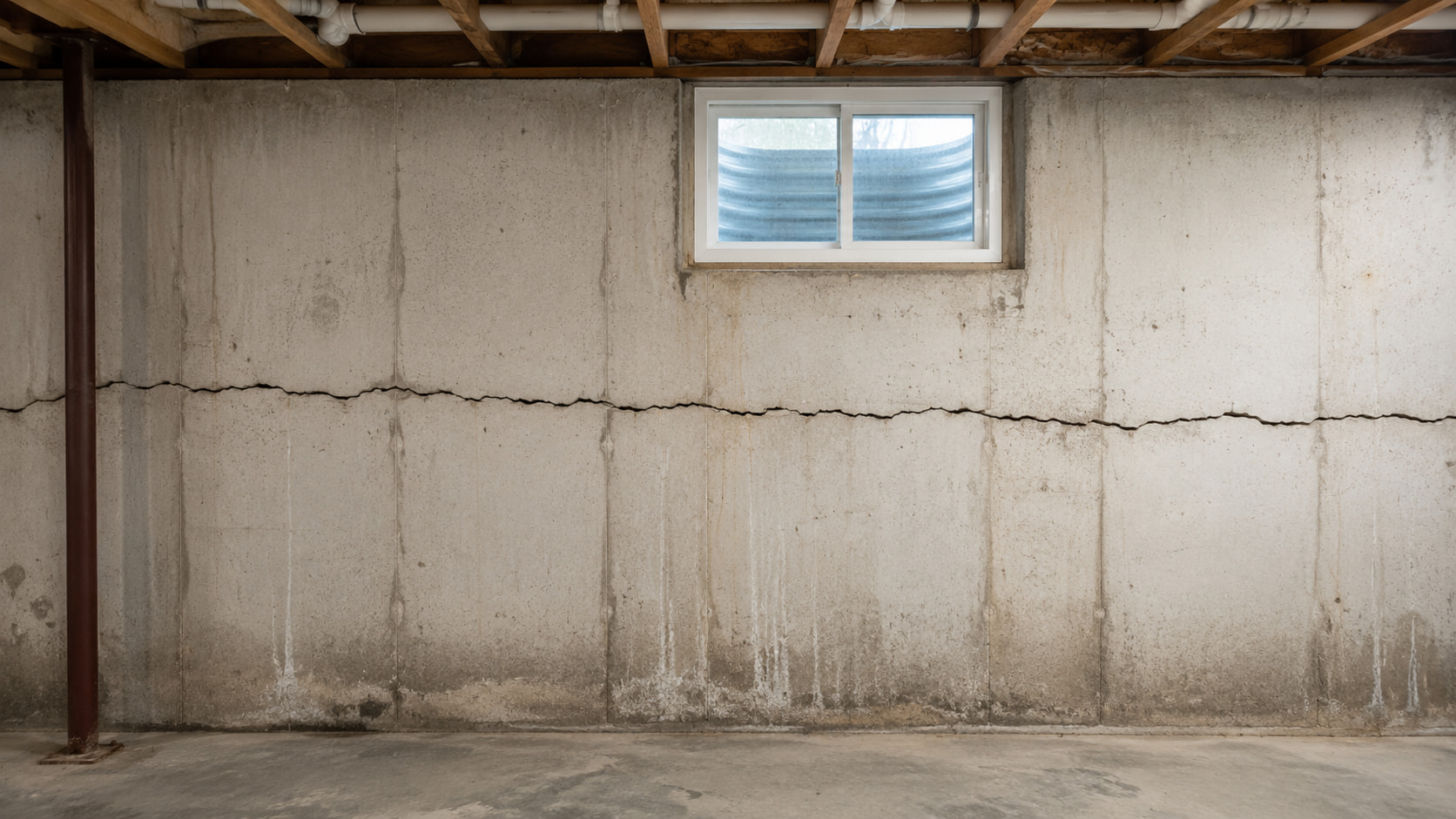
Horizontal cracks signal active bending under soil pressure and require stabilization before sealing. Once the wall is reinforced with carbon fiber, steel, or anchors, the crack is closed using injection methods matched to the movement pattern, restoring both structural integrity and a watertight surface.

Commercial Wall Reinforcement

Commercial basement wall stabilization & repair handles the heavier loads, longer spans, and stricter code requirements common in commercial structures. Engineered solutions combining carbon fiber, structural steel, and load-distributed anchoring systems are designed around the building’s blueprints and surrounding soil conditions.

Sill Plate and Joist Connection Repair

Many wall failures trace back to a compromised connection between the wall top and the framing above. Repair reinforces the sill plate, secures the wall-to-joist tie, and ensures load transfer points are intact, so any stabilization system installed below has a solid anchor point at the top.

Why Bowing and Cracking Foundation Walls Cannot Be Ignored

A foundation wall is one of the few parts of a home that does not heal on its own. Every additional millimeter of inward movement permanently weakens the concrete and adds load to the surrounding structure. Hairline cracks that look harmless are often the first visible sign of deeper bending, and waiting until the wall is visibly bowed shifts the project from straightforward reinforcement into urgent structural repair.

Our Process:

Free Estimate

Critical Warning Signs Your Basement Walls Need Stabilization

Foundation walls show stress in clear physical signs long before they fail. Watching for these warning indicators is the difference between a manageable reinforcement project and a major structural repair. The two clearest signs are described below.

Horizontal Cracks Across the Middle of the Wall

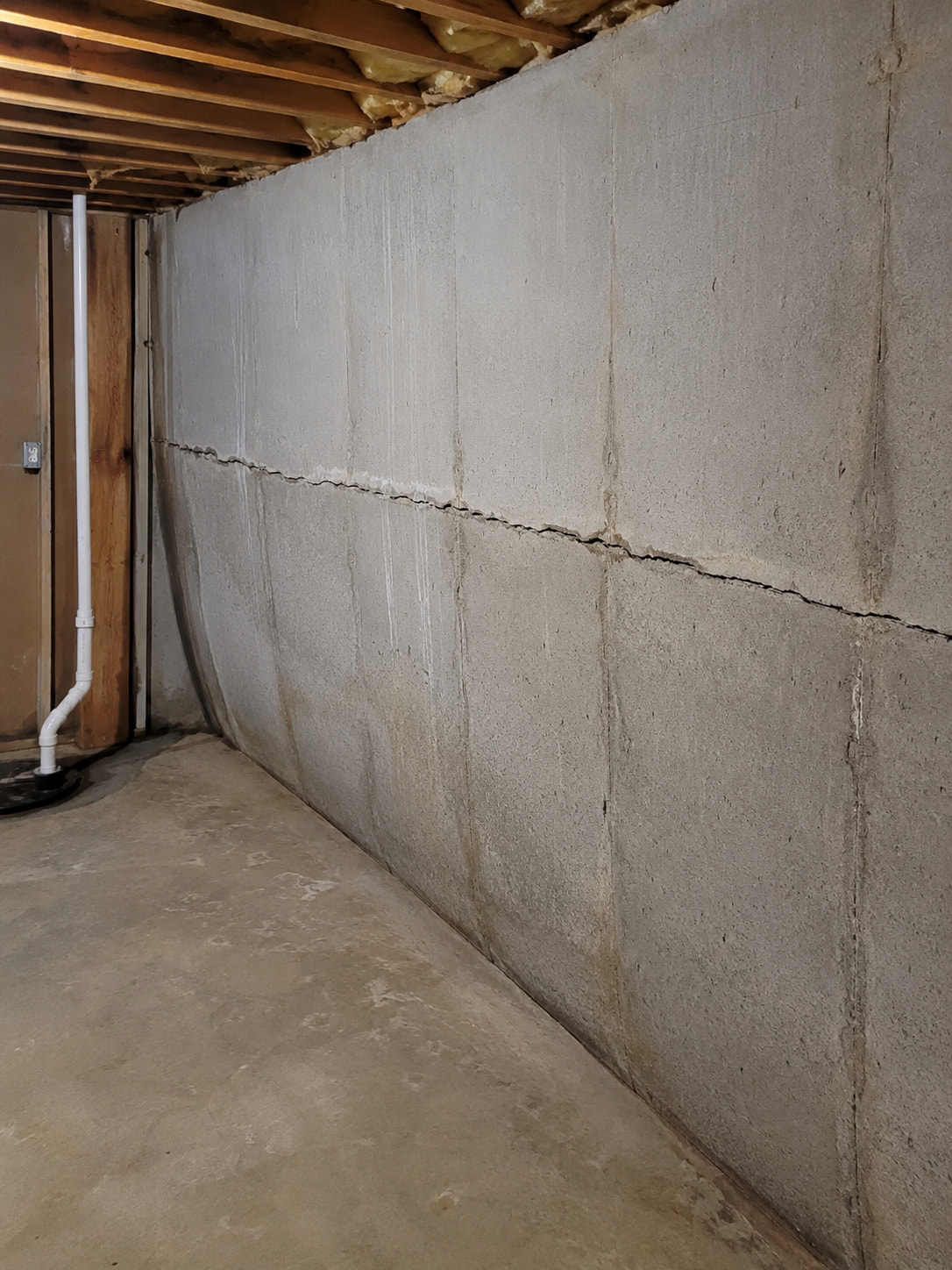
A horizontal crack running across the middle third of a basement wall is the most reliable indicator of active inward bending. The crack forms at the point of maximum stress where soil pressure outside is bending the wall like a bow. Unlike vertical cracks which often relate to settlement, horizontal cracks always point to lateral pressure and require reinforcement before any sealing or finishing work begins.

Visible Bowing, Bulging, or Wall Tilt

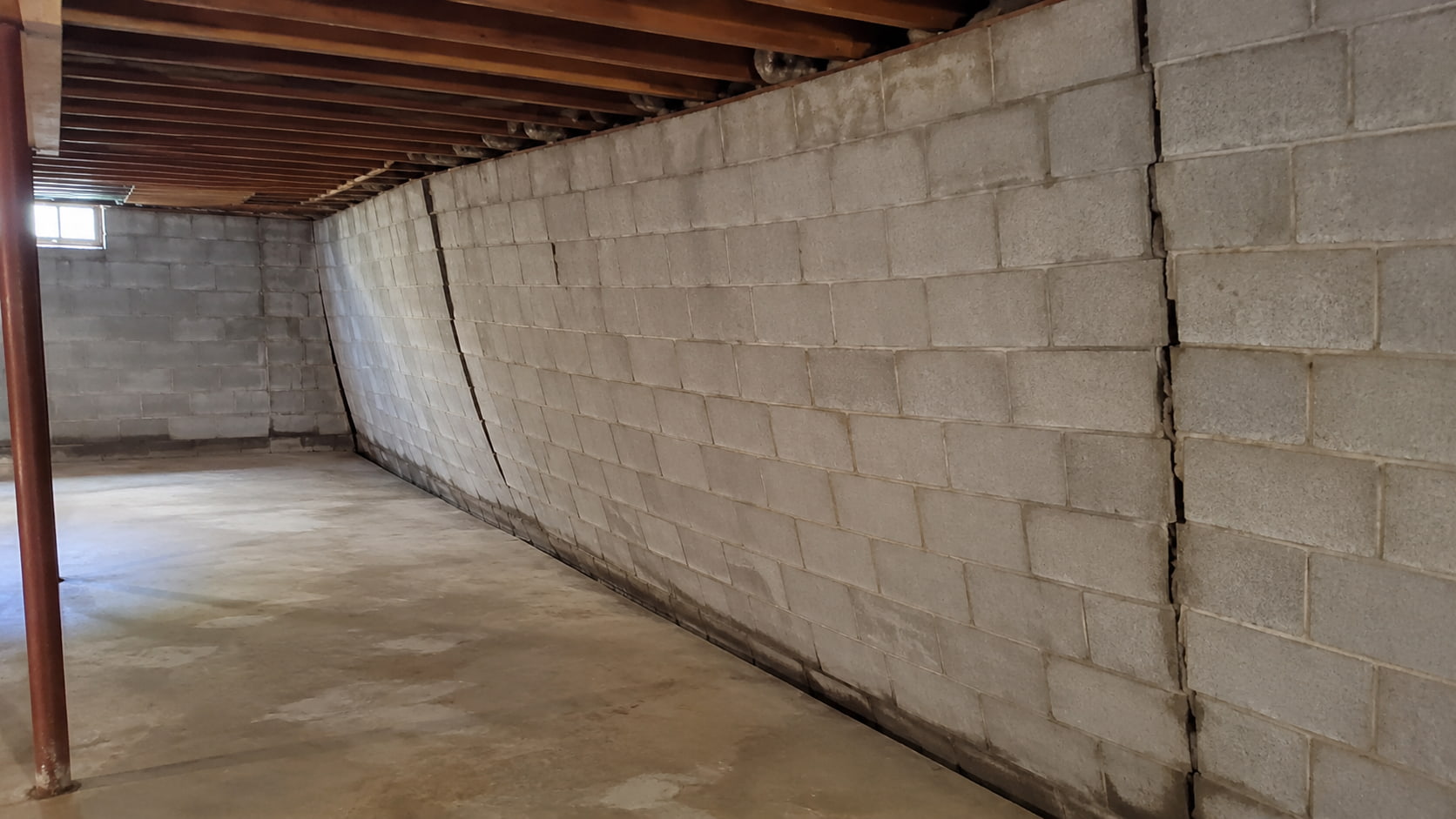
A wall that visibly curves inward, leans toward the floor, or shows a measurable gap between the top of the wall and the floor framing has already moved past the early warning stage. Even small amounts of bowing, often as little as half an inch, indicate that the wall has lost its original stiffness. Without stabilization, the deflection continues and accelerates over time.

Basement Wall Stabilization Coverage Across Southeastern Michigan

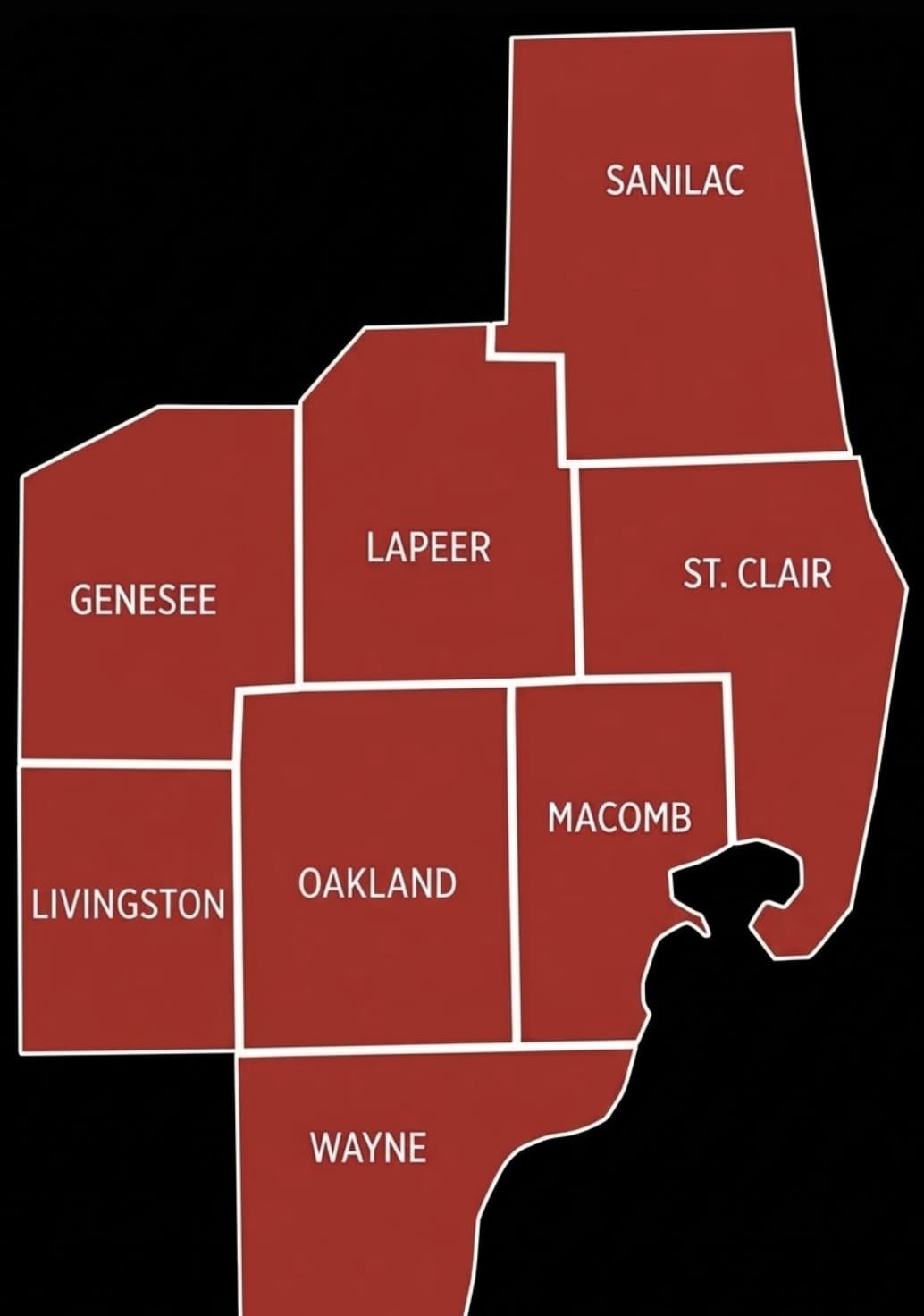
Service coverage extends across the full southeastern Michigan region, supporting homeowners and commercial property owners dealing with the same recurring conditions of clay-heavy soil, deep frost penetration, and seasonal moisture cycles that drive most foundation wall failures:

  • Macomb County
  • Oakland County
  • Wayne County
  • Genesee County
  • Lapeer County
  • Livingston County
  • St. Clair County
CONTACT US

Frequently Asked Questions

How do I know which stabilization method my wall needs?

Method selection depends on how far the wall has deflected and what it is made of. Walls under two inches of movement usually qualify for carbon fiber. Walls past that point typically need steel bracing or wall anchors. An on-site inspection measures deflection and confirms which system delivers the right strength for the actual condition.

Can a bowed wall be straightened back to its original position?

In some cases, yes. Wall anchor systems are designed to be tightened gradually over time, applying steady tension that can pull a bowed wall back toward plumb. Walls reinforced with carbon fiber or steel beams are locked in their current position rather than straightened, which still prevents future damage but does not reverse existing movement.

Will carbon fiber really hold against heavy soil pressure?

Carbon fiber has roughly five to ten times the tensile strength of steel by weight, which makes it more than capable of resisting the lateral forces basement walls actually face. The key is proper installation, since the bond between the strap and the wall is what carries the load. Done correctly, the system is permanent.

How long does the work take?

Most stabilization projects are completed in one to two days. Carbon fiber installations typically finish in a single day. Steel beam installations and wall anchor systems take longer due to drilling, excavation for anchor placement, and load testing. A clear timeline is provided after the inspection.

Does the installation require tearing out finished walls?

Some access is needed along the failing wall to install the reinforcement. Carbon fiber requires only a clean strip of bare concrete the width of the strap. Steel beams and wall anchors need more clearance. Finished walls and ceilings are restored or planned around during installation to minimize disruption.

Is stabilization a permanent solution?

Yes, when the right system is matched to the wall and properly installed. Carbon fiber, steel I-beams, and wall anchors are all engineered for the lifetime of the structure. Carbon fiber does not corrode, steel is treated for moisture exposure, and wall anchors stay tensioned in stable soil indefinitely.

Can these systems be installed in a commercial basement?

Yes. Commercial basement wall stabilization & repair uses the same core methods scaled for larger walls, heavier loads, and code-specific requirements. Engineered solutions combining structural steel, high-grade carbon fiber, and load-distributed anchors are designed around the specific building and soil conditions on site.

Do I need to fix the water problem before stabilization?

Stabilization addresses structural movement, not water entry. If the wall is leaking, both issues need attention. The reinforcement is installed first to secure the wall, then waterproofing and drainage work seal the entry points and remove the moisture source feeding ongoing deterioration.

What happens if I delay the repair?

Foundation walls do not stabilize on their own. Untreated bowing accelerates as soil pressure cycles each season, and walls past three inches of deflection often require partial rebuilding rather than reinforcement. Costs rise sharply once the wall crosses that threshold.

Will stabilization affect my home insurance or resale?

Documented wall stabilization typically improves both. Inspectors view a properly reinforced foundation as a corrected and stable structural element rather than as ongoing damage. Insurance treatment varies by policy, but most carriers prefer a stabilized wall over an untreated one with active movement.