

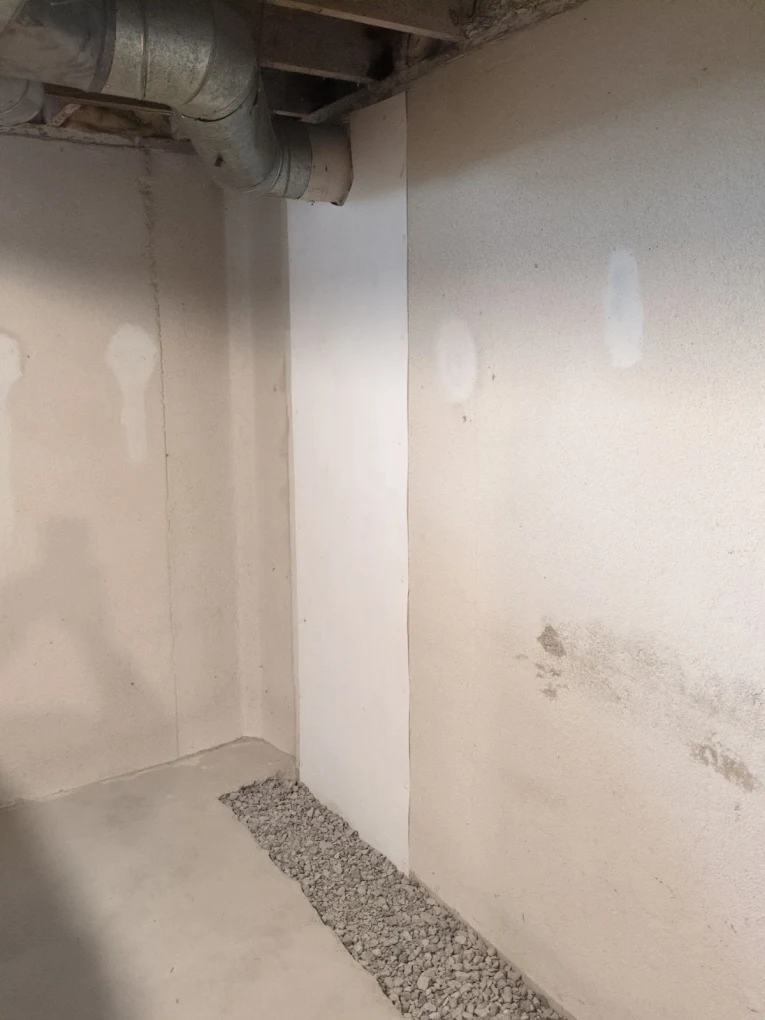
Yes. If water can reach your basement at any point in the year, waterproof it before you finish it. Drywall, carpet, insulation, and wood framing are made for dry rooms, and the basement is the one room in the house surrounded by wet soil.
The math makes the case on its own. According to Angi’s 2026 cost data, finishing a basement costs about $32,000 on average, with most projects running $15,000 to $75,000. Waterproofing adds roughly $4,400 on average. Spending a small slice of the budget to protect the rest is an easy call.
In Southeastern Michigan, dense clay soil holds water against foundation walls, and every spring thaw pushes groundwater higher. If you’re planning a remodel, the team at bdry michigan can inspect your basement before the first stud goes up.
Why Waterproofing Comes Before Finishing
Waterproofing comes first because once the walls are covered, you lose the ability to see water coming in.
On a bare concrete wall, a leak shows up as a dark stain or a small puddle, and you deal with it. Behind drywall, the same leak soaks into the bottom plate, the insulation, and the back of the drywall. Nobody notices until the room smells musty or a baseboard starts to swell.
Timing matters too. The EPA notes that when wet materials are dried within 24 to 48 hours, mold usually won’t grow. Wet insulation sealed inside a finished wall almost never dries that fast.
Think of it like painting a car before fixing the rust. The new finish looks great for a while, but the problem underneath keeps spreading, and eventually you pay to fix the rust and repaint.
Waterproofing First vs. Fixing Leaks After Finishing
Here’s how the two paths usually compare:
| Factor | Waterproof Before Finishing | Fix Leaks After Finishing |
| Access to walls and floor | Open concrete, easy to reach | Drywall, baseboards, and flooring removed first |
| Total cost | Waterproofing only | Waterproofing plus tear-out and rebuilding |
| Mold risk | Low, problems stay visible | Hidden behind walls until odor or stains appear |
| Disruption | Finished rooms are never touched | Finished space out of use during repairs |
| Resale | Dry history and a warranty to show buyers | Water damage history buyers will ask about |
Interior drainage systems are installed along the base of the foundation walls, which is exactly where finished walls, trim, and flooring sit. That’s why fixing water after finishing costs so much more than preventing it.
How to Tell If Your Basement Needs Waterproofing Before You Finish
Most basements that need waterproofing show at least one warning sign. Look for:
- Water stains or tide lines on the walls or floor
- White, chalky deposits (efflorescence) on concrete or block
- A musty smell that comes and goes with the weather
- Dampness where the wall meets the floor after heavy rain
- Cracks in the walls or floor, especially ones that seep
- Peeling paint or bubbling waterproofing paint
- Rust on appliance legs or mildew on stored boxes
For a closer look at each one, see these signs of water damage in a basement.
Try the Plastic Sheet Test
A plastic sheet test is a simple way to check whether moisture is moving through your concrete. It’s based on ASTM D4263, a standard method for detecting moisture in concrete.
Tape an 18-inch square of clear plastic sheeting tightly to the wall or floor, sealing all four edges. Leave it in place for at least 16 hours, then check it:
- Moisture or darker concrete under the plastic: water is coming through the foundation, and waterproofing is needed.
- Droplets on the room side of the plastic: humid indoor air is condensing on cool concrete, which points to a humidity problem.
- Dry on both sides: a good sign, but not a final answer.
One honest caveat: a dry test in August doesn’t clear a basement that leaks every April. Repeat the test after a heavy rain and during the spring thaw, when groundwater pressure peaks.
What Waterproofing a Basement Before Finishing Involves
Waterproofing before finishing means stopping water at the foundation, not just covering it up. A complete plan usually covers four areas.
Repair Cracks and Wall Movement
Cracks should be sealed before framing hides them. Vertical hairline cracks are common and usually minor. Horizontal cracks, stair-step cracks in block, or walls that bow inward point to soil pressure.
Those need foundation crack repair or basement wall stabilization before any finishing starts. Framing over a moving wall doesn’t stop the movement. It only hides it.
Install Interior Drainage and a Sump Pump
An interior drainage system is the most reliable way to keep groundwater off a basement floor. With interior basement waterproofing, a channel is installed along the inside perimeter of the floor. In block foundations, weep holes are drilled so water trapped inside the block cores can drain out.
The channel carries water to a sump pit, where a pump sends it outside. If your basement doesn’t have a reliable pump, sump pump installation belongs on the list before finishing.
Waterproofing paint isn’t a substitute. Surface sealers can’t hold back water pushing through the wall under pressure, which is why waterproofing paint often fails to fix a basement leak.
Manage Water Outside the House
A lot of basement water starts at the roofline. Clean the gutters, extend downspouts several feet from the foundation, and make sure the soil slopes away from the house.
These fixes are inexpensive and reduce how much water reaches the walls in the first place. Many of the most common causes of wet basements in Michigan homes start with exactly these issues.
Control Humidity
Even a leak-free basement can be damp. The EPA recommends keeping indoor humidity below 60 percent, ideally between 30 and 50 percent. A dehumidifier or a basement ventilation system keeps finished materials from absorbing moisture from the air.
How to Finish a Basement So It Stays Dry
Once the basement is dry, the way you build the finished space decides whether it stays that way.
- Skip the fiberglass and plastic sandwich. The Department of Energy’s Building America Solution Center warns that plastic sheeting over fiberglass insulation on basement walls traps condensation, leading to ruined insulation, mold, and rotted framing.
- Use foam against the concrete. Rigid foam board or closed-cell spray foam placed directly on the wall keeps warm, humid air away from cold concrete. Building Science Corporation lists 2 inches of extruded polystyrene (R-10) as one workable option.
- Keep wood off the concrete. Use a pressure-treated bottom plate with a foam sill gasket underneath.
- Pick moisture-tolerant materials. Luxury vinyl plank, tile, and mold-resistant drywall handle a damp day far better than carpet and standard paper-faced drywall.
- Leave access to the sump pit. Never bury the pump under flooring or behind a closet wall. It needs regular service and eventual replacement.
Timing counts as well. When an interior drainage system is installed, new concrete is poured over the channel, and B-Dry’s installation notes say it can take 30 to 45 days to cure completely. Plan your flooring schedule around that.
Should You Still Waterproof If Your Basement Has Never Leaked?
If you’re about to spend five figures finishing it, get it inspected first, even if it has never leaked.
“Never leaked” often means “never leaked while someone was looking.” Water can seep in during a spring thaw or an overnight storm and dry up before anyone goes downstairs.
Clay soil across Macomb, Oakland, and Wayne counties holds water against foundations for days after heavy rain, and older homes may have drain tile that clogged decades ago. A professional inspection costs little compared to the finishing budget. If the basement is dry, you finish with confidence. If it isn’t, you find out while the walls are still bare.
Conclusion
Waterproofing before finishing is the cheapest protection a basement remodel can have. Repair cracks, install drainage and a sump pump where needed, manage outside water, control humidity, and then build with materials that tolerate moisture.
Interior waterproofing can be installed year-round, so winter is a smart time to get it done and have the basement ready for finishing by spring. B-Dry has waterproofed basements across Southeastern Michigan since 1981 and backs its systems with a transferable limited lifetime warranty. To find out where your basement stands, schedule a free estimate before the remodel begins.
FAQs
Should I waterproof my basement before finishing it?
Yes. Waterproofing before finishing protects drywall, insulation, framing, and flooring from water damage and mold. Fixing a leak after finishing usually means tearing out finished walls and floors along the foundation.
How much does it cost to waterproof a basement before finishing?
According to Angi’s 2026 data, waterproofing adds about $4,400 on average, or roughly $5 to $10 per square foot. The final cost depends on the method, the size of the basement, and the condition of the walls.
Can you waterproof a basement after it’s finished?
Yes, but it’s harder and more expensive. Interior drainage runs along the base of the walls, so drywall, trim, and flooring near the perimeter often need to be removed and replaced.
Do I need a vapor barrier on basement walls before finishing?
Avoid plastic sheeting over fiberglass insulation, which can trap moisture inside the wall. Rigid foam board or closed-cell spray foam placed directly against the concrete is the safer choice.
Is waterproofing paint enough before finishing a basement?
No. Waterproofing paint can reduce minor dampness, but it can’t stop water pushed through the wall by groundwater pressure. It often peels or bubbles when the underlying water problem remains.
How long after waterproofing can I finish my basement?
It depends on the work done. When a drainage system is installed, the new concrete over the channel can take 30 to 45 days to fully cure, so confirm timing with your contractor before installing flooring.
What humidity level should a finished basement have?
The EPA recommends keeping indoor humidity below 60 percent, ideally between 30 and 50 percent. A dehumidifier or ventilation system helps maintain that range year-round.
Can basement waterproofing be done in the winter in Michigan?
Yes. Interior waterproofing doesn’t require outdoor excavation, so it can be installed year-round. Winter installation also leaves the basement protected before the spring thaw.
