


You did everything the label said. You cleaned the wall, applied the coats, let it cure, and waited. Then it rained, and your basement was wet again. Maybe the paint bubbled. Maybe water pushed right through a crack you thought was sealed. Maybe it held for a season and then gave out entirely.
This is one of the most common and frustrating experiences homeowners face, and it happens because waterproofing paint is fundamentally the wrong solution for what is actually a water pressure and drainage problem.
If you’re dealing with a persistent basement leak and want a real fix, Basement Waterproofing in Southeastern Michigan starts with understanding why surface treatments fail in the first place.
What Waterproofing Paint Actually Is
Most homeowners assume waterproofing paint is a specialized, heavy-duty product engineered for water intrusion. In reality, it is a thicker version of standard acrylic paint with hydrophobic additives mixed in.
It is designed to repel minor surface dampness. That is the full extent of what it can do.
It is not an engineered waterproofing system. It is not a structural solution. It is a coating applied to the interior surface of a wall that is already being pushed against by thousands of pounds of water pressure from the outside.
The product manufacturers themselves will tell you that cracks and active leaks must be repaired before the paint is applied. Which raises an obvious question: if you have already permanently fixed the source of the water intrusion, what exactly is the paint adding?
The Real Reason Your Basement Is Leaking
Paint failed because it was never capable of stopping what was actually causing your leak. Understanding the true source of basement water intrusion is the only way to understand why surface coatings are irrelevant to fixing it.
Hydrostatic Pressure
This is the most important concept most homeowners have never heard of, and it is responsible for the majority of basement leaks.
Water weighs more than 60 pounds per cubic foot. When soil around your foundation becomes saturated after heavy rain, snowmelt, or a rising water table, that saturated soil exerts enormous outward force against your foundation walls. At just 10 feet of depth, studies indicate saturated soil can exert over 600 pounds per square foot of pressure against your foundation.
Waterproofing paint can only withstand approximately 12 pounds of pressure per square inch before it fails. The force working against your foundation walls is not even in the same category.
At these pressure levels, water does not politely stop at a painted wall. It finds the path of least resistance, which is almost always a crack, a porous section of concrete block, the joint where your floor meets the wall, or a gap around a pipe penetration. No surface coating applied from the inside stands a meaningful chance against this kind of force.
Porous Concrete and Concrete Block
Poured concrete and concrete block are not naturally waterproof. They are porous materials, and water under hydrostatic pressure will migrate through them slowly even without any visible crack.
Painting the interior surface of a porous wall does not stop this migration. It intercepts the moisture at the surface, traps it inside the wall material, and holds it there while continued pressure and seepage build up behind the paint film.
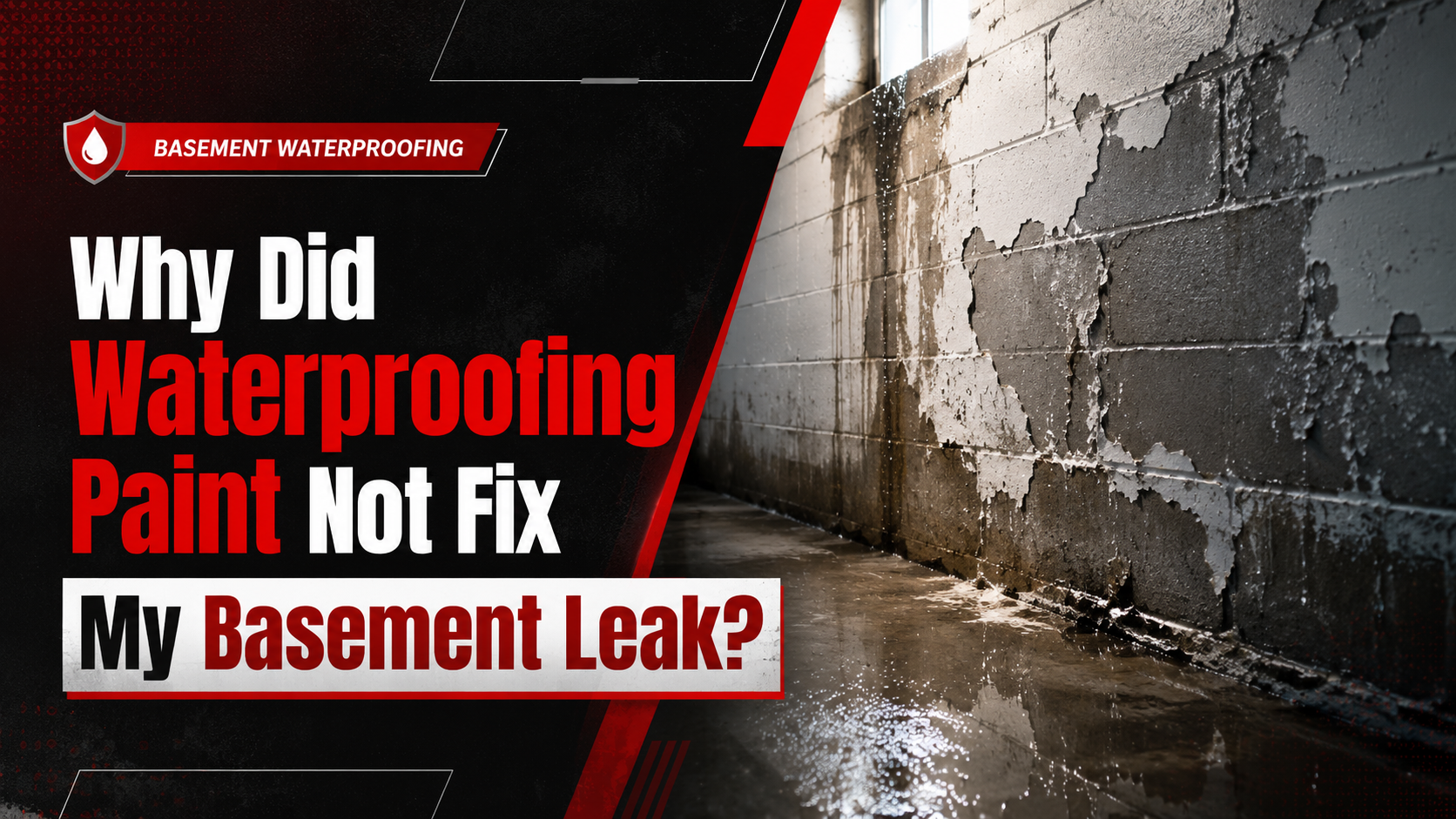
The result is predictable. Paint bubbles form as moisture accumulates behind the film. Those bubbles expand, the paint lifts off the wall, and it peels in sheets. By the time the paint has visibly failed, moisture has been sitting inside your concrete for months, accelerating deterioration, rusting any embedded rebar, and creating conditions for mold growth.
Foundation Cracks
Cracks in foundation walls are a direct pathway for pressurized water. They form for several reasons:
- Normal concrete shrinkage during curing
- Soil settlement beneath and around the foundation
- Freeze-thaw cycles that expand and contract the concrete seasonally
- Hydrostatic pressure itself cracking the wall over time
- Tree root pressure against exterior foundation walls
A coat of paint applied over a crack does not repair the crack. It bridges the gap with a thin film of dried acrylic. When water pressure builds behind that crack again, the film fails almost immediately because it has no structural connection to the concrete on either side.
The Floor-Wall Joint
One of the most common entry points for basement water is the joint where the floor slab meets the foundation wall. This joint is a construction cold joint, meaning the floor was poured separately from the walls and the two never fully bonded together.
As hydrostatic pressure builds under the slab, water seeps upward through this joint and appears along the perimeter of your basement floor. Waterproofing paint is typically applied to walls, not floors, and even if it were applied to the floor surface, it would not stop upward water pressure pushing through from beneath.
Why Waterproofing Paint Makes Things Worse
This is the detail most homeowners find genuinely surprising. In many situations, applying waterproofing paint to a leaking basement wall does not just fail to help. It actively makes the eventual problem more costly to fix.
When paint holds back water temporarily, it creates an environment where moisture is trapped inside the wall material with nowhere to go. This accelerates:
- Concrete deterioration from the inside out
- Corrosion of any steel rebar reinforcing the foundation
- Mold growth behind the paint film where it cannot be detected or treated
- Mineral salt migration that eventually destroys the paint bond
By the time the paint peels and the damage becomes visible, the concrete itself may have deteriorated significantly, and remediation now includes mold treatment as well as waterproofing. A problem that might have cost $5,000 to address properly at the start can easily cost $8,000 to $12,000 or more once hidden mold remediation is added to the scope.
What Actually Works
The reason professional waterproofing systems are effective where paint is not comes down to a fundamental difference in approach. Paint tries to block water at the wall surface. Professional systems manage water before it reaches the living space and relieve the pressure that drives it in.
Interior Drainage Systems
An interior perimeter drain system, commonly called a French drain or drain tile system, is installed at the base of the foundation wall where the floor meets the footing. Rather than trying to stop water from entering, it captures water as it comes through the wall or up through the floor-wall joint and channels it to a sump pit.
This approach works because it relieves hydrostatic pressure rather than resisting it. Water has a managed path to follow, which keeps it from building up and pushing through at weaker points.
Sump Pump
A properly sized sump pump collects the water channeled by the drainage system and pumps it out of the basement and away from the foundation. A battery backup system ensures the pump continues working during power outages, which is exactly when the heaviest rain is occurring.
This combination of interior drain and sump pump is the most common and cost-effective permanent solution for active basement water intrusion.
Exterior Waterproofing Membrane
For situations where the exterior approach is appropriate, excavating around the foundation and applying a true waterproof membrane directly to the outside of the wall addresses the source of water intrusion before it ever reaches the concrete.
This is a more involved and expensive solution, but it is the most direct way to stop water from entering the wall material at all. It is typically reserved for new construction, serious structural situations, or homes where interior access is limited.
Foundation Crack Repair
Active cracks that are channeling water need to be repaired through injection, not painted over. Polyurethane foam injection or epoxy injection fills the crack from the inside, bonding to the concrete and creating a seal that moves with minor structural shifts rather than cracking again.
This is a different category of repair entirely from covering a crack with paint. The material bonds into the crack rather than bridging over it, and the result is structurally integrated rather than sitting on the surface waiting to peel.
Exterior Grading and Drainage
Sometimes a significant portion of a basement moisture problem can be reduced by correcting how water behaves at the surface. If the ground slopes toward the foundation instead of away from it, rainwater flows directly toward the base of your walls.
Correcting the grading so the soil slopes away from the foundation for at least six feet in every direction reduces the volume of water saturating the soil immediately adjacent to your walls. Cleaning gutters, extending downspouts, and ensuring they discharge away from the foundation address the same problem from above.
These measures alone rarely eliminate an active leak, but they reduce the volume of water the drainage system needs to manage and extend the life of any waterproofing investment.
The Cost of Doing It Wrong First
The conversation about waterproofing paint always comes back to cost. The paint costs $30 to $150 per gallon. A professional waterproofing system costs $3,000 to $15,000 or more depending on the scope and size of the basement.
The math looks obvious until you factor in what happens when the paint fails.
Repeated paint applications every one to three years add up. Mold remediation when hidden moisture is finally discovered adds $1,000 to $5,000. Concrete deterioration that requires repair before waterproofing can be installed adds more. And throughout this period, moisture is present in the basement air, affecting indoor air quality, damaging stored belongings, and potentially affecting the floor structure above.
The homeowner who installs an interior drainage system and sump pump at the beginning, rather than after two or three failed paint attempts, almost always spends less in total over a ten-year period.
Signs You Need Professional Waterproofing, Not Paint
If you’re trying to determine whether a paint-based approach has any role in your situation, these signs indicate you have crossed into territory where professional assessment and a proper drainage solution are needed:
- Water appears along the floor-wall joint or seeps upward through the floor
- Cracks in foundation walls, especially horizontal cracks which indicate serious pressure
- White powder (efflorescence) on foundation walls, which indicates ongoing water migration through concrete
- Musty odors that persist despite cleaning and dehumidification
- Water appears during or shortly after heavy rainfall or snowmelt
- Previously applied waterproofing paint is bubbling, peeling, or flaking
- Water appears in multiple locations rather than one concentrated spot
Any one of these, particularly the floor-wall joint seepage or horizontal cracking, indicates hydrostatic pressure that no surface coating can address.
The Bottom Line
Waterproofing paint failed because it was not designed to solve the problem your basement actually has. It is a surface coating. Your leak is a drainage and pressure problem that originates outside your foundation, works its way through porous concrete or cracks, and enters your basement because there is no system in place to relieve the pressure or redirect the water.
The fix is not a better paint or more coats. The fix is a system that manages water the way water actually moves: through drainage, collection, and removal.
If your basement has leaked through paint once, it will leak through paint again. The only variable is how much damage accumulates in the meantime.
FAQs
Why did waterproofing paint stop working after one season?
Waterproofing paint can hold back minor surface dampness temporarily, but it cannot withstand sustained hydrostatic pressure from saturated soil outside your foundation. Once moisture builds up behind the paint film, it lifts the coating off the wall, causing bubbling and peeling. The paint didn’t fail because it was applied wrong; it failed because it was the wrong solution for the problem.
Can waterproofing paint seal foundation cracks?
No. Paint bridges over a crack rather than repairing it. When water pressure builds behind the crack again, the thin paint film breaks almost immediately because it has no structural bond to the concrete on either side. Foundation cracks require polyurethane or epoxy injection to create a seal that is actually integrated into the concrete.
What is hydrostatic pressure and why does it matter for basement leaks?
Hydrostatic pressure is the force that water-saturated soil exerts against your foundation walls. Water weighs more than 60 pounds per cubic foot, and saturated soil can exert over 600 pounds per square foot of pressure at depth. Waterproofing paint can only withstand about 12 pounds of pressure per square inch before it fails, which means the force driving your basement leak and the force the paint can resist are not even close to comparable.
What is the correct fix for a leaking basement?
The most effective permanent solutions are interior drainage systems (perimeter French drains) that capture water at the floor-wall joint and channel it to a sump pump for removal. This approach relieves hydrostatic pressure rather than trying to block it. For appropriate situations, exterior waterproof membranes applied to the outside of the foundation wall stop water before it enters the concrete.
Does waterproofing paint make basement problems worse?
In many cases, yes. When paint temporarily holds back moisture, it traps water inside the concrete wall where it accelerates deterioration, corrodes rebar, and creates hidden conditions for mold growth. By the time the paint peels and the damage is visible, mold remediation costs are added to what would otherwise have been a straightforward waterproofing project.
How do I know if my basement needs professional waterproofing instead of paint?
Key signs include water appearing at the floor-wall joint or seeping up through the floor, horizontal cracks in foundation walls, white powdery deposits (efflorescence) on walls, musty odors that persist despite cleaning, and water appearing consistently after heavy rain or snowmelt. Any of these indicate a pressure or drainage problem that professional waterproofing systems are required to address.
Is professional basement waterproofing worth the cost?
Yes, consistently. A professional interior drainage and sump pump system typically costs $3,000 to $15,000 depending on basement size and conditions. Homeowners who attempt repeated paint applications instead often spend more in total once mold remediation, concrete repair, and eventual professional waterproofing are all factored in, while living with a moisture problem and damaged air quality throughout the delay.
