

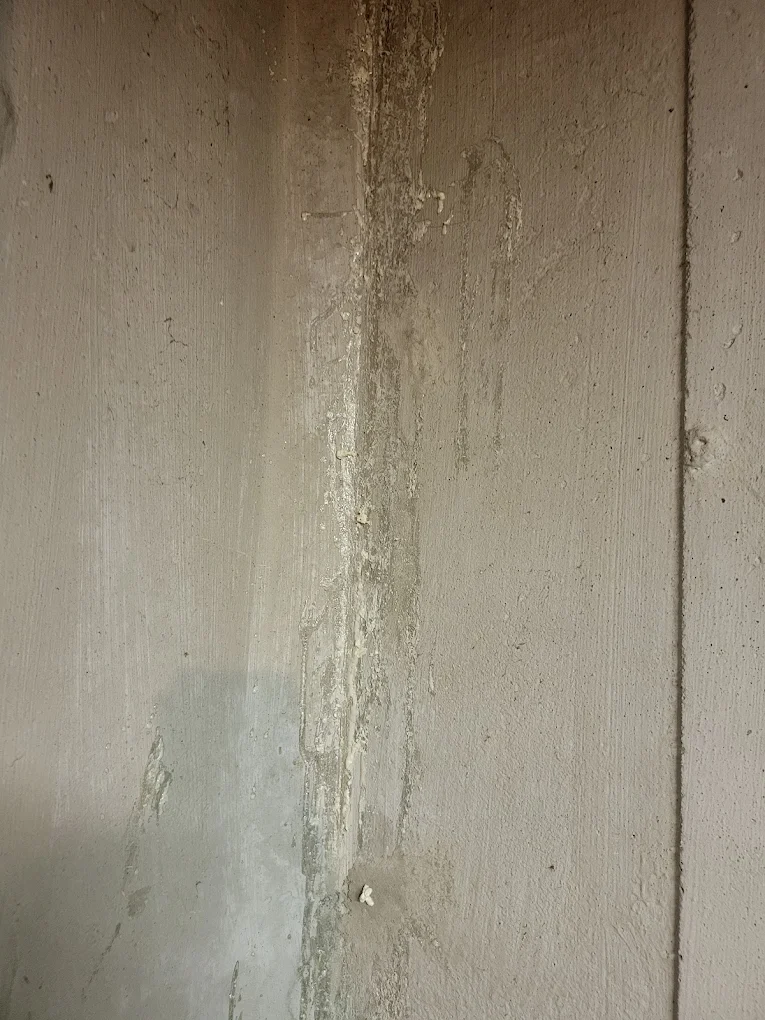
Basement water damage rarely announces itself with a flood. In most homes, it starts small and stays hidden until the damage has already spread through walls, flooring, and stored belongings.
Knowing what to look for early can save you from far more expensive repairs down the road. Here’s what Bdry Michigan recommends homeowners watch for.
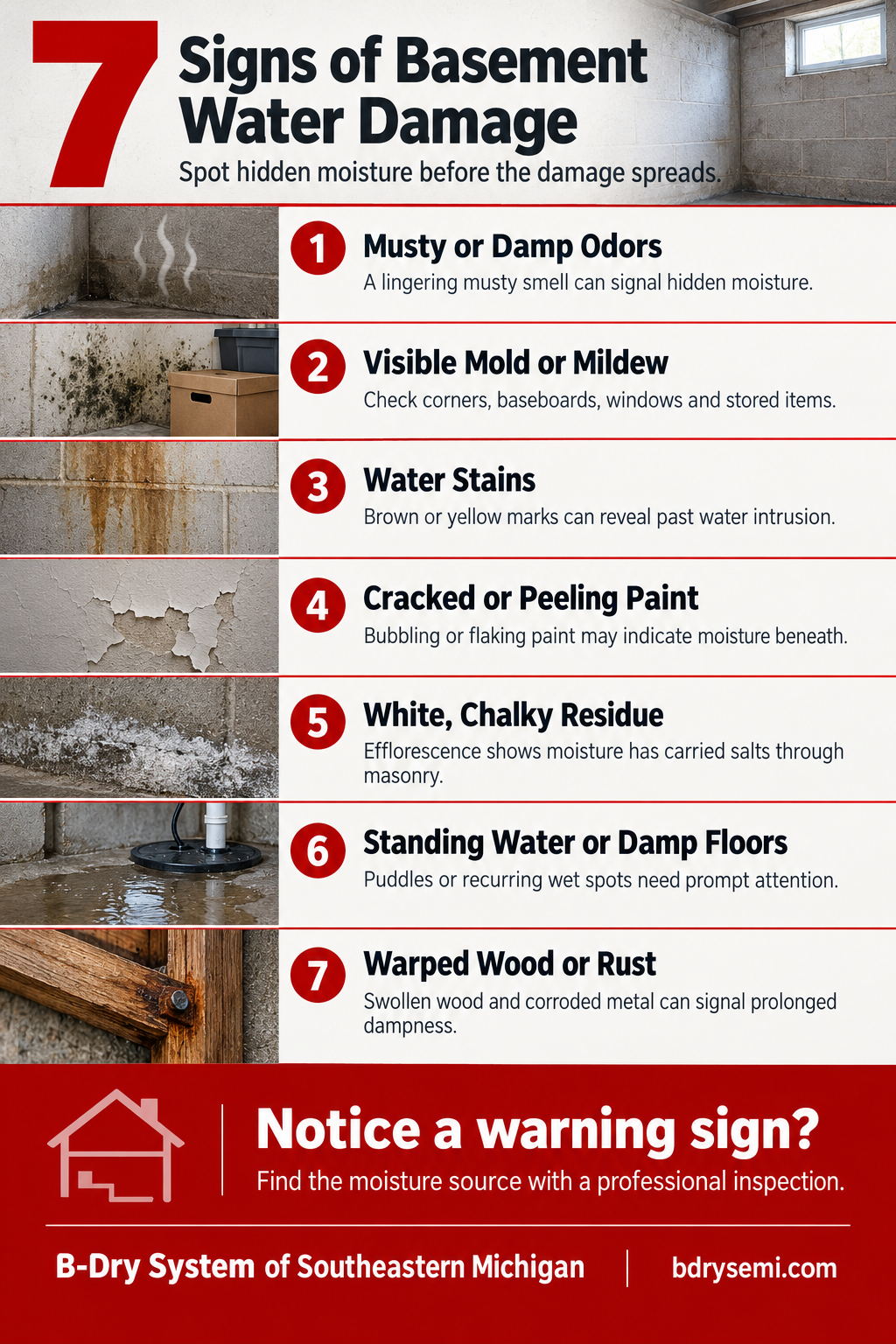
Musty or Damp Odors
A persistent musty smell in your basement is often the first sign of a moisture problem, even before you see any visible damage.
This smell usually comes from mold or mildew growth that has already started in areas you can’t see, such as behind drywall, under carpet, or inside wall cavities.
If the smell lingers regardless of ventilation or cleaning, it typically means there’s an ongoing moisture source that needs to be identified.
Visible Mold or Mildew
Mold growth is one of the clearest signs that water is getting into your basement. It commonly appears as black, green, or white patches on walls, ceilings, or stored items.
Basements provide the exact conditions mold needs to thrive: darkness, limited airflow, and consistent moisture. Once mold appears, it typically means conditions have been favorable for growth for some time.
Common areas to check include:
- Corners where walls meet the floor
- Behind furniture or stored boxes
- Around windows and window wells
- Along baseboards and drywall seams
Water Stains and Discoloration
Brownish or yellowish stains on basement walls or flooring are a strong indicator that water has been present, even if the area is currently dry.
These stains form as water evaporates and leaves behind mineral deposits. Their presence means water has entered the space at some point, and it’s likely to happen again unless the source is addressed.
Cracked or Peeling Paint
Paint that is bubbling, cracking, or peeling on basement walls is often a sign of moisture trapped beneath the surface.
As water works its way through concrete or drywall, it pushes against the paint layer from behind. This creates visible damage on the surface long before the underlying moisture problem becomes obvious in other ways.
Efflorescence on Walls
Efflorescence is a chalky, white, powdery residue that appears on concrete or masonry surfaces. It forms when water moves through the concrete and carries mineral salts to the surface as it evaporates.
While efflorescence itself isn’t structurally damaging, its presence confirms that water is actively passing through your foundation walls. Left unaddressed, this ongoing moisture movement can eventually weaken the concrete over time.
Standing Water or Damp Flooring
Visible pooling water or consistently damp flooring means the problem has moved past early warning signs and into active water intrusion.
This can stem from several sources, including:
- Poor exterior grading directing water toward the foundation
- Cracks in the foundation wall or floor
- A failing or undersized sump pump
- Groundwater pressure during heavy rain or snowmelt
At this stage, Basement Waterproofing in Metro Detroit becomes less of a preventive measure and more of a necessary repair.
Warped Wood or Corroded Metal
Wood framing, shelving, or trim that has started to warp, swell, or soften is a sign of prolonged moisture exposure. Metal fixtures or fasteners that show rust or corrosion point to the same underlying issue.
These materials don’t degrade overnight. Their condition usually reflects weeks or months of consistent dampness in the surrounding air.
Why Early Detection Matters
Basement water damage rarely stays contained. What begins as a small moisture issue tends to spread to insulation, drywall, flooring, and eventually the structural wood framing of the home.
Catching these signs early typically means the fix is simpler and less expensive. Waiting until water damage is obvious often means dealing with mold remediation, structural repair, or full waterproofing systems that could have been avoided with earlier action.
What to Do If You Notice These Signs
If your basement is showing one or more of these warning signs, the next step is identifying the actual source of the moisture rather than just addressing the visible symptoms.
A professional inspection can determine whether the issue is coming from:
- Exterior drainage and grading
- Foundation cracks
- Hydrostatic pressure against the walls
- An inadequate or failing sump pump system
Frequently Asked Questions
What is usually the first sign of water damage in a basement?
A musty odor is typically the earliest sign, often appearing before any visible staining or mold growth.
Is efflorescence dangerous?
Efflorescence itself isn’t harmful, but it confirms that water is moving through your foundation walls, which should be addressed before it worsens.
Can water damage happen without visible flooding?
Yes. Most basement water damage develops gradually through moisture in the air, walls, or soil rather than sudden flooding.
How can I tell if mold in my basement is from water damage?
Mold growth concentrated near walls, corners, or floor joints is usually tied to a moisture source rather than general humidity.
Does cracked paint always mean water damage?
Not always, but in basements it’s a common indicator of moisture trapped behind the surface and should be checked.
What causes standing water in a basement?
Common causes include poor grading, foundation cracks, a failing sump pump, or groundwater pressure during heavy rain.
How quickly does basement water damage spread?
It varies, but consistent moisture can begin affecting drywall, insulation, and wood framing within weeks if left unaddressed.
Should I be worried about a musty smell that comes and goes?
Yes. Even an intermittent smell can indicate an ongoing moisture source that needs to be identified.
Can water damage affect the resale value of my home?
Yes. Visible water damage, mold, or foundation issues are common concerns for buyers and can affect both value and negotiations.
When should I call a professional about basement water damage?
Any time you notice recurring odors, staining, mold, or standing water, it’s worth having the source professionally identified before it worsens.
