

Heavy rain can turn a small foundation crack into a serious basement leak overnight. If you’re dealing with basement leak repair or looking into basement waterproofing in Southeastern Michigan, understanding why water gets in is the first step toward protecting your home. Saturated soil, hydrostatic pressure, and aging foundations are the leading causes of basement water intrusion across the region, and each one has a specific, fixable solution.
This guide explains why water enters basements after heavy rainfall in Southeastern Michigan, what makes local homes especially vulnerable, and which long-term solutions actually work. If your basement is wet, the team at B-Dry System of Southeastern Michigan has been solving these problems for decades and they can solve yours too.
Why Heavy Rain Causes Basement Leaks
When an inch or more of rain falls in a short period, the surrounding soil can’t absorb it fast enough. That excess water saturates the ground around your foundation and builds up. Because your basement sits below grade, it becomes the path of least resistance for all that accumulated groundwater.
The relationship is direct: the more rain, the more saturated the soil, and the greater the pressure pushing water toward your foundation walls and floor. This cycle repeats every spring across St. Clair County, Sanilac County, and the surrounding region — which is why so many homeowners describe a wet basement as a seasonal problem rather than a one-time event, and why basement leak repair is such a common springtime request.
How Hydrostatic Pressure Forces Water In
Hydrostatic pressure is the force exerted by water-saturated soil pressing against your foundation walls and floor. Once the soil around your home is fully saturated, that groundwater has nowhere to go, so it pushes, sideways against basement walls and upward through the floor.
Even a hairline crack is enough for hydrostatic pressure to force water through. If your footing drain or drain tile system has collapsed or clogged with sediment over the decades, nothing is relieving that pressure, and the result is a wet basement after every significant storm. In severe, long-term cases, built-up pressure can also cause bowing basement walls, a structural warning sign that needs immediate attention.
Common Entry Points for Water
A few issues account for most basement leak repair calls in Southeastern Michigan, and each one calls for a slightly different repair approach:
- Foundation wall cracks: Concrete and block foundations expand and contract with every freeze-thaw cycle, and over time this creates cracks that let water in under pressure.
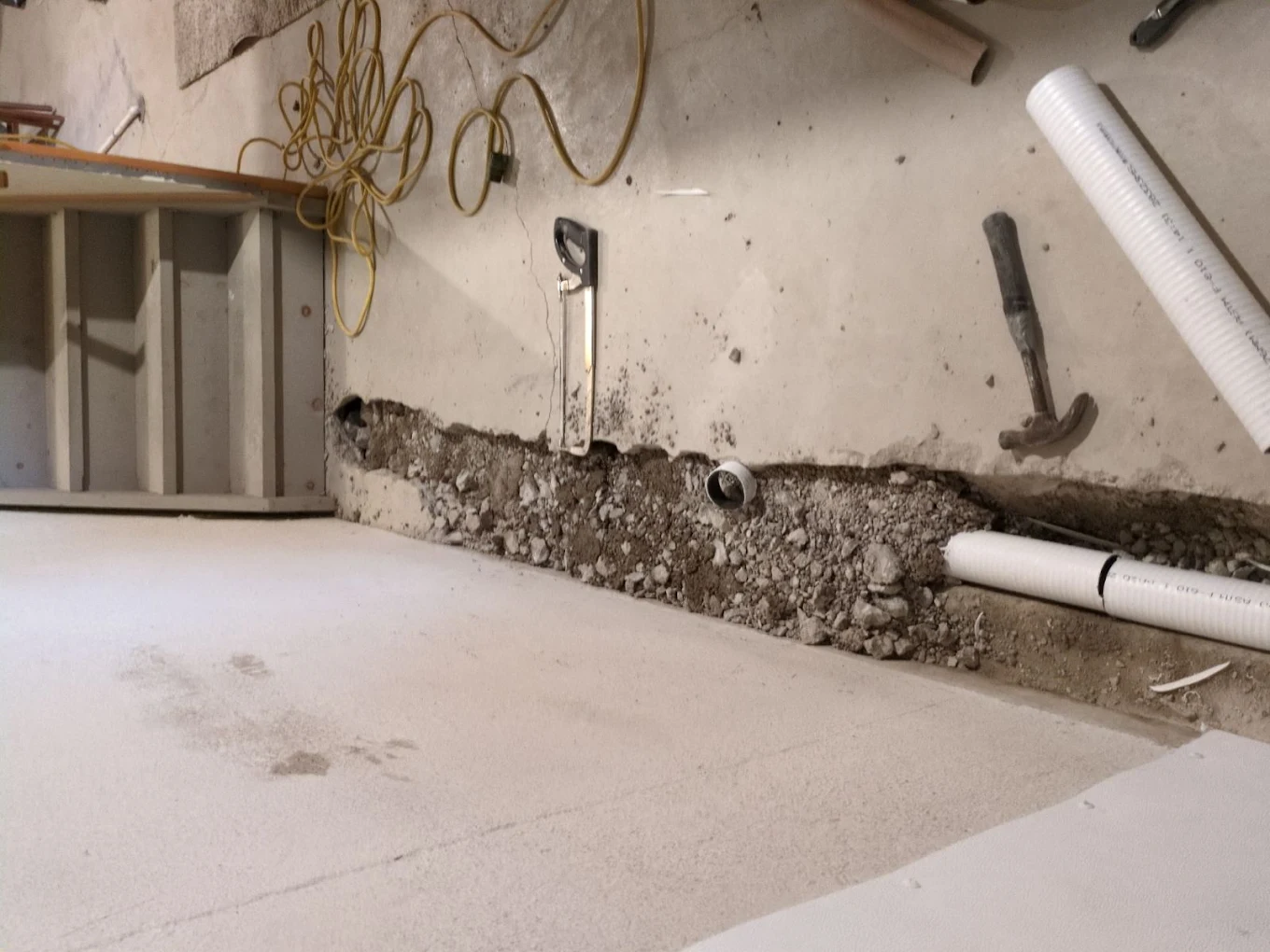
- Cove joints: The seam where your basement wall meets the floor is structurally the weakest point in most foundations, so it’s often the first place water appears.
- Basement floor cracks: When the water table rises, pressure from below pushes water directly up through cracks in the slab.
- Window wells and pipe penetrations: Poorly drained window wells and aging sealant around plumbing or electrical conduit are common infiltration points in older homes.
Why Southeastern Michigan Homes Are Especially Vulnerable
Three regional factors combine to make local basements more prone to leaks, and more frequently in need of basement leak repair, than homes in other parts of the country.
Expansive clay soil. Much of Southeastern Michigan sits on clay-heavy soil. When dry, it shrinks and pulls away from the foundation, creating gaps; when saturated, it swells and can exert thousands of pounds of lateral pressure against foundation walls. Homeowners in Macomb and Oakland Counties often notice horizontal cracking as a result.
Freeze-thaw cycles. Water that seeps into small cracks freezes, expands by roughly nine percent, and widens the crack, a cycle that repeats dozens of times each winter. By spring, foundations that were sound a decade earlier may have several active leak points, which is why the first big spring rain after snowmelt often catches homeowners off guard.
Aging drainage systems. Many homes across Livingston, Lapeer, and Genesee Counties were built between the 1950s and 1980s, when clay tile or corrugated plastic drain systems were standard. These materials crush, clog, and collapse with age, leaving hydrostatic pressure with no relief valve.
Basement Leak Repair vs. Complete Waterproofing
Minor, isolated cracks may only need a localized repair. Recurring leaks, though, usually point to a larger groundwater management problem that a single patch won’t solve. Complete basement waterproofing combines:
- Interior drainage systems
- Professional sump pump installation
- Foundation crack repair
- Moisture and humidity control
- Proper grading and drainage around the home
This integrated approach prevents future leaks rather than just treating the symptom in front of you.
Signs You Need Basement Waterproofing
Don’t wait for a full flood before scheduling emergency basement waterproofing. Watch for:
- Water stains, white mineral deposits (efflorescence), or damp patches on walls or floor
- A musty odor after rain, indicating active moisture and possible mold
- Peeling paint or bubbling drywall near the base of basement walls
- Visible cracks in the wall or floor, even if they look dry between storms
- Bowing or leaning walls, signaling increasing lateral soil pressure
- A sump pump that runs constantly or fails during heavy rain
- Rust stains on appliances or equipment stored in the basement
Waiting rarely helps: mold can begin growing within 24 to 48 hours of water exposure, ongoing moisture weakens concrete and framing, and unresolved leaks are one of the most common reasons buyers negotiate price or walk away from a home sale. Acting early is almost always cheaper, see what basement waterproofing typically costs in Southeastern Michigan.
How a Proper Waterproofing System Works
An effective solution doesn’t just patch today’s leak, it addresses the underlying cause and manages groundwater permanently. Interior drainage channels water entering through the cove joint or wall cracks to a collection point, and a reliable sump pump installation then removes that water automatically. Adding a battery backup keeps the system running even during the power outages that often accompany Michigan’s worst storms.
Where cracks have already formed, professional crack repair seals active entry points and stops further deterioration. For walls under lateral pressure from clay soil, wall stabilization halts movement without costly excavation. In homes with an attached crawl space, a vapor barrier and proper ventilation are just as important, since a wet, unconditioned crawl space feeds humidity straight into the basement above it.
Why Homeowners Choose B-Dry
B-Dry System of Southeastern Michigan has earned homeowners’ trust by delivering long-term solutions, not temporary fixes. Every job starts with a standard installation process: a professional inspection identifying every active entry point and the foundation’s structural condition before any work is recommended.
What sets B-Dry apart is a proprietary waterproofing system backed by a Lifetime Warranty, a sign the company stands behind its work permanently rather than expecting repeat service calls. From Wayne County bungalows to newer construction in Livingston County, B-Dry’s team understands the specific mix of soil, climate, and foundation types found throughout Southeastern Michigan.
If your basement has leaked after the last storm, now is the time to get answers. Whether you’re in Wayne, Oakland, Macomb, or Livingston County, contact B-Dry System of Southeastern Michigan for a professional basement leak repair inspection and a lasting solution — storm after storm, season after season.
Frequently Asked Questions
Why does my basement only leak after heavy rain? Light rain rarely saturates the soil enough to build meaningful hydrostatic pressure. A heavy storm does, and that pressure is what forces water through existing cracks or gaps.
Can heavy rain actually damage my foundation? Yes. Repeated soil saturation expands clay against foundation walls, creating pressure that causes cracking and, over time, inward bowing. Freeze-thaw cycles then widen those cracks each winter.
Is a sump pump enough on its own? A sump pump installation is essential, but it works best paired with an interior drainage system that channels water to the pit in the first place, plus a battery backup for outages.
Does clay soil cause basement flooding in Michigan? Clay soil is a major factor. When saturated, it swells and holds water against the foundation instead of draining away, which is a key reason basement leaks are so common regionally.
How long does basement waterproofing last? A properly installed interior system is designed as a permanent solution. B-Dry backs its system with a Lifetime Warranty, reflecting the durability of the approach when paired with routine sump pump maintenance.
Should I waterproof before finishing my basement? Yes, always. Finishing first is one of the costliest mistakes homeowners make — water intrusion behind finished walls causes hidden mold, and remediation means tearing out everything you just built.
How do I find reliable basement waterproofing near me? Look for a company with a proven track record in your specific region, a written warranty on materials and labor, and a process that starts with a full inspection rather than a quick estimate over the phone. Light rain rarely saturates the soil enough to build meaningful hydrostatic pressure.
