

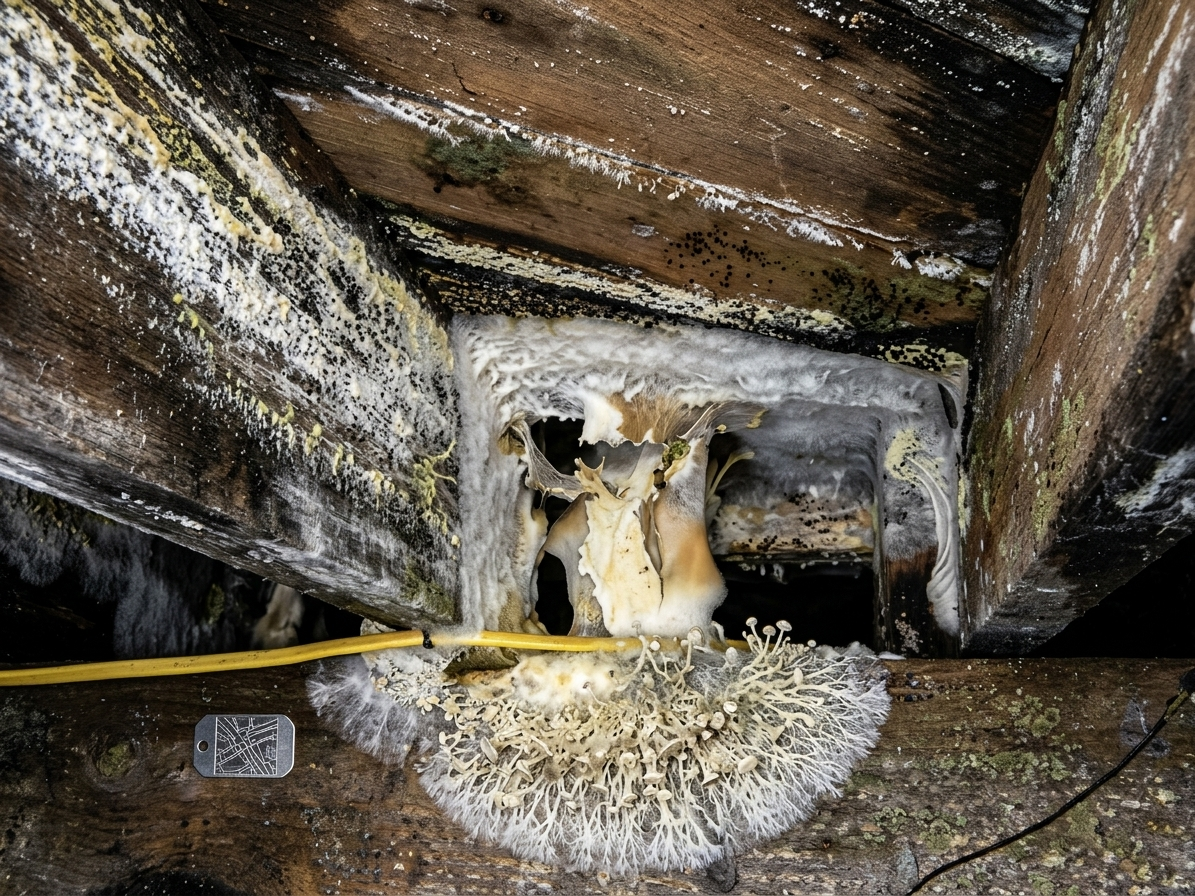
Most homeowners never think about what’s happening beneath their feet. The crawl space sits out of sight, out of reach, and almost always out of mind until something goes wrong.
And the thing that goes wrong most often is mold.
Dark, damp, and rarely disturbed, crawl spaces create nearly ideal conditions for mold to establish itself quietly, spreading across wood joists and insulation for months or even years before anyone notices. By the time you do notice, the damage to your home’s structure and the air your family breathes can already be significant.
Encapsulation is the most effective long-term solution for stopping crawl space mold before it starts. If you’re dealing with existing issues, Crawl Space Repair in Southeastern Michigan can help you get ahead of it. But to understand why encapsulation works so well, you first need to understand how mold gets in, how it spreads, and why crawl spaces are so uniquely vulnerable to it.
Why Crawl Spaces Are a Mold Breeding Ground
Mold isn’t picky. It needs three things to grow: a food source, moisture, and temperatures that aren’t extreme. Crawl spaces check every box.
The exposed wood of floor joists, beams, and subfloor panels is an excellent food source. Temperatures below a home stay moderate year-round, even in colder climates. And moisture, the one factor you could theoretically control, comes from multiple directions at once.
Here’s what feeds a crawl space’s moisture problem:
Ground vapor. Exposed dirt floors constantly release water vapor into the air. Soil moisture doesn’t stay in the soil, it evaporates upward continuously, and in an unventilated or poorly ventilated crawl space, that vapor has nowhere to go except into the air and onto the surfaces above it.
Humid outdoor air. Traditional vented crawl spaces were designed with the assumption that airflow would keep things dry. That assumption falls apart in humid climates. When warm, moisture-laden outdoor air enters through foundation vents, it hits the cooler interior surfaces of the crawl space and condenses, exactly the way a cold glass sweats on a warm day. That condensation coats wood joists and insulation with a thin, persistent layer of moisture that mold can colonize quickly.
Plumbing leaks and condensation. Supply pipes, drain lines, and HVAC condensate lines running through the crawl space are all potential moisture sources. Even a slow drip from a fitting that wasn’t tightened properly can create enough persistent dampness to feed a mold colony over weeks or months.
Poor drainage and groundwater intrusion. Homes built on sloped lots, in low-lying areas, or in regions with high groundwater tables are at greater risk for water seeping in through the foundation walls after heavy rain, creating standing water or sustained dampness along the perimeter.
Once any of these moisture sources is present and unaddressed, mold can begin developing within 24 to 48 hours under favorable conditions. In a crawl space, those conditions are almost always favorable.
The Types of Mold Commonly Found in Crawl Spaces
Not all crawl space mold is the same, and the type you find tells you something about the moisture conditions that allowed it to grow.
White mold is often the earliest sign of moisture intrusion. It tends to look powdery or fuzzy and grows on wood surfaces, insulation, and concrete. Many homeowners mistake early white mold growth for efflorescence, the mineral deposits left behind when water evaporates from concrete, but white mold is biologically active and will spread.
Green or blue-green mold typically indicates Cladosporium or Penicillium species, both common in damp building materials. These are among the most frequently found molds in residential crawl spaces and can spread across large areas of wood and insulation relatively quickly under humid conditions.
Black mold is the term most homeowners fear, though it gets used loosely to describe any dark mold growth. The specific species Stachybotrys chartarum, the mold most associated with serious health concerns, requires constant, sustained moisture to grow, often from active water intrusion or standing water. Its presence is a clear indicator of a significant, ongoing moisture problem. It tends to look dark green or black, slimy in texture, and is often found on wood that has been persistently wet.
Yellow mold, sometimes called “house-eating mold,” includes species like Serpula lacrymans, a brown rot fungus that is particularly destructive to structural wood. Unlike surface molds that feed on the outer layers of wood, brown rot fungi penetrate deeply into the cellular structure of lumber, causing it to crack and crumble in a distinctive cube-like pattern. By the time yellow-brown rot mold is visible on your floor joists, the structural integrity of the wood is often already seriously compromised.
For expert evaluation of what’s happening in your crawl space, Basement Waterproofing in Southeastern Michigan offers professional inspections to identify moisture sources before mold takes hold.
How Crawl Space Mold Affects the Rest of Your Home
The most dangerous misconception about crawl space mold is that because it’s down there, it stays down there. It doesn’t.
The physics of how air moves through a home ensures that whatever is in your crawl space eventually finds its way into your living spaces.
The Stack Effect Explained
The mechanism is called the stack effect. Warm air naturally rises and escapes through the upper portions of a home, through the attic, upper-story windows, and roof penetrations. As warm air exits at the top, negative pressure draws replacement air in from the bottom, pulling it up from the lowest available source.
In homes with crawl spaces, that source is the crawl space itself. Research consistently estimates that up to 40 to 50% of the air on a home’s first floor originated in the crawl space, entering through gaps around plumbing penetrations, utility openings, cracks in the subfloor, and HVAC ductwork.
This means mold spores, mycotoxins, volatile organic compounds (VOCs) produced by actively growing mold, and elevated humidity all travel upward into the living space continuously, even if the crawl space is never entered and no one in the home is aware of the mold below.
Health Impact on Your Family
The health implications are real and documented. A 2004 review by the Institute of Medicine found sufficient evidence linking indoor mold exposure to upper respiratory tract symptoms, coughing, and wheezing in otherwise healthy people.
Children, elderly individuals, and anyone with asthma, allergies, or a compromised immune system face greater risks, including:
- Severe allergic reactions
- Sinus infections
- Worsening respiratory conditions
Symptoms that improve when household members are away from home and return when they come back are a telling pattern worth taking seriously.
Structural Consequences That Compound Over Time
Beyond health, the structural damage builds quietly:
- Wood joists and beams weakened by mold and rot lose load-bearing capacity over time
- Insulation batts saturated with moisture fall, compress, and lose their thermal value
- Flooring above begins to soften, squeak, or sag
- Subfloor panels delaminate
What started as a moisture problem in an invisible space becomes a cascade of expensive repairs affecting the livable areas of the home.
The Warning Signs You Shouldn’t Ignore Mold in Crawl Spaces
Most crawl space mold problems announce themselves through the house before anyone looks beneath it. Recognizing these signals early makes the difference between a manageable remediation and a structural crisis.
Persistent musty or earthy odor. This is usually the first sign, and it’s caused by microbial volatile organic compounds (MVOCs), gases produced as mold actively breaks down organic material. A musty smell that’s present throughout the home, particularly near floors, HVAC vents, or baseboards, and intensifies in warm or humid weather, is a strong indicator of active mold growth below. If the smell becomes noticeably stronger when you open the crawl space access door, the source is almost certainly down there.
Unexplained allergy or respiratory symptoms. When household members experience sneezing, coughing, congestion, itchy eyes, or worsening asthma that responds poorly to typical treatments, and those symptoms improve when they’re away from the home, airborne mold spore exposure is a reasonable explanation to investigate.
Soft, bouncy, or sagging floors. Floor joists damaged by wood rot lose their rigidity. If areas of your floor feel spongy underfoot, particularly near exterior walls where moisture intrusion tends to be most concentrated, the structural wood beneath may already be compromised.
Visible moisture or condensation. Standing water, wet soil, or visible condensation on pipes, the underside of the subfloor, or foundation walls when observed during a crawl space inspection are immediate red flags. Humidity above 60% measured in the crawl space indicates mold-favorable conditions, even before visible growth appears.
Warped or buckling hardwood floors. Wood flooring above a humid crawl space absorbs that moisture through the subfloor. As it swells and releases repeatedly with humidity fluctuations, hardwood boards can cup, warp, or pull away from each other at the seams.
Why Encapsulation Is the Answer, Not Just Mold Removal
This is the part many homeowners get wrong. When mold appears in a crawl space, the instinct is to remove it, and mold removal is absolutely necessary when active growth is present. But removal without addressing the moisture conditions that allowed the mold to grow guarantees it will come back.
Mold remediation without encapsulation is treating a symptom while leaving the cause fully intact.
Bleach, commonly suggested as a DIY solution, doesn’t work on porous wood surfaces. It removes the surface color of the mold but doesn’t penetrate into the wood grain where the mold’s root structures (hyphae) remain viable. The mold returns within weeks.
Even professional mold remediation, done correctly with appropriate antifungal treatments and disposal of unsalvageable material, is only a permanent fix if the moisture conditions that created the problem are also corrected. This is where encapsulation changes the equation entirely.
How Encapsulation Eliminates the Conditions Mold Needs
A properly installed crawl space encapsulation system attacks every moisture entry point simultaneously:
The vapor barrier blocks ground moisture. A thick, reinforced polyethylene liner (typically 12 to 20 mil) installed across the entire dirt floor and run up the foundation walls stops water vapor from rising out of the soil into the crawl space air. This eliminates the most constant and unavoidable moisture source in any crawl space with an exposed dirt floor.
Sealed foundation vents stop humid air infiltration. Closing and sealing all foundation vents eliminates the single biggest source of external humidity in warm, humid climates. Instead of the crawl space air constantly cycling with outdoor moisture, it becomes a controlled, stable environment.
Sealed penetrations eliminate hidden entry points. Every gap around pipes, electrical conduits, and structural supports is sealed with appropriate materials. These small openings are often overlooked but collectively allow significant air and moisture exchange between the crawl space and both the outdoors and the living space.
A dedicated dehumidifier actively manages residual humidity. Even a perfectly sealed encapsulation system retains some moisture from internal sources. A crawl space-rated industrial dehumidifier, not a residential unit from a hardware store, runs continuously to maintain relative humidity below 55%, the threshold above which mold growth, dust mite activity, and wood decay all become active risks according to the EPA.
Keeping humidity between 45% and 55% year-round keeps the crawl space consistently dry enough that mold spores, even if present, cannot establish or sustain growth.
Together, these components don’t just reduce moisture, they remove it as a viable environmental condition for mold. No moisture, no mold. It’s that direct.
One Critical Rule: Remediate Before You Encapsulate
There’s an important sequence that must be followed, and it’s non-negotiable. If mold already exists in the crawl space, it must be professionally remediated before encapsulation begins.
Sealing an active mold problem inside a vapor barrier creates a dark, humid, contained environment, exactly the conditions mold prefers. You’d be locking the problem in rather than locking moisture out.
The correct sequence is:
- Professional inspection to assess mold presence, moisture sources, and structural damage
- Address any standing water, drainage problems, or active plumbing leaks
- Professional mold remediation using appropriate antifungal treatments; removal and disposal of any wood or insulation too damaged to salvage
- Allow the space to dry thoroughly
- Install encapsulation, vapor barrier, sealed vents, insulation, and dehumidifier
Done in this order, encapsulation becomes the final, definitive step that ensures the remediation actually holds. The mold is gone, the food source (damaged wood) has been replaced or treated, and now the moisture that made the space habitable for mold in the first place is permanently controlled.
What Encapsulation Doesn’t Do
Being honest about limitations matters.
Encapsulation prevents mold by eliminating moisture. It does not kill or remove existing mold. It also does not repair structurally compromised wood. Joists or beams weakened by rot need to be sistered, reinforced, or replaced before or during the encapsulation project.
And it is not a substitute for fixing active plumbing leaks, correcting drainage problems, or addressing any other direct water intrusion sources.
Encapsulation is a moisture control system, and it is extraordinarily effective at what it does. But it works as part of a complete approach, not as a shortcut around other necessary repairs.
Long-Term Benefits Beyond Mold Prevention
Preventing mold is the primary reason most homeowners encapsulate their crawl spaces, but it’s far from the only benefit that follows. A dry, sealed crawl space also delivers:
Better indoor air quality throughout the home. With the stack effect no longer pulling damp, contaminated air upward, the air circulating through living spaces is cleaner, drier, and lower in mold spores and allergens. Many homeowners report improvement in allergy and respiratory symptoms within weeks of encapsulation.
Structural protection. Floor joists, beams, and subfloor panels maintain their integrity for decades longer in a dry, stable environment than in a chronically damp one. The cost of encapsulation is consistently lower than the cost of foundation or joist repair.
Energy savings. Sealing the crawl space reduces cold air infiltration in winter and humid air infiltration in summer, reducing the load on HVAC systems. Energy savings of 10 to 20% on heating and cooling are commonly reported, typically representing $200 to $500 per year depending on home size and climate.
Pest deterrence. A sealed, dry crawl space is far less hospitable to rodents, insects, and termites than an open, damp one. Encapsulation eliminates the conditions these pests seek, though it should be combined with continued pest inspections rather than treated as a complete pest control solution on its own.
Property value. A documented, encapsulated crawl space is a positive in home inspections and appraisals. Buyers increasingly understand what a failing crawl space costs to remediate, and removing that concern from the inspection report directly supports sale price and negotiating position.
The Bottom Line
Crawl space mold is one of those problems that earns its reputation precisely because it operates invisibly. By the time you notice a musty smell in the living room or feel the floor softening near an exterior wall, the mold has typically been growing for months. The stack effect ensures it’s been affecting your indoor air for just as long.
Encapsulation works because it doesn’t compete with mold after the fact. It removes the conditions mold depends on entirely. A properly sealed, dehumidified crawl space is a place where mold simply cannot sustain itself. No moisture, no darkness that matters, no exposed food source, just a clean, dry, conditioned space doing its job silently beneath your home.
If your crawl space hasn’t been inspected recently, or ever, that’s where to start. A professional assessment will tell you exactly what’s happening below your home, whether mold is present, and what it will take to solve the problem permanently rather than temporarily. In most cases, the cost of getting ahead of it is a fraction of the cost of dealing with it after it gets worse.
FAQs:
Can crawl space mold spread to the rest of my home?
Yes. Due to the stack effect, up to 40 to 50% of the air on your home’s first floor originates from the crawl space. Mold spores, mycotoxins, and VOCs travel upward through floor gaps, plumbing penetrations, and HVAC ductwork, circulating throughout your living areas even if no one ever enters the crawl space.
Does crawl space encapsulation kill existing mold?
No. Encapsulation prevents mold by eliminating moisture, but it does not kill or remove mold that is already growing. If active mold is present, it must be professionally remediated before encapsulation begins. Sealing mold inside a vapor barrier traps it and can make conditions worse.
How does encapsulation stop mold from growing?
Mold needs moisture to survive. Encapsulation installs a heavy-duty vapor barrier across the floor and walls, seals all foundation vents, closes penetration gaps, and adds a dedicated dehumidifier to keep humidity between 45% and 55%. Without moisture, mold spores cannot establish or sustain growth.
What are the early warning signs of mold in a crawl space?
The most common early signs include a persistent musty or earthy odor throughout the home, unexplained allergy or respiratory symptoms that improve when household members are away, soft or spongy floor areas, visible condensation in the crawl space, and warped or buckling hardwood floors.
How long does crawl space mold take to grow after moisture appears?
Under favorable conditions, which crawl spaces almost always provide, mold can begin developing within 24 to 48 hours of moisture exposure. This is why addressing moisture sources quickly and permanently is far more effective than repeated mold removal treatments.
Is crawl space encapsulation worth the cost for mold prevention?
Yes. The average professional encapsulation costs between $3,000 and $15,000 depending on size and conditions. That investment is consistently lower than the combined cost of repeated mold remediation, structural joist repair, and subfloor replacement that result from chronic moisture left unaddressed.
What type of mold is most dangerous in a crawl space?
Stachybotrys chartarum, commonly called black mold, is associated with the most serious health concerns and requires constant sustained moisture to grow. However, all crawl space mold types, including white, green, and yellow mold, pose health and structural risks and should be professionally assessed and treated.
