

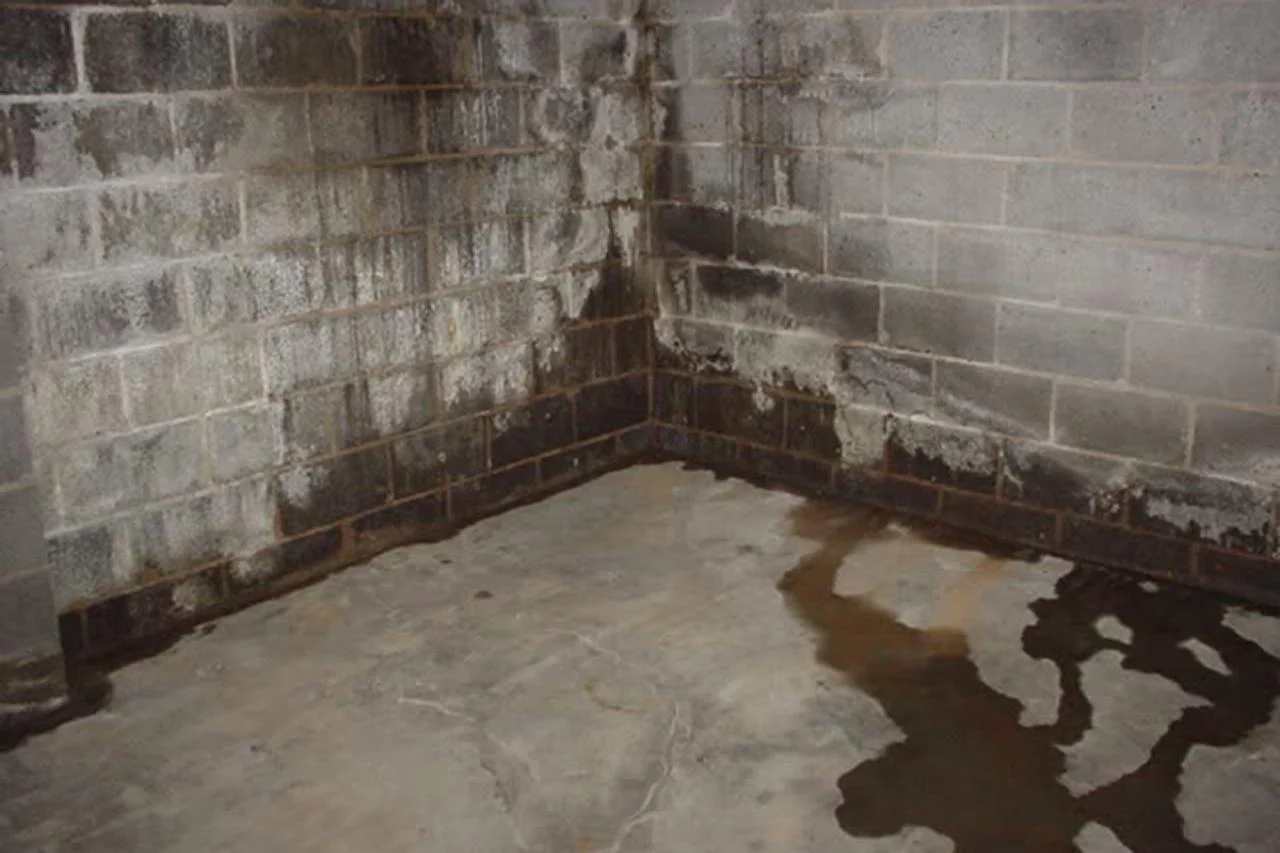
A wet basement rarely announces itself with drama. More often it starts as a damp spot on the wall, a faint musty odor, or a small puddle along the floor after a heavy rain. Homeowners ignore it, wipe it up, and move on. Then the season changes, the rain gets heavier, and what was a manageable damp patch becomes standing water, peeling drywall, and the beginning of a mold problem.
Basement leaks are one of the most common and most misunderstood problems in residential homes. Understanding what actually causes them is the only way to stop them permanently rather than managing the symptoms repeatedly. If you are already dealing with water intrusion, b-dry michigan provides professional assessments and long-term solutions built specifically for the foundation and soil conditions in this region.
Why Basements Leak: The Foundation of the Problem
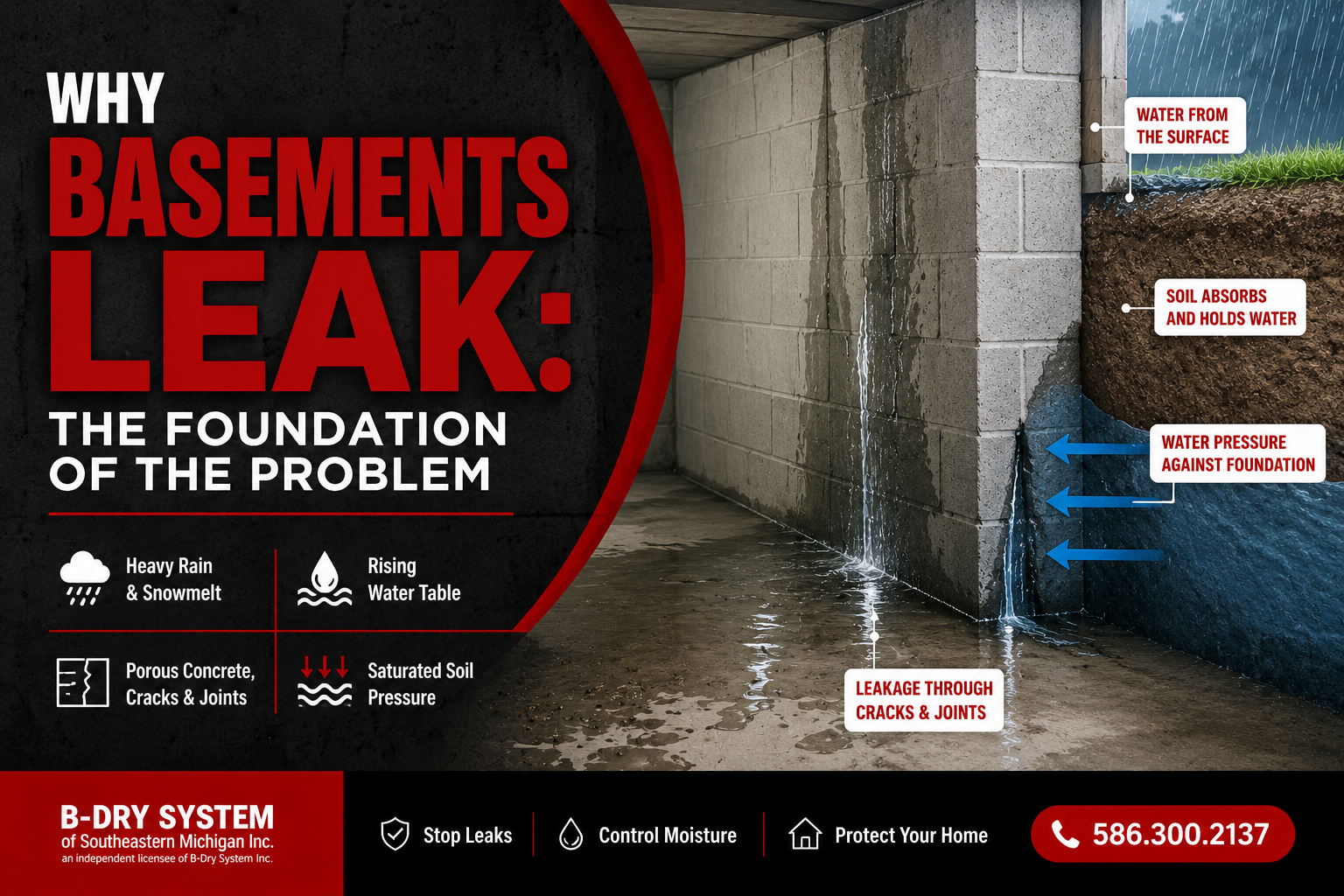
Your basement sits underground, surrounded by soil on all sides. That soil holds water, absorbs water, and transmits water. Every heavy rain event, every spring snowmelt, and every rise in the water table puts moisture in direct contact with your foundation walls and floor.
The concrete or masonry that makes up your foundation is not as impenetrable as it looks. It is porous. It has joints, cracks, and penetrations. And it sits against soil that is under pressure every time it becomes saturated.
That is the environment your basement exists in. Every leak has a cause rooted in that environment, and identifying the specific cause is the first step toward choosing a fix that actually works.
The Main Causes of Basement Leaks
Hydrostatic Pressure
This is the single most important concept for understanding basement leaks, and it is the cause most homeowners have never heard of.
Water weighs slightly over 60 pounds per cubic foot. When the soil surrounding your foundation becomes saturated after heavy rain, snowmelt, or a rising water table, that water-saturated soil exerts enormous pressure against your foundation walls and floor. At significant depth and saturation levels, the force can reach tens of thousands of pounds pressing inward against your basement.
This force is called hydrostatic pressure, and it does not stop pushing until the water has somewhere to go. That somewhere is through any crack, gap, joint, or porous section in your foundation.
Hydrostatic pressure is also why surface sealants and waterproofing paints fail consistently. They can withstand around 12 pounds of pressure per square inch at most. The forces acting against your foundation in saturated conditions far exceed that threshold.
The Clay Bowl Effect
When a home is built, the soil surrounding the foundation is excavated, the foundation is poured, and then backfill soil is placed back around the walls. That backfill is looser and more porous than the undisturbed soil beyond it.
In areas with clay-heavy soil, which is common throughout Southeastern Michigan, this creates what is known as the clay bowl effect. The clay backfill around the foundation forms a basin-like zone that retains water rather than draining it away. Instead of dispersing outward, groundwater collects directly against the foundation walls and builds pressure there.
This effect explains why many homeowners notice leaking even when they have addressed gutters, grading, and downspouts. The water collecting in the clay bowl around their foundation is coming from below and the sides, not just the surface.
For homeowners in this region, professional Basement Waterproofing in Southeast Michigan specifically addresses clay soil conditions that standard drainage measures alone cannot solve.
Foundation Wall Cracks
Cracks in foundation walls are the most direct entry point for water in poured concrete foundations. They form for several reasons:
- Normal concrete shrinkage during the initial curing process
- Soil settlement beneath and around the foundation over time
- Seasonal freeze-thaw cycles that expand and contract concrete repeatedly
- Lateral pressure from saturated soil pushing against the wall
- Hydrostatic pressure building behind the wall and creating stress fractures
Vertical cracks in poured concrete walls are common and typically indicate shrinkage or settlement. Horizontal cracks are more serious, indicating lateral soil pressure bowing the wall inward, and require professional structural assessment immediately.
Once a crack exists, water under hydrostatic pressure finds it and uses it consistently. Small cracks widen over time as water entering the crack freezes in winter, expands, and enlarges the opening further.
The Cove Joint (Wall-Floor Junction)
The joint where the basement floor slab meets the foundation wall is called the cove joint, and it is one of the most common entry points for water that homeowners misidentify or overlook.
The floor slab and the foundation wall are two separate concrete pours. They never fully bond together, leaving a natural gap at the joint. When hydrostatic pressure builds under the floor slab from a rising water table, water is pushed upward and inward through this joint, appearing along the perimeter of the basement floor.
Homeowners often see water appearing at the base of walls with no visible streak running down the wall above it and assume it is coming through the floor. In most cases it is coming through the cove joint under hydrostatic pressure from below the slab. Sealing this joint from the interior does not fix it because the pressure beneath continues building and simply finds the next available exit point.
Floor Cracks
Basement floor slabs are typically only 2 to 4 inches thick and carry no structural load for the foundation. When the water table rises and hydrostatic pressure pushes upward against the underside of the slab, cracks form and water seeps up through them.
This is more pronounced in basements where the water table rises significantly during heavy rain events or spring snowmelt, which is a consistent seasonal pattern in many Southeastern Michigan communities.
Sealing floor cracks from the surface addresses the visible crack but does not relieve the pressure beneath it. The water simply finds an adjacent path and continues entering. The correct solution is an interior drainage system that relieves the pressure by giving the water a managed path before it reaches the slab.
Poor Drainage and Grading
Basements that leak consistently during or immediately after heavy rain are often dealing with a surface water management problem as much as a groundwater problem.
If the soil around the foundation slopes toward the house rather than away from it, rainwater flows directly to the base of the foundation walls and saturates the soil there. Clogged gutters that overflow and deposit concentrated water alongside the foundation compound the problem significantly.
Downspouts that discharge too close to the house, typically within 6 feet, are one of the most commonly overlooked contributors. FEMA recommends downspouts discharge at least 10 feet from the foundation. When they are discharging immediately alongside it, every rain event sends a concentrated volume of water into the soil directly adjacent to the basement wall.
Settled pavement, sunken patio slabs, and decks that slope toward the foundation all create the same problem by directing surface runoff toward the house instead of away from it.
Window Well Leaks
Basement windows sit at or near grade level and are surrounded by window wells that hold back the soil. When those wells are improperly installed, clogged with leaves and debris, or missing adequate drainage, they fill with water during heavy rain events.
A window well full of water creates localized hydrostatic pressure directly against a basement window frame, which is rarely sealed to the same standard as the foundation wall around it. Water seeps in around the frame, through deteriorated seals, or in severe cases pushes the window inward entirely.
Window well covers reduce debris accumulation and prevent most overflow scenarios. But wells with failed or missing drains need to be corrected at the drainage level, not just covered, to prevent water from building up and eventually finding a path inside.
Porous Concrete and Mortar Joints
Poured concrete is naturally porous, and water under sufficient hydrostatic pressure will migrate through it slowly even without any visible crack. This type of seepage appears as persistent dampness or wet patches on walls, often accompanied by efflorescence, the white powdery mineral deposits left behind when water evaporates from concrete.
In concrete block foundations, mortar joints between blocks are the weak points. Mortar deteriorates over time from moisture exposure, and eroded mortar joints become pathways that allow water to seep through the wall consistently.
Plumbing Leaks and Internal Condensation
Not every wet basement is caused by external water intrusion. Leaking supply lines, failing water heater connections, damaged washing machine hoses, and HVAC condensate lines that are not properly draining can all introduce moisture directly into the basement.
Condensation on cold pipes and walls during humid summer months is another internal source. Warm, humid air meets cold basement surfaces and deposits moisture on them. Over time, this condensation contributes to mold growth and can be mistaken for seepage from outside.
A simple way to distinguish condensation from seepage is to tape a sheet of plastic firmly to a suspect wall section and check it after several days. If moisture appears on the room side of the plastic, it is condensation from interior air. If it appears behind the plastic against the wall surface, water is coming from outside through the foundation.
The Warning Signs Most Homeowners Miss
Basement leaks rarely start with standing water. The early signs appear long before the situation becomes obvious, and catching them early dramatically reduces repair costs.
- White or grey powdery deposits (efflorescence) on foundation walls indicate ongoing water migration through the concrete
- Rust staining on walls or floors where rebar or metal fasteners are present beneath the surface
- Peeling paint or wallboard that has absorbed and released moisture repeatedly
- A persistent musty odor that intensifies after rain or in warm weather
- Hairline cracks in walls or floors that were not there previously
- Damp spots on carpet or warped wood flooring near the perimeter
- Humidity that feels consistently higher in the basement than in the rest of the home
Each of these is a signal that moisture is already entering the space. Treating them as cosmetic issues rather than early warning signs consistently leads to more expensive repairs later.
How to Prevent Basement Leaks
Correct the Grading Around the Foundation
The soil around your foundation should slope away from the house at a minimum of one inch per foot for at least six feet in every direction. Where settling has reversed the grade and created a slope toward the house, adding soil to restore the correct pitch and compacting it properly is one of the most cost-effective preventive measures available.
This will not solve a problem driven by hydrostatic pressure from a high water table. But it removes surface runoff as a contributing factor and reduces the volume of water the drainage system needs to manage.
Manage Gutters and Downspouts
Clean gutters at minimum twice per year, more often if there are large trees nearby. Overflowing gutters deposit concentrated water alongside the foundation with every rain event.
Ensure downspouts extend at least 10 feet from the foundation before discharging. Downspout extensions and underground discharge pipes that carry water to a daylight outlet away from the house are among the most practical and affordable preventive investments homeowners can make.
Maintain and Cover Window Wells
Install fitted covers on window wells to reduce debris accumulation and limit direct rainfall entry. Check that each well has a functioning drain and clear it of any blockage at least annually.
If a well consistently fills with water despite a clear drain, the drain itself may be disconnected from the drainage system or clogged underground. A professional assessment is needed to determine whether the drain can be cleared or needs to be replaced.
Seal Utility Penetrations
Every point where a pipe, conduit, or utility line passes through the foundation wall is a potential water entry point. These penetrations are often inadequately sealed during construction and deteriorate further over time.
Inspect visible penetrations for gaps, cracking sealant, or mineral staining that indicates past water entry. Hydraulic cement or polyurethane caulk applied to properly prepared surfaces can seal minor gaps. Larger gaps or penetrations where water is already actively entering require professional injection methods for a durable repair.
Address Foundation Cracks Through Injection
Small, non-structural foundation cracks can be repaired through polyurethane foam or epoxy injection. Unlike surface patching with hydraulic cement or caulk, injection fills the crack through its full depth, bonding to the concrete on both sides and creating a repair that moves slightly with the structure rather than cracking again at the same location.
Polyurethane foam works well for cracks that still experience some water infiltration, as it expands to fill the void even in the presence of moisture. Epoxy injection creates a stronger, more rigid bond and is better suited for dry cracks where structural reinforcement is a consideration.
Neither method is appropriate for cracks that are actively bowing, widening, or showing signs of ongoing structural movement. Those require professional structural assessment before any repair is made.
Install an Interior Drainage System
For basements with recurring water intrusion from hydrostatic pressure, the most reliable permanent solution is an interior perimeter drainage system combined with a sump pump. This system does not attempt to block water from entering. It gives water a managed path to follow once it enters the wall or rises from beneath the slab, capturing it before it reaches the living area and directing it to a sump basin for removal.
A perforated drain pipe installed at the base of the foundation walls, surrounded by washed gravel, collects water seeping through the cove joint, through the walls, or up through floor cracks. The system relieves hydrostatic pressure under the slab rather than letting it build to the point of forcing water through the floor.
A properly sized sump pump with a battery backup ensures the system continues functioning during power outages, which is exactly when the heaviest rain events are most likely to test it.
Consider Exterior Waterproofing for Severe Cases
Where water is entering through porous wall material rather than through cracks or joints, an exterior waterproofing membrane applied directly to the outside of the foundation wall stops moisture before it enters the concrete at all.
This requires excavating around the foundation perimeter, which makes it more disruptive and expensive than interior solutions. It is most appropriate for new construction, significant structural situations, or homes where the wall material itself has deteriorated to the point of being consistently permeable regardless of interior drainage.
The Most Important Thing to Understand About Basement Leaks
There are two distinct categories of leaks, and the distinction matters more than most homeowners realize.
Seepage is the movement of water through porous material, such as water rising through the floor slab or migrating through the concrete wall. It is driven by pressure and cannot be permanently stopped by surface coatings from the inside.
Leakage is water flowing through an opening, such as through a foundation crack, around a window frame, or through a failed joint. This can often be stopped at the source through injection or sealing if the structural conditions are stable.
Most real-world basement water problems involve elements of both, which is why professional assessment matters before investing in any specific repair. The correct fix for seepage driven by a high water table is fundamentally different from the correct fix for a single crack leaking after heavy rain, even though both result in water on your basement floor.
Identifying the specific entry point and the specific mechanism driving water through it is what makes the difference between a repair that holds for decades and one that fails within a season.
The Bottom Line
Basement leaks are not inevitable, and they are not a normal condition that homeowners simply have to manage indefinitely. Every leak has a cause, and every cause has a solution.
The key is understanding that most basement water problems are driven by forces outside the basement, primarily hydrostatic pressure and inadequate drainage, that cannot be resolved by anything applied to the interior wall surface alone. Waterproofing paint, hydraulic cement patches, and interior sealants treat symptoms without addressing the pressure and drainage dynamics creating those symptoms.
A dry basement is achievable. It requires identifying the actual source of water intrusion, addressing the drainage conditions that create the pressure driving it, and installing systems that manage groundwater permanently rather than temporarily.
FAQs:
What is the most common cause of basement leaks?
Hydrostatic pressure is the primary driver behind most basement leaks. When soil around the foundation becomes saturated from rain, snowmelt, or a rising water table, it exerts enormous force against the foundation walls and floor. Water finds any crack, gap, joint, or porous section available and is pushed through it by that pressure. In clay-heavy soil regions like Southeastern Michigan, this pressure builds faster and holds longer than in areas with well-draining sandy soil.
Why does my basement leak only when it rains heavily?
Heavy rain rapidly saturates the soil around your foundation, spiking hydrostatic pressure quickly. Water also overloads gutters, deposits concentrated runoff near the foundation, and can fill window wells beyond their drainage capacity. Leaks that appear specifically during or shortly after heavy rain usually indicate a surface water management problem combined with existing foundation entry points such as cracks or a compromised cove joint.
What is the cove joint and why does it leak?
The cove joint is the gap where the basement floor slab meets the foundation wall. Because these are two separate concrete pours that never fully bonded, a natural gap exists at this junction. When the water table rises and hydrostatic pressure pushes upward from beneath the slab, water is forced through this joint and appears along the perimeter of the basement floor. Sealing the joint from inside does not resolve the underlying pressure and the water simply exits elsewhere.
Will waterproofing paint or sealant stop a basement leak permanently?
No. Waterproofing paint and interior sealants can only resist approximately 12 pounds of pressure per square inch. Hydrostatic pressure from saturated soil far exceeds that threshold. These products temporarily intercept moisture at the wall surface, trap it inside the concrete, and eventually fail as pressure builds behind them. They are not permanent solutions for active water intrusion driven by hydrostatic pressure or drainage problems.
What is the most effective permanent solution for a leaking basement?
For most basements with recurring water intrusion, an interior perimeter drainage system combined with a properly sized sump pump and battery backup is the most reliable long-term solution. This system relieves hydrostatic pressure by capturing water before it reaches the living space and directing it to a sump basin for removal. It does not try to block the water but manages it with a permanent, low-maintenance system.
How do I know if my basement leak is seepage or leakage?
Seepage is water migrating through porous material, such as water rising through the floor or migrating through the concrete wall with no visible crack. Leakage is water flowing through a specific opening, like a foundation crack, failed joint, or gap around a window. A useful diagnostic method is taping a sheet of plastic to the suspect wall for several days. Moisture on the room side indicates interior condensation. Moisture behind the plastic against the wall confirms water is coming from outside through the foundation.
Can I prevent basement leaks with landscaping and drainage improvements alone?
Surface drainage improvements, including correcting soil grading, extending downspouts, and clearing gutters, reduce the volume of surface water reaching the foundation and can significantly reduce or eliminate leaks caused primarily by surface runoff. However, they do not address hydrostatic pressure from a high water table, the clay bowl effect in backfilled soil, or existing foundation cracks. In most cases, surface corrections reduce the problem but a permanent interior drainage solution is still needed for full protection.
