

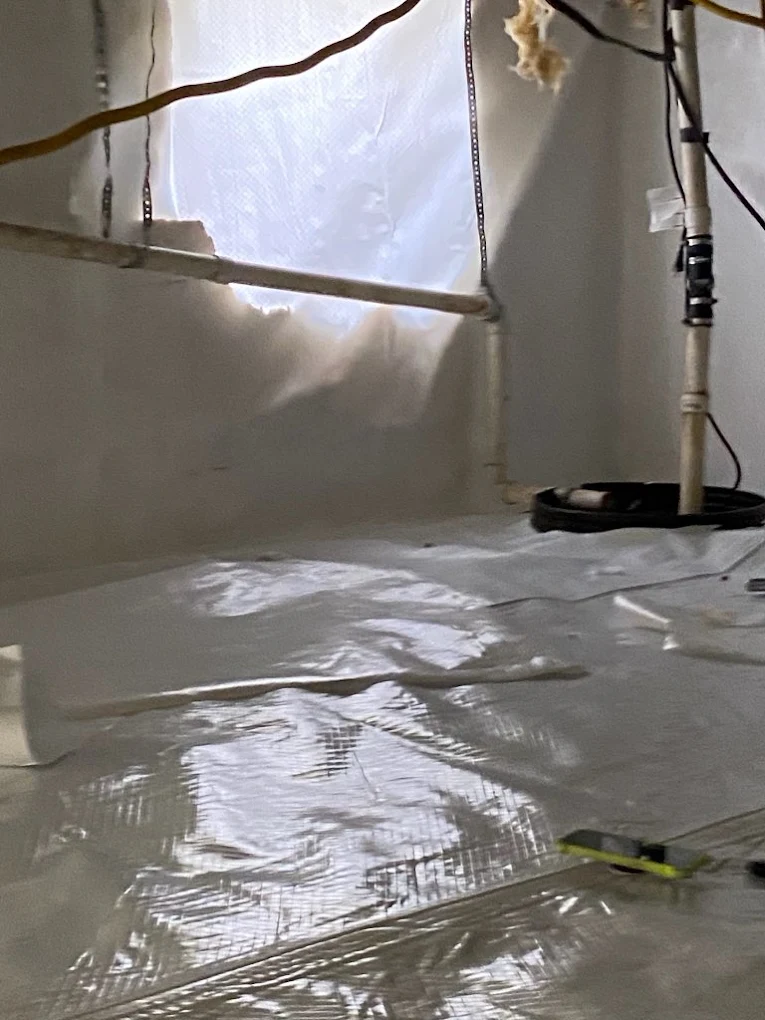
Crawl space encapsulation is not a purchase most homeowners plan for. It tends to become a priority after a mold inspection, a home sale that fell apart over a failed inspection report, or a winter when the floors above stayed cold no matter how high the thermostat went. By that point, the conversation moves quickly from “what is encapsulation?” to “what is this actually going to cost me?”
The honest answer is that crawl space encapsulation cost varies more than almost any other home improvement project, and the range quoted on most websites, $1,500 to $15,000, covers such different scopes of work that it tells you almost nothing about what your specific project will cost. This guide breaks down exactly where that money goes, what drives the price up or down, and how to evaluate a quote before you sign anything.
What Crawl Space Encapsulation Actually Involves
Crawl space encapsulation is the process of converting a vented, open crawl space into a sealed, conditioned area that is managed for moisture year-round. A properly executed encapsulation is not a single product. It is a system of components that work together.
A complete encapsulation typically includes:
- A heavy-duty polyethylene vapor barrier (12 to 20 mil thick) installed across the entire dirt floor and run up the foundation walls
- Sealing of all foundation vents with rigid foam board or custom vent covers
- Insulation on foundation walls and rim joists using rigid foam or spray foam
- A commercial-grade dehumidifier (70 to 90 pint daily capacity) with an automatic condensate drain line
- Sealing of all penetrations around pipes, conduits, and structural supports
When all five components are in place and correctly installed, the crawl space beneath a home maintains stable humidity between 45% and 55% year-round, below the threshold at which mold growth, wood decay, and dust mite activity become active risks according to EPA moisture control guidelines.
A critical rule that applies before any of this: if mold is already present, it must be professionally remediated before encapsulation begins. Sealing an active mold problem behind a vapor barrier creates a contained, initially humid environment that sustains continued growth rather than stopping it.
Crawl Space Encapsulation Cost at a Glance
The national average cost to encapsulate a crawl space is $5,500 in 2026, with most projects falling between $1,500 and $15,000. On a per-square-foot basis, standard professional encapsulation runs $3 to $7 per square foot. Crawl spaces with significant moisture damage, active mold, or structural repairs needed can push that figure to $10 per square foot or higher.
What the $1,500 figure typically represents is a loose vapor barrier laid on the dirt floor with basic vent sealing and no dehumidifier. Crawl Space Ninja, one of the most experienced encapsulation companies in the Southeast, notes plainly that by the time a professional is called to address a humidity, mold, or flooding problem, the basic option no longer exists. The entry-level quotes circulated online are written for crawl spaces that have no problems, which is rarely the scenario that motivates homeowners to call.
Labor is the largest line item in any encapsulation project, accounting for 50 to 70 percent of total project cost. A three-person crew working four days at eight hours per day in a crawl space represents significant physical labor in one of the most demanding work environments in residential construction. That labor cost alone, at professional rates, can exceed the “basic encapsulation” prices quoted as total project costs across much of the internet.
Cost to Encapsulate a Crawl Space by Size
Square footage is the primary driver of crawl space encapsulation cost. More square footage means more vapor barrier material, more wall and rim joist surface to insulate, more time to install, and a larger dehumidifier to manage the air volume.
| Crawl Space Size | Typical Cost Range | Average Cost |
| Under 1,000 sq ft | $1,500 to $5,000 | $3,000 |
| 1,000 sq ft | $3,000 to $10,000 | $5,000 |
| 1,500 sq ft | $4,500 to $12,000 | $7,500 |
| 2,000 sq ft | $6,000 to $15,000 | $10,000 |
| 2,500 sq ft | $7,500 to $18,000 | $12,500 |
| 3,000+ sq ft | $9,000 and up | $15,000+ |
These figures assume professional installation with a full system including dehumidifier. They do not include pre-encapsulation repairs such as mold remediation or structural work, which are priced separately.
It is also worth noting that Crawl Space Ninja has completed small crawl spaces well over $15,000 and larger ones well into the $40,000 range when significant pre-existing damage, complex drainage systems, and extensive mold remediation are required. Square footage sets the floor of the estimate, not the ceiling.
Every crawl space has a different layout, moisture history, and repair scope. Contact B-Dry for an accurate estimate based on your home’s specific conditions.
Factors That Determine Your Crawl Space Encapsulation Cost
Crawl Space Size and Layout
Square footage is the most straightforward cost variable, but layout matters nearly as much. A 1,500-square-foot crawl space with a single rectangular footprint and a 4-foot ceiling height is a fundamentally different project from a 1,500-square-foot space with multiple levels, low clearance under 18 inches, and obstructions including ductwork, plumbing runs, and structural posts.
Low-clearance crawl spaces, typically under 2 feet, require crews to move materials, equipment, and personnel in and out on their backs. This dramatically increases time on task. Spaces with 9-foot clearance present a different problem: pulling old insulation from subfloor joists above head height requires ladders in a confined space, which adds both time and safety complexity.
Every obstacle adds to the labor estimate. A realistic bid accounts for layout, not just square footage.
Condition of the Crawl Space Before Work Begins
The condition of a crawl space before encapsulation begins is the single biggest wildcard in project cost. A dry, clean crawl space with no existing damage is the starting point that the quoted price ranges assume. It is also the exception rather than the rule.
Common pre-encapsulation findings and their associated additional costs:
- Standing water or active drainage problems: $500 to $3,000+ to install interior drainage and a sump pump before encapsulation can proceed
- Old fiberglass batt insulation removal from between floor joists: $1 to $2 per square foot
- Existing mold on floor joists, subfloor, or sill plate: $1,500 to $4,000 for professional mold remediation with HEPA containment and antimicrobial treatment
- Wood rot requiring structural repair to floor joists or sill plate: $2,000 to $8,000+ depending on extent
- General debris and contaminated material removal: $500 to $2,000
These costs are additive. A crawl space with standing water, old insulation, and active mold growth requires drainage work, remediation, and insulation removal before a single foot of vapor barrier goes down. That pre-encapsulation scope alone can match or exceed the encapsulation cost for a clean space.
Not sure whether your crawl space needs drainage, moisture control, or structural work before encapsulation? Contact B-Dry to discuss the conditions in your home and arrange an accurate evaluation.
Vapor Barrier Thickness and Material Quality
The vapor barrier is the most visible component of any encapsulation system and the one where material choice creates the widest cost range. Thickness is measured in mil (thousandths of an inch), and the difference between a 6-mil and a 20-mil liner is not just price. It is puncture resistance, lifespan, and performance.
- 6-mil liner: $0.15 to $0.30 per square foot for materials. Used in basic installations, tears easily under foot traffic, degrades faster.
- 12-mil liner: $0.50 to $1.00 per square foot. The industry standard minimum for professional encapsulation.
- 20-mil reinforced liner: $1.00 to $2.00 per square foot. The premium option, rated for long-term durability and significant foot traffic.
Installed cost for vapor barrier, including materials and labor, typically runs $1,200 to $4,000 for a standard-sized crawl space. All seams must be overlapped by at least 6 inches and sealed with specialized tape rated for below-grade applications. The liner must run up foundation walls, secured with adhesive or mechanical fasteners, with a 3 to 4 inch termite inspection gap left at the top of the wall in regions with active termite pressure.
That termite gap is not optional in most areas. Building codes in North Carolina, South Carolina, and other Southern states where termite pressure is high require it specifically, and reputable contractors maintain it as standard practice regardless of local code.
Insulation, Dehumidifier, and Additional Components
These components address different aspects of the crawl space environment and each adds meaningfully to total project cost.
Foundation wall and rim joist insulation creates a thermal break between the conditioned crawl space air and the cold or warm soil outside the foundation. Rigid foam board (R-10 to R-15) is the most common choice at $500 to $3,700 installed. Spray foam, which provides both insulation and air sealing simultaneously, costs more per square foot but eliminates the need for separate sealing at irregular surfaces around pipes and penetrations.
The dehumidifier is the component most frequently omitted from low-end quotes and most frequently responsible for encapsulation failures in humid climates. A standard residential dehumidifier is not an acceptable substitute for a commercial crawl space unit. Residential units are not designed for continuous operation, they do not drain automatically, and they are not rated for the temperature and humidity conditions common in unfinished below-grade spaces. They run themselves out within a season.
A commercial crawl space dehumidifier with a 70 to 90 pint per day capacity costs $1,000 to $3,500 installed, including the automatic drain line routed to a sump pit, floor drain, or exterior discharge point. The unit maintains relative humidity below 55% year-round without manual intervention. Without it, even a perfectly installed vapor barrier will have condensation forming beneath it in humid conditions, recreating the moisture environment the encapsulation was designed to eliminate.
A sump pump becomes necessary when the crawl space has a history of standing water, a high water table, or soil grading that directs groundwater toward the foundation. Installation including the basin, pump, and discharge line runs $600 to $1,800. A battery backup adds $300 to $500 and is strongly recommended in areas with frequent power outages during storm events.
Vent sealing is the most cost-effective component in the system. Closing and sealing foundation vents with rigid foam board costs $150 to $450 for a typical home with four to eight vents. Despite its low price relative to other components, vent sealing has an outsized impact on humidity control because it eliminates the primary pathway for warm, humid outdoor air to enter the crawl space and condense on cooler interior surfaces.
Labor and Installation Complexity
Labor represents 50 to 70 percent of total encapsulation cost and is driven by three factors: crew size and hourly rates, the number of hours the project requires, and the physical difficulty of the working environment.
Crawl space work is consistently rated among the most physically demanding tasks in residential contracting. Limited headroom, tight access openings, heavy materials, and challenging body positions throughout a multi-day project make this specialized labor. Experienced crews command appropriate rates for it, and projects where corners are cut on labor quality tend to produce installations that fail within a few seasons.
Specific factors that increase labor time and cost:
- Access openings smaller than 24 by 24 inches require smaller materials and longer time to move equipment
- Clearance under 18 inches anywhere in the crawl space
- Multiple levels or step-downs in the crawl space floor
- Dense plumbing or HVAC ductwork requiring careful liner routing around components
- Existing contamination that requires personal protective equipment throughout the job
Geographic Location and Regional Labor Rates
Regional labor rates affect crawl space encapsulation cost just as they affect every other trade. Contractors in major metropolitan areas, coastal markets, and high cost-of-living regions charge more per labor hour than contractors in rural or lower-cost markets.
Beyond labor rates, climate drives scope. In the Southeast, where annual humidity is consistently above 60% for most of the year, dehumidification is not optional. It must be sized more aggressively than in drier climates, and the units run more frequently, meaning operating cost and maintenance requirements are higher. Coastal areas with high water tables or flood zone designations may require drainage solutions alongside encapsulation that inland areas with well-draining soil do not.
Building permit requirements also vary by jurisdiction. Most require permits for crawl space encapsulation, adding $100 to $250 to project cost. Some jurisdictions require specific inspections at defined stages of work, which affects scheduling and potentially labor cost.
Component-by-Component Cost Breakdown
| Component | Typical Cost Range | Notes |
| Pre-installation inspection | $100 to $250 | Moisture meters, thermal assessment, mold identification |
| Debris removal and cleaning | $500 to $2,000 | Old insulation, contaminated material |
| Mold remediation (if present) | $1,500 to $4,000 | HEPA containment, antimicrobial treatment |
| Structural repair (if needed) | $2,000 to $8,000+ | Joist sistering, sill plate replacement |
| Vapor barrier (12 to 20 mil) | $1,200 to $4,000 | Materials and installation, floor and walls |
| Foundation vent sealing | $150 to $450 | Rigid foam or custom covers |
| Wall and rim joist insulation | $500 to $3,700 | Rigid foam R-10 to R-15 or spray foam |
| Commercial dehumidifier | $1,000 to $3,500 | 70 to 90 pint/day with auto-drain |
| Sump pump (if needed) | $600 to $1,800 | Basin, pump, and discharge line |
| Battery backup for sump pump | $300 to $500 | Recommended in storm-prone areas |
| Permits | $100 to $250 | Most jurisdictions require |
DIY vs. Professional Crawl Space Encapsulation
The appeal of DIY encapsulation is real. Materials for a basic vapor barrier and vent sealing can be purchased for $1,500 to $3,000, representing significant apparent savings against professional quotes. The reality of what that savings costs in time, risk, and outcome quality is less often discussed.
An Air Force veteran interviewed by Crawl Space Ninja after completing his own encapsulation during the COVID lockdown made the comparison directly: he said he would rather have been on deployment in Afghanistan than encapsulating his crawl space. Crawl space work is that physically demanding.
Beyond the physical demands:
DIY cannot safely address mold. Professional mold remediation requires containment to prevent cross-contamination, HEPA filtration equipment, and antimicrobial treatment protocols. Attempting remediation without these creates exposure risk and rarely produces lasting results.
DIY cannot verify installation quality. Professional installations include moisture readings at completion, confirming wood moisture content is below 19% and relative humidity is within spec. A vapor barrier that appears well-installed but has undetected unsealed penetrations or inadequately lapped seams can allow ground moisture to accumulate under the liner, creating the same conditions encapsulation was designed to prevent.
DIY may not meet building code. Permits, required termite inspection gaps, and other code-mandated details may be missed by homeowners unfamiliar with local requirements. Non-compliant encapsulations create issues at resale and may require remediation before a home can be sold.
DIY carries no warranty. Professional installations from reputable contractors come with workmanship warranties. Some offer lifetime warranties on encapsulation systems. Materials alone have no installation warranty.
For homeowners with a clean, dry, accessible crawl space and significant construction experience, DIY vapor barrier installation is achievable. For any crawl space with existing moisture problems, mold, structural damage, or limited access, professional installation is the only option that addresses the full scope of what is needed.
Is Crawl Space Encapsulation Worth the Cost?
The financial case for encapsulation rests on three categories of measurable return: energy savings, avoided repair costs, and property value.
Energy savings of approximately 15% on heating and cooling costs are commonly documented after encapsulation. For a home spending $200 per month on HVAC, that is $30 per month, or $360 per year. At that rate, energy savings alone recover the cost of a $5,500 encapsulation in approximately 15 years. In climates with higher energy costs or less efficient existing HVAC systems, that recovery period shortens.
Avoided repair costs are harder to calculate in advance but often dwarf the cost of encapsulation when ignored. Floor joist repair after moisture-driven wood rot costs $2,000 to $8,000. Mold remediation after mold has spread to subfloor panels and structural members costs $3,000 to $10,000 for affected areas. A home that sells for $10,000 to $15,000 less than comparable properties because of crawl space problems identified during inspection has effectively paid for encapsulation multiple times over in lost sale price.
According to the EPA, controlling moisture in the crawl space is one of the most effective interventions available for improving indoor air quality throughout a home. Given that research consistently estimates that 40 to 50% of the air on a home’s first floor originates in the crawl space, the connection between crawl space condition and the health environment inside the living areas is direct. This value is real but difficult to quantify in dollar terms.
The calculation most homeowners ultimately face is this: the cost to encapsulate now versus the cost to remediate, repair, and then encapsulate after allowing moisture problems to develop further. The second path is almost always significantly more expensive than the first. Encapsulation done before significant damage accumulates is an investment. Encapsulation done after years of moisture exposure is part of a remediation project.
Conclusion
The cost to encapsulate a crawl space ranges from $1,500 for a basic vapor barrier in a clean, small space to $15,000 or more when significant moisture damage, mold remediation, or structural repairs are involved before encapsulation begins. The $5,500 national average applies to a standard-sized crawl space with moderate existing conditions and a complete system including dehumidifier.
Any quote significantly below that average deserves scrutiny. Ask specifically what is included in the vapor barrier installation (thickness, how seams are handled, whether it runs up the walls), whether a commercial-grade dehumidifier is part of the scope, and what the contractor’s process is if mold or structural damage is discovered during installation.
A crawl space encapsulation done correctly lasts decades with minimal maintenance. One done cheaply rarely survives a full season without moisture problems returning, ultimately costing more than the professional installation would have from the start.
Want to know what proper crawl-space work would cost for your home? Request a free estimate from B-Dry based on the size, condition, and moisture issues in your crawl space.
FAQs
What Is the Average Cost of Crawl Space Encapsulation in 2026?
The national average is approximately $5,500, with most projects costing $1,500–$15,000. Standard pricing is $3–$7 per square foot, while extensive damage can increase costs to $10 per square foot.
How Much Does It Cost to Encapsulate a 1,500-Square-Foot Crawl Space?
A 1,500-square-foot crawl space typically costs $4,500–$12,000, with most undamaged spaces costing $6,000–$8,000. Mold, standing water, or old insulation can increase the price.
What Is Included in a Complete Crawl Space Encapsulation?
A complete system includes a 12–20 mil reinforced vapor barrier, sealed foundation vents, wall and rim-joist insulation, sealed penetrations, and a commercial-grade dehumidifier maintaining humidity below 55%.
Why Are Crawl Space Encapsulation Quotes So Different From Contractor to Contractor?
Quotes often differ because of scope and materials. Lower-priced options may only include a loose vapor barrier, while higher-priced systems can include secured liners, sealed vents, insulation, and a dehumidifier.
Does Crawl Space Encapsulation Cost Include Mold Remediation?
Not automatically. Mold remediation is usually separate and can add $1,500–$4,000. Active mold should be treated before encapsulation begins.
Is a Dehumidifier Necessary for Crawl Space Encapsulation?
Yes, in nearly all climates. A 70–90 pint commercial-grade dehumidifier with an automatic drain helps maintain humidity below 55% year-round.
Can I Encapsulate My Crawl Space Myself to Save Money?
DIY is possible for a clean, dry crawl space, with materials costing around $1,500–$3,000. Professional installation is recommended for spaces with moisture, mold, or structural damage.
How Long Does Crawl Space Encapsulation Take?
A standard professional encapsulation for a 1,500-square-foot crawl space takes about 5–7 business days. Mold remediation or structural repairs can extend the timeline.
How Much Does Crawl Space Encapsulation Increase Home Value?
Encapsulation does not typically add a specific dollar amount to appraised value, but it can prevent price reductions, inspection problems, and buyer concerns related to moisture, mold, or wood rot.
How Do I Know if a Crawl Space Encapsulation Quote Is Accurate and Fair?
Request a detailed written quote covering the vapor barrier, vent sealing, insulation, dehumidifier, and preparation work. Also ask how mold or structural damage will be handled.
