

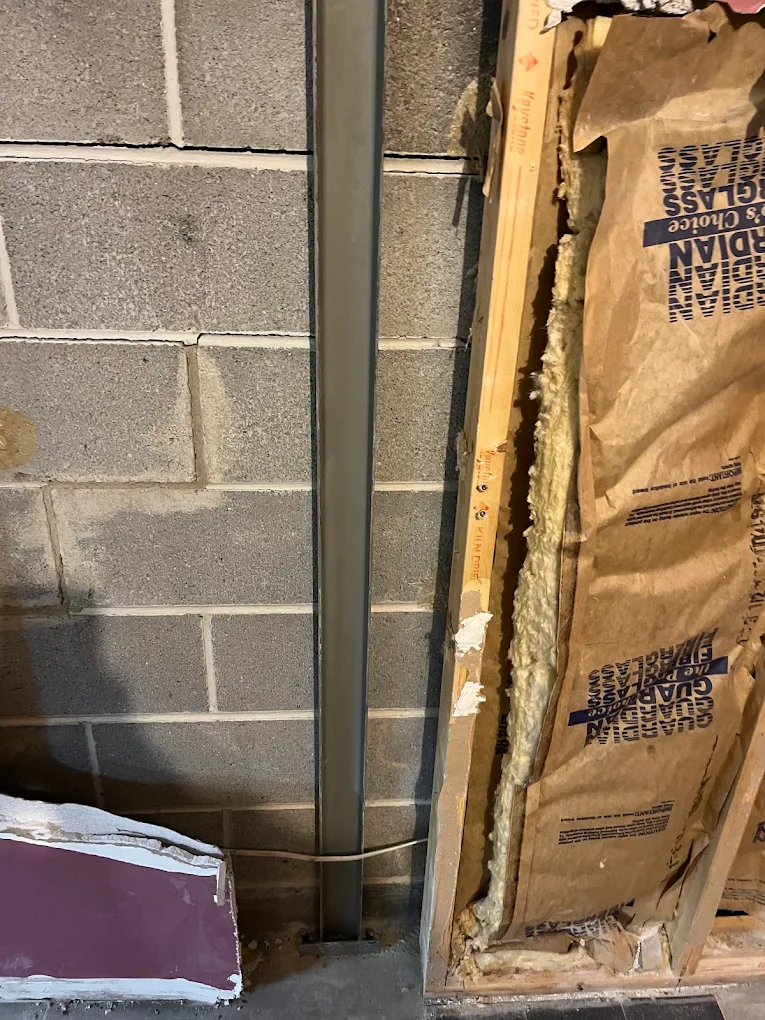
The main signs of foundation settling are cracks in walls, sticking doors and windows, sloping floors, and a leaning chimney.
These signs show up when the soil under your home shifts or compresses. A little settling is normal, but cracks wider than ¼ inch are not.
Spot the signs early and you can avoid costly structural damage with Foundation Repair in Southeastern Michigan.
Common Signs of Foundation Settlement
Foundation problems rarely appear overnight. The signs of foundation settlement show up slowly, both inside and outside your home.
Hairline cracks from normal settling are common, so what matters is change. Widening or recurring cracks, or several warning signs at once, point to a real problem.
Doors and windows often reveal it first, because areas with openings are the weakest parts of a wall.
Below are the main signs of settlement in a house, so you know what to watch for and can document any changes.
Not every noise or small mark is a problem. A home can creak as it settles into the ground, and that can be normal. Structural movement is not.
Excessive settlement can point to deeper issues. If you are unsure what you are seeing, Bdry System can help you find the cause.
Cracks in Walls, Ceilings, or Floors
Cracks are the most visible sign. Watch for diagonal cracks running from the corners of doors and windows, and stair-step cracks in brick or block walls.
Jagged cracks at a 45-degree angle are called shear cracks. Buckling or ripped drywall tape and ceiling separation also count.
Shear cracks form when the foundation puts enough stress on the wall frame to pull the drywall apart. Cracks that follow drywall seams can point to the same movement.
Any crack wider than ¼ inch needs inspection. Horizontal cracks in foundation walls are more serious, because they suggest pressure is making the wall bow.
Cracks in the foundation itself matter too. Hairline cracks may be harmless, but deeper or wider ones should never be ignored.
Inside a basement or crawl space, stair-step cracks are most common in concrete block walls. Vertical cracks are more common in poured concrete walls.
These cracks often start narrow at the bottom and widen as they move up the wall. In a finished basement, they can be hidden.
If cracks keep growing, the settling is still active. Cracks that keep widening can also mean a wall is rotating.
Read more on why Foundation Cracks Get Worse After Michigan Winters.
Sticking Windows and Doors
Sticking doors and windows are among the earliest signs of settling foundation movement.
When the foundation shifts, the frame goes out of square, so doors rub against the frame, won’t latch, or swing open on their own. You may also see gaps around window frames or misaligned doorways.
This is especially common in slab-on-grade homes.
Cracks that start at the corners of door or window frames are another warning. Big cracks usually begin as small cracks that were never treated.
Doors and windows may also pull away from the frame or the exterior finish. This kind of separation can cause drafts and higher energy bills.
Watch for homeowner fixes too: shaved door tops, moved latches, or fresh caulk covering gaps. Those repairs hide the symptom, not the cause.
Behind the caulk, a more severe problem could be hiding. If any of these fixes sound familiar, the foundation may be settling.
Uneven or Sloping Floors
Most houses are built level, so a sloping floor means something has moved.
Place a level on the floor, or set a small ball down. If it rolls on its own, the foundation may be settling.
Floors that feel soft or bouncy, or furniture that seems to roll, point the same way.
Often the cause is loose or weakened soil, erosion, or voids beneath the slab. These are common house settling problems and they usually get worse over time.
Settlement happens when the soil beneath your home shifts, compresses, or weakens. That makes parts of the foundation sink unevenly, so the slope may be stronger in one area.
Walk through each room and note where the floor dips. This helps a specialist see which part of the foundation is moving.
Look up as well. A sagging or uneven roofline can come from the same movement, and it can lead to roof leaks, water damage, and mold growth.
A sinking foundation is a related sign. On a slope or hillside, soil can slowly shift downhill over a period of years, which can leave the house unstable.
Detached or Leaning Chimneys
A chimney pulling away from the house is one of the most alarming foundation settling signs.
Brick chimneys are sometimes built on a separate foundation, which makes chimney settlement more likely. Because it may sit on its own foundation, a chimney can move on its own and pull away from the house.
A leaning or tilting chimney usually means one part of the foundation is sinking more than another. Gaps around the chimney can also make it unstable.
Cracked or shifting bricks near the chimney are another clue, since brickwork can shift and crack as the foundation settles.
This is a structural issue, so get it looked at right away. Leaving a leaning chimney alone is a risk, because it can become unstable.
Gaps Between Walls, Ceilings & Floors
Look for gaps where walls meet ceilings, baseboards pulling away from floors, or cabinets separating from walls.
These show parts of the house are no longer moving together, often because the foundation is unevenly supported.
Check outside too. Any gap that widens where a patio, deck, or attached garage meets the main house is a red flag. You can spot all of this without any tools.
Other outside warning signs
- Cracks in exterior stucco or masonry
- Separation between the home and a driveway or patio
- Tilted retaining walls or concrete slabs
Water is another clue. Settlement can create small openings that let water into a basement or crawl space.
Damp walls, pooling water, or musty odors are signs. If water seeps in after rain, the foundation may be compromised.
Bowing basement walls are also a warning. They can lead to cracks, water damage, and mold growth.
What Causes Foundation Settlement?
House foundation settling starts with the soil.
Clay-rich soils expand and shrink with moisture, and loosely compacted soil loses strength.
Water makes it worse: poor drainage, improper grading, and plumbing leaks wash soil away, while drought followed by heavy rain shrinks and swells it.
Tree roots can pull moisture from the ground, and earthquakes can loosen soil under older homes. Even in ideal conditions, a house settles a little with time.
Soil that is too dry or too wet expands and contracts, and that movement is passed on to the foundation.
Roots from nearby trees can absorb moisture from the soil or grow underneath the foundation, which causes uneven settling.
Other causes to know
- Poor site preparation, such as a foundation built on loose or unstable soil
- Poor soil compaction during construction
- Broken or aging underground pipes
- Over-irrigation near the foundation
- Natural disasters such as floods and hurricanes
- Poor design, where foundations or structures that are not properly supported shift and crack over time
Time alone is not the issue. Rapid or excessive settlement points to a deeper problem.
FAQs about Foundation Settlement
Two questions come up often when homeowners spot these problems.
The answers below explain how settlement differs from subsidence and when widening cracks and worsening floors call for a foundation specialist rather than a wait-and-see approach.
Is foundation settlement the same as subsidence?
Not exactly, but they are related.
Foundation settlement is when a structure sinks because the soil compresses or loses support. Subsidence is the downward movement of the ground itself, often caused by erosion, leaking utilities, or soil collapse.
The cause differs, but the result is similar: both can compromise your home’s structural integrity, so both should be addressed promptly.
At home, both can show up as cracks, sloping floors, and sticking doors. A specialist can tell which one is causing the problem.
When should I call a professional?
Call a foundation specialist when you see several signs at once, cracks that keep widening, or floors that keep getting worse.
Early action usually means less invasive, more affordable repairs.
If you are wondering how to fix a shifting house foundation, the answer starts with an inspection to find the cause.
Common fixes include support piers, drainage improvements, and polyurethane foam injection to lift and stabilize the foundation. Depending on the severity, underpinning or slab jacking may also be used.
What you can do in the meantime
- Document any visible changes or damage
- Monitor cracks or movement over time
- Schedule a professional evaluation if issues persisthbjkn
