

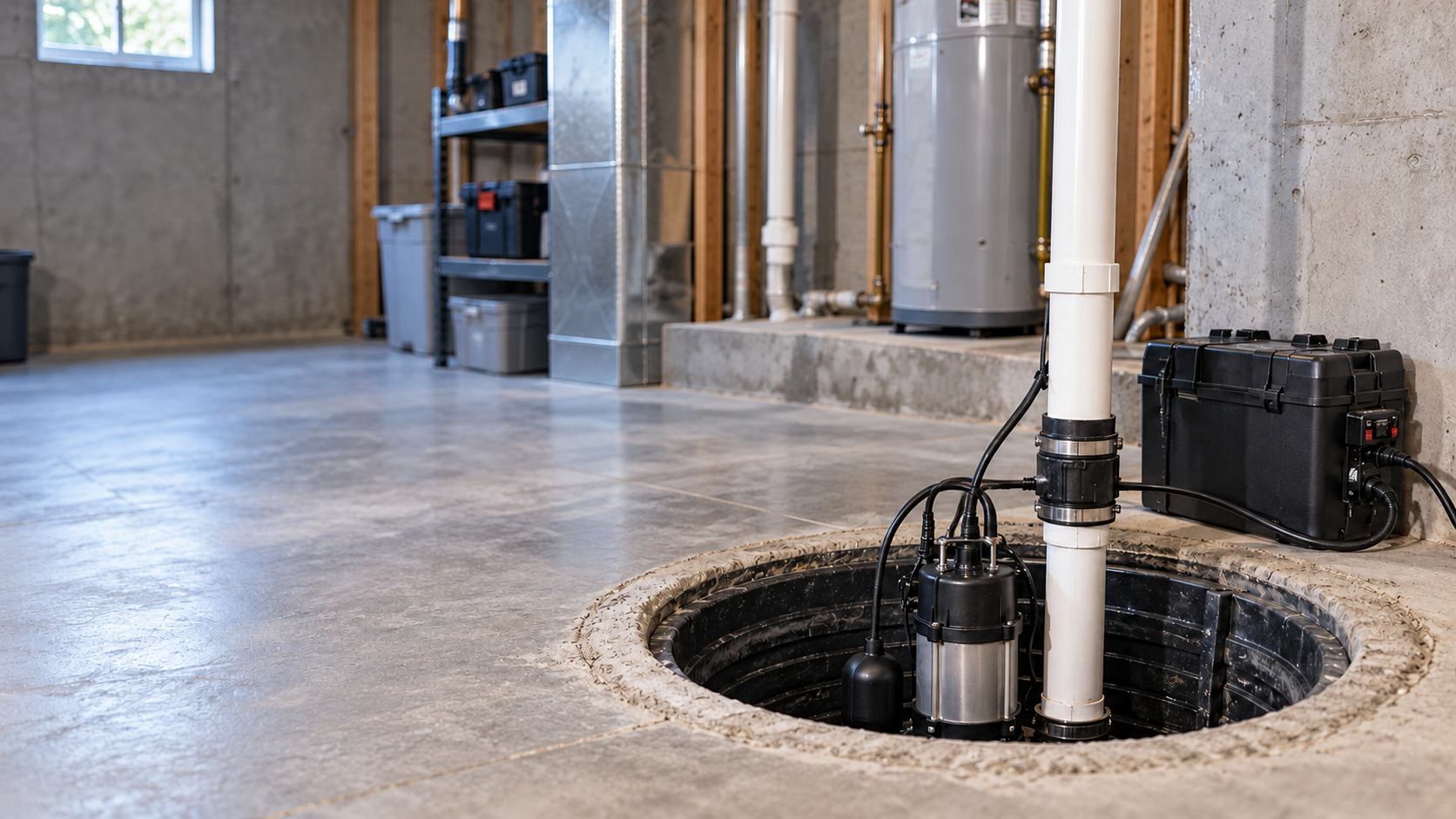
Sump pump installation costs $500 to $4,000 for most homes, with a national average around $1,400. The final number depends on the pump type, the condition of the existing pit, and how much electrical or drainage work the job needs.
This guide breaks down sump pump cost by pump type and installation scope, plus the signs that mean your current pump needs replacing. If you’re in Southeast Michigan, the team at bdry michigan can inspect your sump system and give you an exact number.
Sump Pump Installation Cost at a Glance
According to This Old House’s 2026 pricing data, sump pump installation averages $1,400 nationally, with most homeowners paying between $500 and $4,000. A simple pump swap into an existing pit sits at the low end. A new pit, discharge line, and battery backup pushes the total higher.
These numbers reflect a straightforward job. A full sump pump installation considers your soil, water table, and existing drainage before recommending a system.
| Installation Type | Typical Cost | What It Usually Involves |
| Pump replacement (existing pit) | $400 to $900 | Swapping a failed pump into a working pit |
| New submersible pump + pit | $1,000 to $2,500 | New basin, pump, check valve, discharge line |
| Pedestal pump installation | $300 to $800 | Lower cost option, motor sits above the pit |
| Battery backup system | $600 to $1,800 | Secondary pump that runs during power outages |
| Full system with trenching | $2,500 to $6,000+ | New pit, drainage tie-in, exterior discharge line |
What Determines Sump Pump Installation Cost
Several factors decide where a quote lands within that range.
Sump Pump Type
Submersible pumps sit inside the pit and run quieter, typically costing more upfront than pedestal pumps, which mount above the water with the motor exposed. Submersible units usually run $150 to $900 depending on horsepower, while pedestal pumps run $80 to $250.
Submersible is the standard choice for finished basements because of the lower noise and cleaner look.
Sump Pump Pit Condition
An existing sump pit in good shape keeps costs low since the pump swaps in directly. A cracked, undersized, or missing pit adds excavation, a new basin, and gravel backfill, which can add $500 to $1,500 to the job depending on soil and slab thickness.
Discharge Line and Electrical
The discharge line carries water away from the foundation, and a longer run or one that needs trenching through concrete adds cost. Homes without a dedicated GFCI outlet near the pit need electrical work too, typically $100 to $400 for wiring and a new outlet.
Sump Pump Battery Backup
A battery backup pump keeps working when the power goes out, which is exactly when storms cause the most flooding. Adding one typically costs $600 to $1,800 installed, depending on battery capacity and whether it’s a standalone unit or built into the primary pump.
What’s Included in a Professional Sump Pump Installation
A complete installation covers more than dropping a pump into a hole.
The pit is sized and lined, the pump is set with a check valve to stop backflow, and the discharge line runs well away from the foundation, not just a few feet from the wall. Wiring is checked for a dedicated GFCI circuit, and many installers add a battery backup as standard.
Skipping any of these steps is usually why a cheap pump fails within a year or two.
Signs You Need a New Sump Pump
- Pump runs constantly even in dry weather
- Loud grinding, rattling, or banging noise
- Water sits in the pit without draining
- Pump is more than 7 to 10 years old
- Visible rust or corrosion on the housing
- Basement flooded during a recent power outage
Can You Install a Sump Pump Yourself?
A basic pedestal pump swap into an existing pit is within reach for an experienced DIYer. Trenching a new discharge line, wiring a dedicated circuit, or sizing a pit for your home’s water table is not.
Getting any of these wrong means a pump that runs but doesn’t actually protect the basement.
Why Waiting Costs More
A sump pump rarely fails on a dry day. It fails during the storm that needed it most, when a dead pump means a flooded basement instead of a $1,400 repair.
In Southeastern Michigan, spring thaw and heavy summer storms are when an old or undersized pump gets tested hardest. Replacing a pump before it dies, not after, is the difference between a scheduled job and an emergency one.
Conclusion
Sump pump installation cost ranges from about $400 for a simple pump swap to $6,000 or more for a full system with trenching and backup power. The pump type, pit condition, and whether you need a backup system decide where your number falls.
Bdry michigan has installed and serviced sump pumps across Southeastern Michigan since 1981. To find out what your basement needs and what it will cost, schedule a free estimate.
FAQs
How much does it cost to install a sump pump?
Sump pump installation costs $500 to $4,000 for most homes, with a national average around $1,400. The final cost depends on pump type, pit condition, and whether electrical or trenching work is needed.
How much does a battery backup sump pump cost?
A battery backup system typically costs $600 to $1,800 installed, depending on battery capacity and whether it’s added to an existing pump or built into a new system.
How long does a sump pump last?
Most sump pumps last 7 to 10 years with regular use. Pumps that run constantly or sit in poor water quality tend to wear out sooner.
Can I install a sump pump myself?
A simple pump swap into an existing pit is manageable for an experienced DIYer. New pits, trenching, and electrical work are best left to a professional to avoid a system that doesn’t actually protect the basement.
Submersible or pedestal sump pump, which is better?
Submersible pumps run quieter and are the standard for finished basements, though they cost more upfront. Pedestal pumps cost less and are easier to service since the motor sits above the water.
Do I need a permit to install a sump pump?
Many municipalities require a permit for new electrical work or drainage tie-ins. A licensed installer typically handles permitting as part of the job.
What size sump pump do I need?
Most residential basements use a 1/3 to 1/2 horsepower pump. Homes with a high water table or frequent flooding may need a 3/4 to 1 horsepower pump.
Does homeowners insurance cover sump pump failure?
Standard policies often exclude sump pump failure and the resulting water damage unless you’ve added specific sump pump or water backup coverage.
