

Foundation problems rarely announce themselves with a collapse. They show up first as a sticking door, a hairline crack, or a floor that isn’t quite level anymore, small signs that are easy to explain away.
This guide covers the interior and exterior warning signs that point to a foundation problem, which ones are urgent, and which can wait. If you’re in Southeast Michigan, the team at bdry michigan can look at what you’re seeing and tell you what it means.
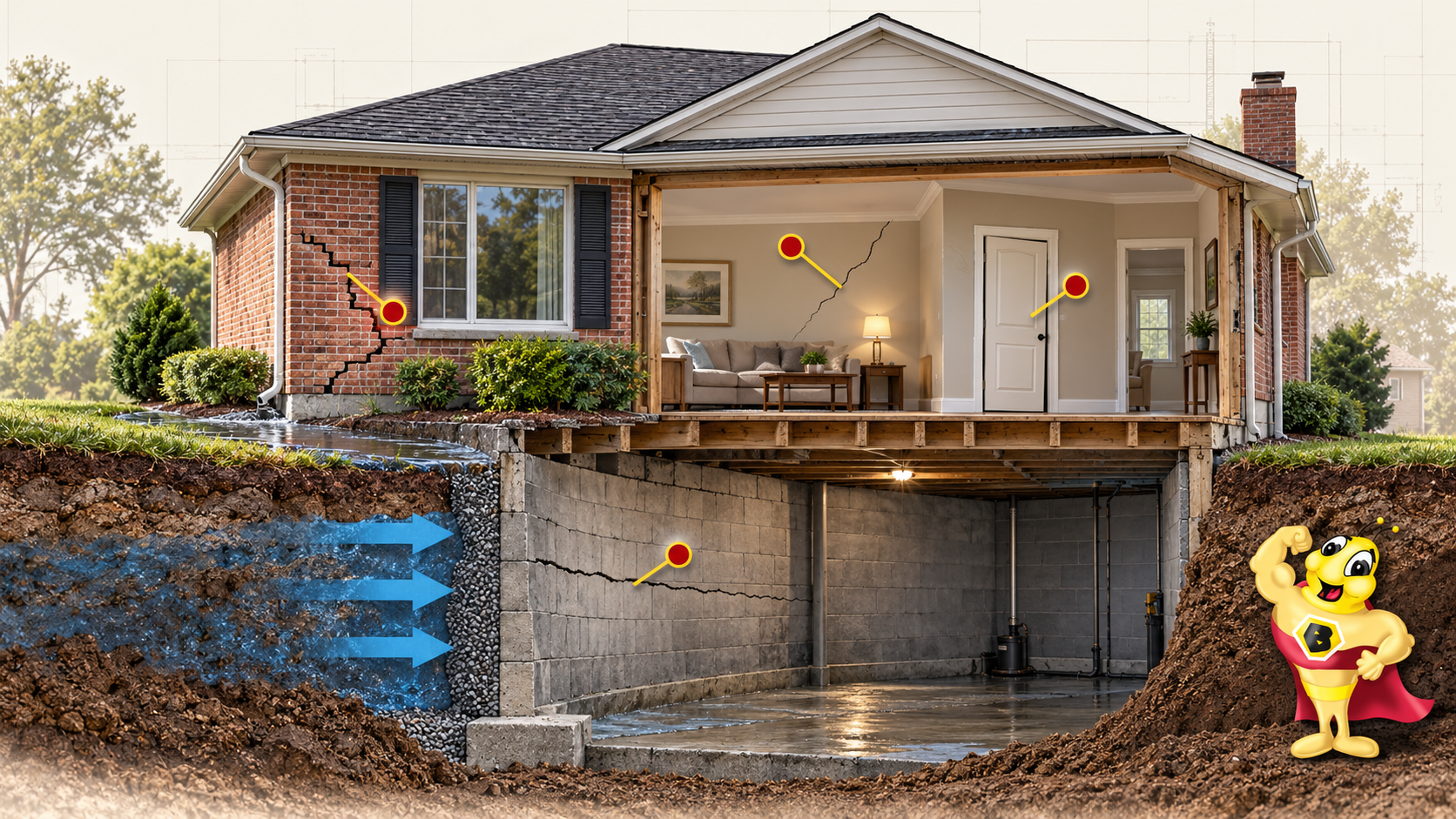 Foundation Warning Signs at a Glance
Some signs point to normal settling. Others point to a foundation that’s actively moving. This table sorts the common signs by how much attention they typically need.
| Sign | Where You’ll See It | Level of Concern |
| Hairline cracks | Basement walls, poured concrete | Usually minor, monitor |
| Sticking doors or windows | Interior door and window frames | Moderate, worth checking |
| Sloping or uneven floors | Any level of the home | Moderate to serious |
| Stair-step cracks | Block or brick walls | Serious, needs evaluation |
| Horizontal cracks | Basement or crawl space walls | Serious, needs evaluation |
| Bowing walls | Basement walls | Urgent |
| Gaps around window and door frames | Exterior walls | Moderate to serious |
Interior Signs of Foundation Trouble
These are the signs most homeowners notice first, since they show up inside the living space.
Sticking Doors and Windows
When a foundation shifts, door and window frames shift with it, so doors that used to close easily start sticking or no longer latch. This isn’t always foundation related, humidity swells wood too, but if it’s happening on multiple doors across different rooms, foundation movement is the more likely cause.
Sloping or Uneven Floors
A floor that slopes more than about an inch over 20 feet, or that you can feel with a marble rolling on its own, usually means the foundation is settling unevenly.
Minor, consistent settling across an old home is common. A slope that’s new, growing, or concentrated in one area needs a closer look.
Cracks in Drywall and Ceiling Gaps
Diagonal cracks running from the corners of doors and windows, or gaps opening between the ceiling and crown molding, both point to the frame of the house shifting. A foundation crack repair specialist can tell you whether the cause is normal settling or something that needs stabilization.
Cabinets and Counters Separating From the Wall
When cabinets or countertops pull away from the wall behind them, it usually means the floor or wall they’re anchored to has shifted. A small gap that isn’t growing can be cosmetic. A widening gap is worth having checked.
Exterior Signs of Foundation Trouble
Outside signs are easier to miss since they’re not part of the daily walkthrough of the house.
Stair-Step Cracks in Block or Brick
Stair-step cracks follow the mortar joints in a zigzag pattern and usually point to settlement or soil pressure against the wall. They’re common on block foundations and almost always mean water or soil movement is putting stress on the wall.
Horizontal Cracks
Horizontal cracks are among the most serious signs, since they usually mean clay soil and water pressure are pushing a basement wall inward. In Michigan, freeze and thaw cycles make this worse every winter, and a horizontal crack often needs basement wall stabilization, not just sealing.
Bowing Walls
A wall that curves inward, rather than staying flat, has already started to fail under pressure. This is one of the few signs that needs attention right away, since a bowing wall can keep moving until it’s reinforced with anchors, straps, or bracing.
Standing Water or Gaps Near the Foundation
Water pooling against the foundation after rain, or a visible gap opening between the ground and the foundation wall, both point to soil pulling away or settling unevenly. Left alone, this keeps feeding water toward the exact spot causing the problem.
Which Signs Are Urgent
- Bowing or curving basement walls: Urgent, get it evaluated right away
- Horizontal cracks: Urgent, especially if growing or leaking
- Sudden, new sloping floors: Schedule an evaluation soon
- Multiple sticking doors across different rooms: Worth checking soon
- Hairline vertical cracks with no leak: Monitor, not urgent
What Happens If You Wait
A hairline crack costs a few hundred dollars to seal. The same wall left to move for another year or two can need carbon fiber straps, steel bracing, or full wall anchors, work that runs into the thousands.
Foundation problems don’t fix themselves, and every freeze-thaw cycle in Michigan adds more pressure to a wall that’s already under stress.
Conclusion
Most homes show at least one of these signs at some point, and most of the time it’s normal settling, not an emergency. The signs worth taking seriously are the ones that are new, growing, or paired with water: horizontal cracks, bowing walls, and doors or floors that keep getting worse.
B-Dry has evaluated foundations across Southeastern Michigan since 1981. To find out what your home’s signs actually mean, schedule a free estimate.
FAQs
What are the most serious signs of foundation problems?
Bowing basement walls and horizontal cracks are the most serious signs, since both usually mean soil and water pressure are actively pushing against the wall.
Are hairline cracks in a foundation normal?
Yes, in most cases. Hairline cracks from concrete shrinkage are common in the first few years after a home is built and are usually cosmetic if they’re dry and not growing.
Can sticking doors and windows really mean foundation problems?
Yes, if it’s happening on multiple doors or windows across different rooms. A single sticky door is more often humidity or seasonal wood swelling.
How much does foundation repair cost?
Simple crack sealing runs about $250 to $800 per crack. Structural repairs like wall stabilization or bracing typically run $1,000 to $15,000 or more depending on the extent of the movement.
Should I get a foundation inspected even without obvious damage?
It’s worth it before a major purchase, a basement remodel, or if you’ve noticed even minor signs like a sticking door. A free inspection costs nothing and catches problems early.
Does a sloping floor always mean a foundation problem?
Not always. Older homes often have minor, consistent slope from decades of settling. A slope that’s new, growing, or concentrated in one area is more concerning.
Can I fix a bowing wall myself?
No. Bowing walls need engineered solutions like carbon fiber straps, wall anchors, or steel bracing, installed by a professional who can confirm the wall has stopped moving.
How does Michigan weather affect foundation problems?
Freeze and thaw cycles push water into cracks, where it expands and widens them. Clay soil, common across Southeastern Michigan, also swells and shrinks with moisture, adding pressure on foundation walls year-round.
