

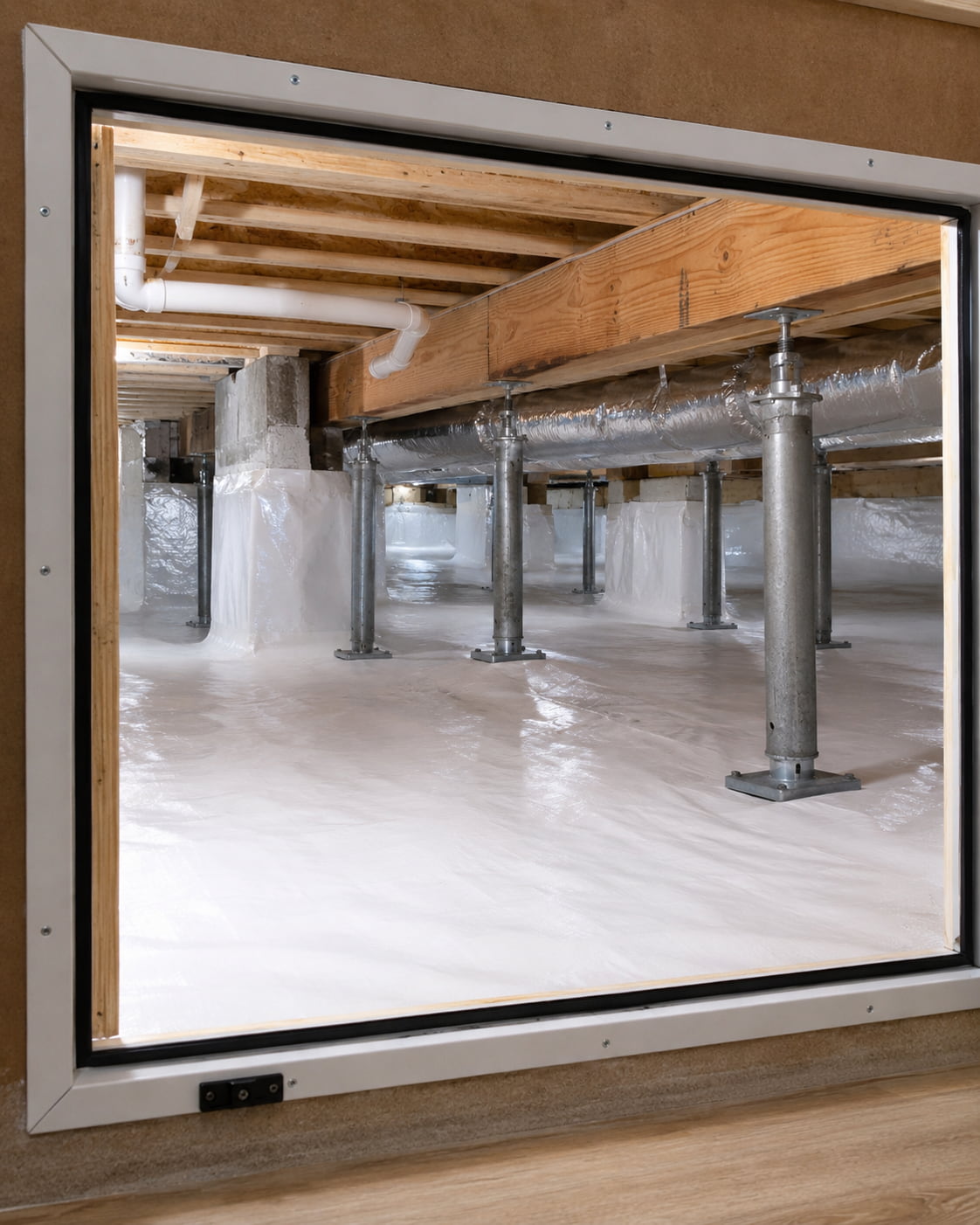
Basement waterproofing can increase a home’s value, though the size of the impact depends on the home, the local market, and how severe the existing moisture issue is. A dry, documented basement typically removes one of the most common reasons buyers negotiate price reductions or walk away after inspection. It may also support a stronger appraisal outcome and, where finishing is possible, can unlock additional usable square footage. None of this is guaranteed dollar-for-dollar the actual effect on a specific sale depends on the buyer, the appraiser, and the condition of the rest of the home.
For homeowners across Southeast Michigan including Oakland, Macomb, Genesee, Livingston, and Lapeer counties basement moisture is a common concern because of regional soil conditions and freeze-thaw winters that place recurring stress on concrete foundations. Related issues such as foundation repair, crawl space moisture, and sump pump reliability often come up alongside basement waterproofing during pre-sale prep. If you’re weighing whether it’s worth doing before you list, B-Dry System of SE Michigan offers inspections that can help you understand the specific condition of your basement first.
Why Buyers Care About Basement Condition
Basement condition is one of the first things experienced buyers and inspectors check during a showing. Water stains, musty odors, efflorescence, and visible foundation cracks all signal the same concern to a buyer: there may be an unresolved moisture problem, and its extent is unknown.
That perception commonly becomes negotiating leverage, buyers may request price reductions, repair credits, or walk away from the deal entirely. In competitive markets, listings with visible basement moisture issues tend to sit longer and attract lower offers than comparable homes without them.
Lenders add another layer of scrutiny. FHA and conventional appraisals can flag active moisture intrusion or structural concerns as conditions that need to be resolved before closing, which can delay or jeopardize financing if discovered late in a transaction.
Addressing the moisture issue before listing, whether through an interior drainage system, exterior membrane, or another appropriate method, replaces an open question with a documented condition buyers can evaluate directly.
How Basement Waterproofing May Affect a Home Appraisal
Appraisers assess overall property condition as part of determining value, and visible moisture damage — staining, efflorescence, active seepage, is generally treated as a negative factor, since it suggests deferred maintenance or unresolved defects relative to comparable homes.
Fannie Mae’s standard condition-rating framework (used on many conventional appraisals) rates properties from C1 to C6, where C1 reflects a property in new or like-new condition and C6 reflects one with significant physical deterioration. It’s important to be precise here: there is no fixed rule that basement moisture automatically drops a home to a specific rating. The rating reflects the appraiser’s overall judgment of the property’s condition, of which the basement is one component among many, roof, mechanicals, structure, and finishes all factor in as well. A documented, professionally completed waterproofing system with warranty paperwork on file can support a more favorable condition assessment, but the actual effect on any individual appraisal depends on the appraiser and the rest of the home’s condition.
Where waterproofing enables finished basement space, that additional square footage can be reflected in the appraisal, typically at a different per-square-foot rate than above-grade space, see the finished-space section below for how that generally works.
What Waterproofing May Return on Investment
Waterproofing’s return comes from two general sources: potential value added to the home, and damage costs it may help avoid. Both matter, but neither is guaranteed, and actual costs and returns vary significantly by contractor, region, and project scope. For current, project-specific pricing, see basement waterproofing costs or request an inspection.
Possible value added. Interior systems (drainage, sump pump, vapor barrier) and exterior systems (excavation and membrane) sit at very different price points, with exterior work generally costing more due to excavation labor and site restoration. Homes with a documented, warrantied waterproofing system are often better positioned to hold asking price during negotiations than comparable homes with an unaddressed moisture history, though the specific premium, if any, depends on the market and the buyer pool.
Damage that may be avoided. Left untreated, basement moisture can lead to mold growth, wood rot in framing and subfloor, and — over years of unaddressed foundation cracks after Michigan winters more costly structural repair. Addressing water intrusion earlier is generally less expensive than remediating secondary damage after it develops, though exact costs depend on the extent of damage found.
Finished-space potential. Where waterproofing makes it safe to finish a basement, that additional square footage is a separate value driver.
What Can Happen If You Skip Waterproofing Before Selling
Not waterproofing doesn’t make a moisture problem invisible, it typically shifts discovery to the buyer’s inspector, which is a difficult point in the transaction for a seller to address issues.
Inspection findings. A documented moisture finding in an inspection report gives the buyer grounds to request a credit, a price reduction, or waterproofing as a condition of closing. Some buyers walk away rather than negotiate.
Disclosure in Michigan. Michigan’s Seller Disclosure Act (MCL 565.951 et seq.) requires most residential sellers to complete a written Seller’s Disclosure Statement covering known conditions, which can include basement flooding, water intrusion, and structural issues the seller is aware of. Knowingly omitting a known issue can create legal exposure after closing. This is general information, not legal advice, a Michigan real estate attorney or your listing agent can advise on how the disclosure form applies to your specific situation.
Narrower buyer pool. Listings with a disclosed or discovered moisture history sometimes draw more interest from investors and cash buyers looking for a discount, rather than retail buyers paying closer to market value, though this varies by market and by how the issue is presented.
Interior vs. Exterior Waterproofing: How They Compare
Interior and exterior systems both address basement moisture, but through different methods, at different price points, with different levels of disruption. Neither is universally “better” the right choice depends on the source and severity of the water intrusion, the condition of the foundation wall, and budget.
Exterior waterproofing addresses water at the foundation wall itself: excavation, a waterproofing membrane, and drain tile at the footing. It’s generally considered the more comprehensive approach for homes with severe intrusion, deteriorating exterior walls, or high hydrostatic pressure, and may be worth pairing with basement wall stabilizing if there’s visible wall movement. It costs more and disrupts landscaping during the work.
Interior waterproofing manages water after it enters, typically through an interior drainage system that channels water to a sump pump for discharge outside the foundation. Combined with crack injection and a vapor barrier, it controls moisture without excavation, at a lower cost and with less disruption, but it doesn’t stop water from reaching the foundation wall itself, only from entering the living space.
Should You Waterproof Before Selling? Quick Decision Guide
| Situation | Generally Worth Considering |
|---|---|
| Active water intrusion, staining, or musty odor already visible | Yes, likely to surface during a buyer’s inspection regardless |
| Home is in a flood-prone area or has a history of basement flooding | Yes, disclosure and buyer scrutiny are both likely |
| No visible moisture issues, but basement is unfinished and undocumented | Optional a pre-listing inspection can clarify whether it’s needed |
| Selling within 30 days and moisture issue exists | Consider disclosing with a contractor estimate instead of rushing installation |
| Basement is already dry with an existing warrantied system | Gather the paperwork rather than re-doing the work |
How a Dry Basement May Expand Usable Space
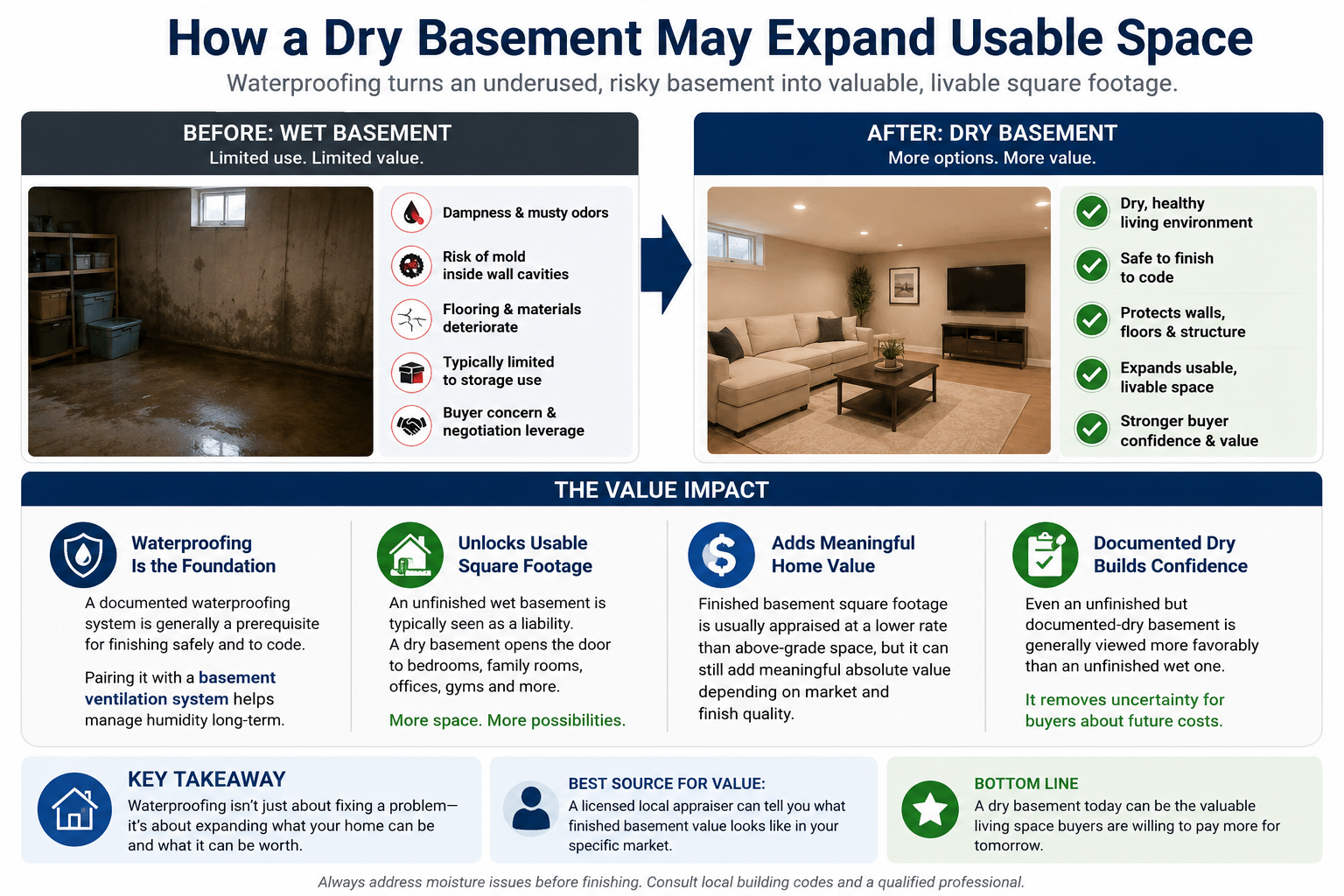
An unaddressed wet basement is typically limited to storage use. A documented dry basement opens the door to finishing it into livable space, which can be a meaningful value driver.
Finishing over an unresolved moisture problem is not advisable, drywall against a damp wall can develop mold within the wall cavity, and flooring over a damp slab tends to deteriorate. Waterproofing is generally a prerequisite for finishing safely and to code, and pairing it with a basement ventilation system can help manage humidity afterward.
Finished basement square footage is usually appraised at a lower rate per square foot than above-grade living space, but it can still add meaningful absolute value depending on market and finish quality, a licensed local appraiser is the best source for what that looks like in your specific market. Even an unfinished but documented-dry basement is generally viewed more favorably by buyers than an unfinished wet one, since it removes the uncertainty around the cost of fixing moisture before finishing.
How Waterproofing May Affect Inspection Results
Inspectors typically check basements for water staining, efflorescence, moisture meter readings, sump pump condition, evidence of prior flooding, foundation crack patterns, wall bowing, and musty odor. These findings are documented as part of the inspection report and can be treated as conditions requiring further evaluation.
A basement with a professionally installed system, an operational sump pump, and available warranty documentation generally presents differently to an inspector than one with unaddressed moisture though the inspector’s language and the buyer’s reaction still depend on what they find.
Pre-listing strategy: A pre-listing inspection before any waterproofing work can identify what a buyer’s inspector would likely flag, so it can be addressed proactively rather than discovered during a live transaction.
Transferable Warranties: What They Do and Don’t Guarantee
Warranty terms vary significantly by contractor and manufacturer, so it’s worth being specific rather than assuming all waterproofing warranties are equivalent. What a warranty actually covers — and whether it transfers to a new owner — depends entirely on the written warranty document itself.
Some points worth checking on any warranty before assuming it adds resale value:
- Is it transferable? Not all warranties automatically transfer to a new owner; some require written notice or a transfer fee.
- Is it manufacturer-backed or labor-only? A manufacturer-backed warranty is generally still honored if the installing contractor closes; a labor-only warranty from the contractor typically is not.
- What does it actually cover? Coverage can range from system failure and reinstallation to more limited terms — read the document rather than assuming full protection.
A written, transferable warranty that a buyer can independently verify is generally viewed more favorably than a verbal assurance or an undocumented system, but the specific value it adds depends on its actual terms.
When to Waterproof Relative to a Listing Date
Lead time. Where possible, completing waterproofing 60–90 days before listing allows time for the system to settle, for any follow-up items to be resolved, and for warranty paperwork to be finalized.
Seasonality. Spring with snowmelt and rainfall, is generally the season when basement moisture is most visible in Southeast Michigan. A seasonal basement maintenance check ahead of listing season can catch smaller issues early.
Sequencing. Waterproofing should be completed before any finishing, flooring, or painting in the basement, installing finished surfaces over unresolved moisture risks trapping problems behind walls.
If timing doesn’t allow it. A professional waterproofing assessment and written contractor estimate can be presented to buyers as documentation of a defined scope and cost, which is generally viewed as more favorable than an undisclosed, unaddressed issue. Some sellers negotiate a credit toward the estimate at closing instead of completing the work themselves.
FAQs
Does basement waterproofing add value to a home?
It can. Waterproofing tends to remove a common source of buyer negotiation leverage and can support a stronger appraisal and inspection outcome. The actual value impact depends on the home, the market, and the severity of the original issue.
How much value does a waterproofed basement add?
There’s no fixed figure, it depends on the market, the home, and whether the work enables finished basement space, which is generally the larger value driver of the two. A local real estate agent or appraiser can give a market-specific estimate.
Does a wet basement affect home appraisal?
It can be a negative factor in the appraiser’s overall condition assessment, though there’s no fixed formula linking basement moisture to a specific rating or dollar adjustment, it depends on the appraiser’s judgment of the whole property.
Do I have to disclose a wet basement when selling in Michigan?
Michigan’s Seller Disclosure Act generally requires sellers to complete a written disclosure statement covering known material conditions, which can include basement moisture or flooding history. This is general information, not legal advice — check with a Michigan real estate attorney or your agent for guidance specific to your sale.
Is basement waterproofing worth it before selling?
Often, but not always, it depends on whether moisture issues already exist or are likely to surface during a buyer’s inspection. A pre-listing inspection is usually the best way to find out whether it’s necessary for your specific home.
How long does basement waterproofing take before I can list?
Interior systems are commonly installed within a few days; exterior systems with excavation typically take longer. Allowing 60–90 days before listing gives time for the system to settle and for documentation to be finalized, though exact timing depends on scope and scheduling.
What type of waterproofing is right before selling?
It depends on the water intrusion source and severity. Interior systems are generally lower cost and less disruptive; exterior systems are generally more comprehensive for severe or structural-level intrusion. A professional assessment can identify which fits your situation.
Will buyers accept a home with a previously wet basement?
Many will, particularly when the issue has been professionally addressed with documentation and a written warranty. Buyer reaction still varies, and an undocumented history is generally viewed less favorably than a documented, resolved one.
Does basement waterproofing affect homeowners insurance?
Not typically as a direct premium discount, since standard policies generally exclude gradual water damage regardless of waterproofing. It can help avoid claims tied to water damage or mold, which may support a cleaner claims history over time.
Can I finish my basement after waterproofing and sell it for more?
Often, yes finished basement space is generally viewed as an added value driver, and waterproofing is typically a prerequisite for finishing responsibly. Confirm permitting and code compliance to make sure the finished space is reflected properly in an appraisal.
Does a sump pump with battery backup matter for resale?
It can. A battery backup sump pump protects against pump failure during power outages — often when storms are most likely to cause flooding, and is generally viewed as a meaningful upgrade over a single-pump setup by buyers and inspectors.
Does crawl space condition affect basement waterproofing value?
It can, especially in homes with a combination foundation, since moisture can migrate between spaces. Addressing crawl space repair alongside basement work gives buyers a more complete picture of moisture control across the whole foundation.
Next Steps
If you’re weighing whether waterproofing makes sense before you list, the most reliable next step is a professional inspection rather than guessing from general figures. B-Dry System of SE Michigan offers free estimates across Oakland, Macomb, Genesee, Livingston, and Lapeer counties, or you can contact our team directly to schedule an assessment.
