

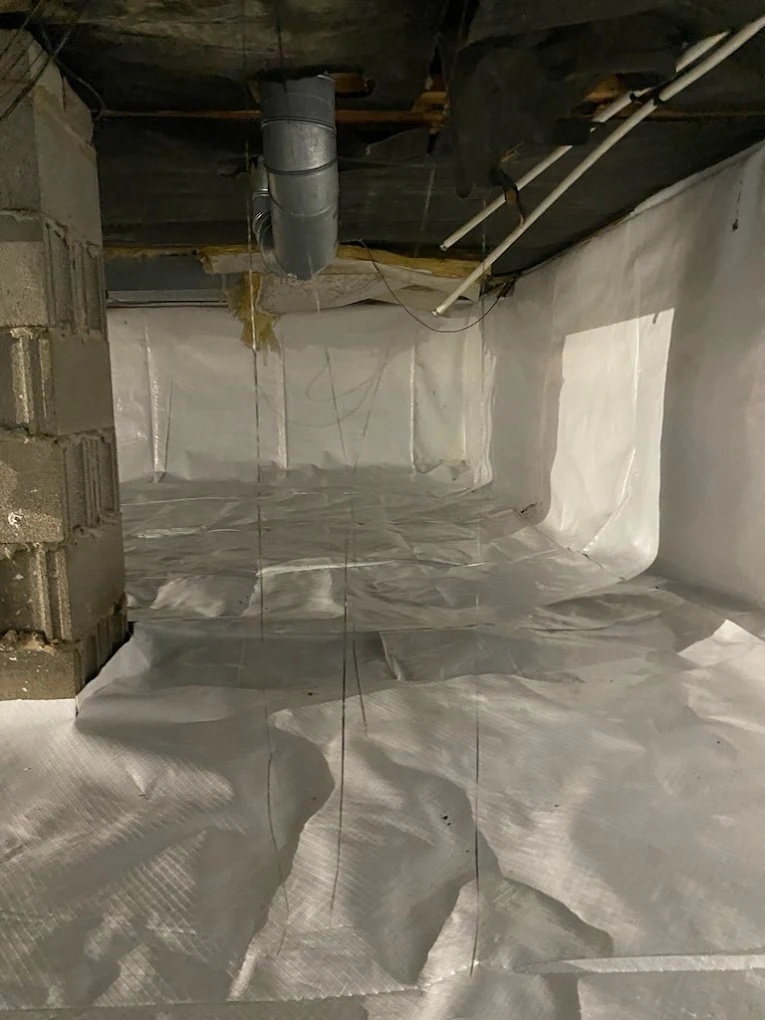
To insulate a crawl space, fix moisture problems first and lay a vapor barrier on the ground. Then insulate the walls if the space is sealed, or the floor above if it is vented. Seal air gaps and wrap pipes too. Seeing cracks or damage? Look into Foundation Repair in Southeastern Michigan before you insulate.
This guide shows how to insulate crawl space floors, walls, and pipes the right way.
Vented or Unvented? Check Your Crawl Space Type First
Your crawl space type decides where the insulation goes. Many homeowners search how insulate crawl space walls or floors, and the answer depends on venting.
A vented crawl space has openings to the outside. An unvented crawl space is sealed and sometimes conditioned.
Do not mix the two methods. A partially vented crawl space with wall insulation does not meet either the vented or unvented requirements.
Not sure which type you have? A pro can inspect it for you through Crawl Space Repair in Southeastern Michigan.
Insulating a Vented Crawl Space
In a vented crawl space, insulation goes in the floor above, between the joists. The ground still needs cover, because bare soil releases moisture into the air continuously.
Foam boards can also be fastened to the bottom of the joists, which helps prevent condensation and raises the floor’s insulation value.
Insulating an Unvented Crawl Space
In a sealed crawl space, insulate the walls, not the floor above. Rigid foam or closed-cell spray foam runs from the top of the wall down to the footing, and a heavy-duty vapor barrier covers the ground.
Building science experts and the DOE generally recommend this approach. It also helps protect plumbing from freezing.
Best Insulation for a Crawl Space
The best insulation for a crawl space resists moisture. The best answer is almost always a sealed vapor barrier plus rigid foam board or closed-cell spray foam on the walls, with humidity control.
Common insulation for crawl spaces includes spray foam, fiberglass batts, and rigid foam board.
Rigid Foam Board
Rigid foam resists mold and mildew and is easy to install. Instead of going between the joists, the boards are placed directly against the crawl space walls.
Insulating the walls with rigid foam is considered best-practice advice.
Closed-Cell Spray Foam
Closed-cell spray foam has a high R-value, resists moisture, and prevents air leaks. Building Science Corporation recommends foam-based insulation because it creates an air barrier.
It costs more than other options and usually needs an experienced contractor.
Fiberglass Batts
Fiberglass is the cheapest option, but it can absorb moisture, promote mold, and attract pests. It also allows air flow, which is a major source of cold floors.
Use it only in a dry, vented crawl space, installed between the floor joists.
How to Insulate a Crawl Space Step by Step
Follow these five steps in order. The vapor barrier always goes in before the insulation.
Step 1: Fix Moisture Problems and Clean Out the Space
Move on only once the source of water is corrected and the framing reads dry. If you find mold, treat and remove it before you seal and insulate.
Clear out debris, because anything touching the edges of the space can keep the barrier from working.
Standing water or damaged framing? Get help with Crawl Space Repair in Southeastern Michigan first.
Step 2: Seal Air Leaks and Vents
Close gaps around pipes, vents, and electrical boxes, because even small openings let air escape. Use foam plugs and sealants around pipes and ducts.
If you are making the crawl space unvented, seal the crawl space vents as well. Check your local code first.
Step 3: Lay the Vapor Barrier
Cover the entire floor, run the barrier up the walls, and seal every seam with high-quality tape.
Experts recommend 10 to 20 mil reinforced plastic, which lasts longer than thin 6 mil sheeting. Avoid metal screws, because they rip the edges of the barrier.
Code often calls for the barrier to run at least 6 inches up the perimeter walls.
Step 4: Insulate the Walls or the Floor Joists
In an unvented crawl space, attach wall insulation to the interior walls with adhesive or a masonry fastener.
In a vented crawl space, fill the joist bays with cavity insulation, or fasten foam boards to the bottom of the joists.
Step 5: Wrap Pipes, Ducts, and Rim Joists
In cold climates, insulate any plumbing lines that sit below the crawl space insulation. Seal and insulate heating and cooling ducts too.
Air seal and insulate the band joist with spray foam. Do not use open-cell foam there in cold climates.
Best Way to Insulate Floor Joists in Crawl Space
The best way to insulate floor joists in crawl space areas that are vented is to fill the joist bays with moisture-resistant insulation. Spray foam is a strong option for sealing gaps and protecting against moisture.
Whatever material you pick, follow these tips:
- Keep the insulation in full contact with the subfloor, with no gaps.
- Support it so it stays in place.
- Do not block the foundation vents.
- Add foam boards under the joists to reduce condensation.
Installing floor insulation in an unvented crawl space is a dangerous mistake. In a sealed space, insulate the walls instead.
Crawl Space Insulation R-Values
Required R-values depend on your climate zone. For a vented crawl space, floor insulation runs from R-13 in the warmest zones to R-38 in the coldest.
- Zones 1 to 2: R-13
- Zones 3 to 4: R-19
- Zones 5 to 6: R-30
- Zones 7 to 8: R-38
Sealed crawl space walls commonly need R-5 to R-15, depending on the zone. Check your local code before buying insulation for crawlspace projects in your area.
Crawl Space Insulation DIY: What You Can Do Yourself
Crawl space insulation DIY is realistic for some parts of the job. For most DIY projects, fiberglass rolls and batts or rigid foam boards work best. Angi puts DIY insulation projects at up to $500.
Leave spray foam to a pro. It is often too complex for a DIY crawl space project.
Wear proper protective gear when working with fiberglass.
Call a pro first if you see standing water or heavy mold. A large amount of mold should be removed by a professional before a vapor barrier goes in. For help, contact Bdry System.
How Much Does It Cost to Insulate a Crawl Space?
Professional crawl space insulation runs about $0.55 to $7.25 per square foot, and the size of the space and the insulation type are the biggest cost factors. Here is the cost with labor:
- Batt and roll: $0.55 to $2 per square foot
- Rigid foam board: $0.50 to $2.50 per square foot
- Spray foam: $3 to $8 per square foot
Removing old insulation adds $1 to $1.50 per square foot. The vapor barrier is a separate cost.
FAQs
What is the best insulation for a crawl space?
The best option is usually a sealed vapor barrier with rigid foam board or closed-cell spray foam on the walls, plus humidity control.
Should I insulate the crawl space walls or the floor?
In a vented crawl space, insulate the floor above. In a sealed crawl space, insulate the walls.
Can I insulate a crawl space myself?
Yes, for fiberglass, rigid foam, and the vapor barrier. Spray foam is best left to an experienced contractor.
Do I need a vapor barrier before adding insulation?
Yes. Install the vapor barrier first, before you add insulation. Without it, moisture can condense on the cold insulation.
How much does it cost to insulate a crawl space?
Professional installation runs about $0.55 to $7.25 per square foot. Spray foam sits at the high end.
